
Sign up to save your podcasts
Or



Based on Podcast App listening data
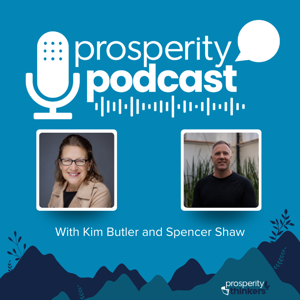
In this episode, Kim D.H. Butler and NO BS Money Guy Todd Strobel tell the real story of the qualified retirement plan.
Who really benefits?
Which types of plans give you the most freedom towards your prosperity, and which should you AVOID?
One key thought in today's conversation is, "When the government is benefiting, it typically means that we are not."
0:27 – Let's talk about the real story of the qualified plan
2:01 – The difference in tax treatments between qualified plans
3:05 – Is the qualified retirement plan structure truly beneficial?
3:54 – Sharing the 7 Principles of Prosperity
5:11 – In order to gain prosperity, you need to have your brain on, you need to be thinking, you need to be consciously doing things not just letting it happen.
5:21 – Todd's profound quote, "prosperity follows responsibility"
7:48 – Why is the government providing a tool for tax deferrals and is it really beneficial
8:57 – When the government's benefitting, it typically means that we are not
9:44 – Should you contribute to the up to the match or the max in your retirement plan?
11:24 – Kim talks about her latest book, Busting the Retirement Lies
12:50 – Why you should be investing for cash flow from the get go
14:30 – Investing for cashflow vs. equity
15:55 – You should have control over your structure and over the investments inside that structure
18:00 – How to create movement with your money
19:39 – When money is moving or leveraged in any way, it is healthier money
20:52 – How to get your money to multiply
22:33 – When dollars are just doing one job, if they're just enabling us to retire, if they're just educating a child, that's not as effective or as efficient as dollars that could do both.
22:58 – How to avoid paying huge penalties in taxes to use your own money
Kim D.H. Butler and NO BS Money Guy Todd Strobel talk about freedom and liberty, and how they relate to prosperity. They share excerpts from the book 'Are We Good Enough for Liberty?' by Lawrence W. (aka Larry) Reed of FEE.org. FEE is the Foundation for Economic Education, a non-profit organization dedicated to educating future leaders about the economic, ethical and legal principles of a free society.
0:33 – Today we are talking about the book, Are We Good Enough For Liberty?
1:21 – Kim shares how she was introduced to FEE and Larry Reed the head of the organization.
3:04 – FEE's mission is to enhance each individual's understanding of themselves and the systems that they live in.
3:35 – How to be in control when everything feels out-of-control.
4:07 – The three requirements in order to have an effective and productive society.
6:06 – Why private property encourages pride of ownership.
6:15 – What does free competition mean and how can we benefit from it?
7:59 – The fight towards increasing wage and what affect it has on you.
11:08 – Why we prosper with a severely limited government.
11:43 – Kim shares a story where Donald Trump stepped in and outperformed the government because of the free market.
12:53 – Any time the government puts forth a plan, strategy or structure we need to be really careful.
15:04 – Todd talks about the base of the prosperity pyramid.
16:45 – "No people who lost their character ever kept their liberties"
17:25 – The one key quality Warren Buffett looks for in people.
20:10 – Talking about the integrity of the main character in the movie Cinderella Man.
21:05 – The #1 thing you can do to improve your character.
Kim stresses the value of the focus a fiduciary advisor will place on their client, contrasted with the focus the advisor will put on themselves. Whose best interests take priority?
Todd summarizes the episode's theme in one poignant comment. He encourages buyers to listen for two different sentences when meeting with their advisors. If they say, "I am required to say if the recommendations I make are good or bad for you," their focus is on not on you. If they say, "I am required to say if the recommendations I make are the best for you," your success is the first point on their agenda.
The two leave the podcast with a few words regarding the value of Prosperity Economicsand ways that those listening can hear more about it.
0:00 Intro 0:18 Welcome 0:32 Fiduciary vs. Suitability Standard 1:21 Advisor working from a fiduciary standard definition 1:51 Advisor working from a Suitability standard definition 4:40 Good or bad for you vs. best for you 5:19 License differences 6:05 Assets under management 7:00 Investment fees separate from advice fees 9:56 Qualifications for making a decision on a specific investment advisor 12:00 Prosperity Economics vs. typical financial planning. 13:58 List of Kim D. H. Butlers books on Prosperity Economics. 15:14 Wrap up
The arguments and responses covered include: price comparison, investing comparison, and large commission comparison.
Kim and Todd address the reasoning behind each question the viewer had and then proceed to teach why both whole life and term insurance are important and practical. Most clearly, they express why term on its own is not a long term option, as its name suggests.
Once again, the final consensus is that a combination of both insurance options is the best way to stay protected as well as save for the future.
0:00 – Introduction 0:18 – Welcome 1:06 – Recap on previous podcast concerning term insurance vs. whole life insurance debate 2:51 – Argument #5 Why is term insurance cheaper than whole life? 3:02 – Response to argument #5 Immediate price comparison is not helpful because they have different functions over time. It's like renting vs. buying. 6:16 – Argument #6 "Unbundling" gives the client more cash back and more options on investing. 7:10 – Response to argument #6 part one: Actually, it's the "investing" part of "buy term and invest the difference" that often doesn't work well. 9:33 – Typical advisor recommended investment information. 10:15 – Response to argument #6 part two: Whole life out-performs many other savings vehicles and even many investment vehicles, depending on the environment. 12:00 – Sales of term insurance helps the insurance company meet the 4 to 5 percent net figures to the whole life policy owners. 13:24 – Argument #7 insurance agents sell whole life to make huge commission. 13: 34 – Response to argument #7: Term, whole life and mutual funds can all deliver good commissions. Commissions are necessary to business success. It is ludicrous to think that a 200-year old product has survived only because of commissions! 14:44 – Wrap up
Looking at a comment that was left on Partners for Prosperity's blog, they clarify four aspects of whole life insurance, busting four common myths: These include:
The question and answer sequence of this particular podcast is a great way to uncover misconceptions that various insurance buyers might have, especially if they are relying on "internet advice" or even advice from financial planners who do NOT specialize in life insurance.
This episode presents facts that will help buyers make properly informed decisions. Through questions and answers, Kim and Todd determine that a combination of both whole life insurance and term insurance may actually be the safest and most reasonable option for many families.
0:00 – Introduction 0:18 – Welcome 0:40 – Recap on past podcast encouraging combination of term insurance and whole life insurance. 1:00 – Whole Life insurance vs. Term Insurance 2:44 – Comment on partners4prosperity.com website with concerns regarding whole life insurance. 3:36 – Argument #1 Pay for two and only get one with whole life insurance (death benefit or cash value). 3:41 – Response to argument #1 Pay for one and get three or four benefits! 6:17 – Argument #2 Zero cash value. 7:39 – Response to argument #2 Cash value always grows with whole life. 7:53 – Examples of growth and also paid-up additions rider. 9:01 – Argument #3 Insurance company takes accumulated cash value in exchange for the death benefit. 9:50 – Response to argument #3 Death benefit grows along with cash value. Rate of return is excellent when claims are paid. 12:00 – Term insurance is limited because claims are rarely made. 13:15 – Argument #4 Cost to cover death benefit is too expensive for middle income family 13:54 – Response to argument #4 Whole life insurance is one of the best places to save money long-term. 15:00 – Wrapping up.
Answering common questions, Kim and Todd clarify differences between types of life insurance, and give listeners sound insurance advice. They explain the many different ways we can use life insurance, and which types are the most ideal for different situations. This truly is a life (insurance) lesson you won't want to miss!
0:19 – Welcome 0:42 – Common questions regarding life insurance 1:00 – What to do with your cash? 2:00 – The oldest life insurance product 3:40 – Clarifying whole life vs. term insurance 6:10 – Summarizing functions of life insurance 7:07 – Convertible term insurance 9:31 – Term/whole life hybrids 13:49 – "In force" illustrations 15:10 – Kim's last thoughts
Our hosts point out the impossible problems of financial planning and the traps we can fall into when relying on financial planning. They also talk about how financial advising is different and WHY it works better than financial planning to build wealth and prosperity.
0:20 – Welcome! 0:45 – Financial Advising vs Financial Planning 1:48 – The faults of financial planning 4:20 – The advantages of financial advice 5:50 – "Projected" retirement age? 7:30 – The risk tolerance question 9:00 – Average vs. Actual 11:10 – Target portfolios and the stock vs. bond split 12:30 – Full disclosure 13:20 – Focusing on the next 3-5 years 13:45 – Using Prosperity Economics 14:40 – Wrapping up
Our hosts answer the question about free financial advice and whether or not the phrase "you get what you pay for" rings true in those types of situations. Referring to insurance, Todd and Kim remind us that investments are not our only way toward gaining financial stability and growth.
0:19 – Welcome to another edition 0:31 – Praise for Prosperity 1:15 – Developing a prosperity mindset 3:14 – What is a financial adviser? 4:30 – 1st camp: the suitability standard 5:15 – 2nd camp: fiduciary adviser 6:11 – 3rd camp: insurance agents 6:50 – Investments aren't everything 7:45 – Clarifying questions 8:05 – Which one do I need? 13:12 – What about free financial advice? 15:29 – Take care!
From the publisher's feed
3,155 Listeners
3,837 Listeners

693 Listeners

3,063 Listeners

268 Listeners
7,929 Listeners

246 Listeners
62 Listeners
1,730 Listeners

74 Listeners

65,318 Listeners

1,027 Listeners

55 Listeners

120 Listeners

10,572 Listeners