
Sign up to save your podcasts
Or

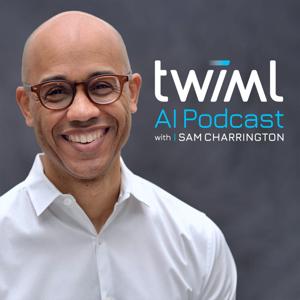

Today, we're joined by Stefano Ermon, associate professor at Stanford University and CEO of Inception Labs to discuss diffusion language models. We dig into how diffusion approaches—traditionally used for images—are being adapted for text and code generation, the technical challenges of applying continuous methods to discrete token spaces, and how diffusion models compare to traditional autoregressive LLMs. Stefano introduces Mercury 2, a commercial-scale diffusion LLM that can generate multiple tokens simultaneously and achieve inference speeds 5-10x faster than small frontier models, paving the way for latency-sensitive applications like voice interactions and fast agentic loops. We also cover the open research challenges in diffusion LLM training, serving infrastructure requirements, and post-training for diffusion-based systems. Finally, Stefano shares his perspective on whether diffusion models can rival or surpass autoregressive LLMs at scale, the advantages for highly controllable generation, and what the future of multimodal diffusion models might look like.
The complete show notes for this episode can be found at https://twimlai.com/go/764.
 View all episodes
 By Sam Charrington

4.7
422422 ratings
Today, we're joined by Stefano Ermon, associate professor at Stanford University and CEO of Inception Labs to discuss diffusion language models. We dig into how diffusion approaches—traditionally used for images—are being adapted for text and code generation, the technical challenges of applying continuous methods to discrete token spaces, and how diffusion models compare to traditional autoregressive LLMs. Stefano introduces Mercury 2, a commercial-scale diffusion LLM that can generate multiple tokens simultaneously and achieve inference speeds 5-10x faster than small frontier models, paving the way for latency-sensitive applications like voice interactions and fast agentic loops. We also cover the open research challenges in diffusion LLM training, serving infrastructure requirements, and post-training for diffusion-based systems. Finally, Stefano shares his perspective on whether diffusion models can rival or surpass autoregressive LLMs at scale, the advantages for highly controllable generation, and what the future of multimodal diffusion models might look like.
The complete show notes for this episode can be found at https://twimlai.com/go/764.
1,093 Listeners
169 Listeners
301 Listeners
345 Listeners

228 Listeners
208 Listeners
202 Listeners

314 Listeners
99 Listeners
576 Listeners
143 Listeners
101 Listeners
226 Listeners
682 Listeners
34 Listeners