BY Robert Royal.
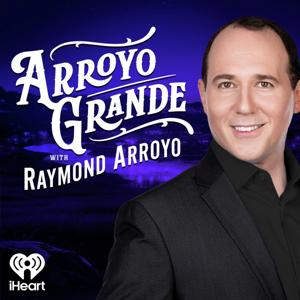
But first a note: We will be bringing you regular commentary here at TCT on the Conclave to elect the next pope, which begins this Wednesday, May 7. And as always, we'll also be covering other matters of interest in the everyday column, even during the voting. The Papal Posse (Raymond Arroyo, Fr. Gerald Murray, and I) will appear on EWTN in the regular Thursday 8 PM time slot. But I'd like to call your attention to the longer and more detailed reporting the three of us will provide - daily - on the Arroyo Grande podcast (the first episode from last Friday on "The Real Factors Shaping the Next Pope" may be viewed by clicking here). You can access all of those either on YouTube or wherever you listen to or watch podcasts. And in the meantime, to keep us from being entirely absorbed by the rumors, politics, and sheer horse-race of the Conclave, a personal reflection here about some longer-term perspectives on the world and sacred history.
Now for today's column...
I have a confession to make: the past dozen years ruined Rome for me. And it's my own fault. I suppose it was inevitable that someone who got drawn into the multitudinous labors of the Papal Posse would begin to feel that Rome itself had become an unpleasant task. All the controversy and confusion started to eclipse "the grandeur and the glory." But Rome has a way of surviving everything that threatens to obliterate it. And I expect that this week's Conclave will demonstrate once again, above and beyond all personal and passing episodes, that indestructible, historical truth.
Rome is a city that doesn't so much see history pass through as it accumulates much of what's important to our race. As Chesterton noticed when he visited here in 1929, people talk about the City founded on seven hills but forget that it, therefore, also has seven valleys that have become an "inexhaustible store of superimposed cultures and closely packed secrets of the past ; the sense of a place being mined for all the gold of human and divine glories ; brought up for ever out of an abyss of abundance, the depth and the richness of Rome."
This makes it the scene of both endless endings and boundless beginnings. The prospect of what may come after the dozen Francis years and in the years and centuries to come has gotten me thinking about my own long (humanly speaking) relationship to this city. In 1978, I spent a year - mostly idling, though with intent - on scholarship in Florence. But it was also the year that Pope Paul VI died, and we saw his funeral - as well as the election of two subsequent popes, John Paul I and, more consequentially, John Paul II. It was also the year that Ignazio Silone, a forgotten but seminal and internationally award-winning Italian writer, passed on to his own reward.
Silone was an anti-Fascist, when Fascism meant something concrete, not merely a slur to hurl at people you don't like. A naïve Communist in his early years, he broke with the party over Stalin and moved on to be a Christian "without a church," as he put it, mostly because he thought some in the Catholic Church of his days were too chummy with the Italian Fascists. He wrote one of the essays in The God That Failed, an anthology of brilliant thinkers - Arthur Koestler, Richard Wright, Stephen Spender, and André Gide - who saw through the pretensions of Communism as a kind of substitute religion decades earlier even than Solzhenitsyn. (I borrowed that title, slightly altered, for my own book The God That Did Not Fail: How Religion Built and Sustains the West.)
But I've been thinking in particular of Silone's novel The Seed Beneath the Snow - the final volume of a trilogy that included two other noteworthy tales: Bread and Wine and Fontamara. Cluny Media, which has been bringing out elegant editions of many titles of interest to Catholics and anyone who appreciates fine thought and writing, has republished all of them.
As Silone's title suggests, there's always hidden life present even be...




 View all episodes