
Sign up to save your podcasts
Or

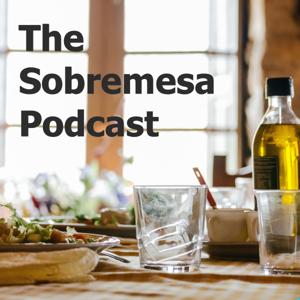


On this episode Alan is joined by Gregorio Alonso, Associate Professor in Hispanic History at the University of Leeds. We explore the 1812 Cádiz Constitution, a landmark document born in a time of siege and upheaval.
Gregorio takes us through the tensions between liberalism and Catholicism, the shaping of Hispanidad, and how these ideas influenced Spain and the loss of its empire. This conversation uncovers how faith, freedom, and imperial identity collide in one of Spain’s most fascinating historical documents .
Please donate at to make the podcast sustainable:https://www.buymeacoffee.com/thesobremey
Hours after the United States and Israel bombed Iran on Saturday morning, Spanish Prime Minister Pedro Sanchez released a statement which read: “We reject the unilateral military action of the United States and Israel that entails an escalation and contributes to a more uncertain and hostile international order...We demand immediate de-escalation and full respect for international law." He also condemned the Iranian retaliation missile and drone attacks on neighbouring Arab states.
Apart from the Norwegian foreign minister’s condemnation, Sanchez stood alone among European leaders in his willingness to call out US-Israeli aggression. Indeed as he attended the Goyas film awards on Saturday night, he told reporters: ““We are witnessing a violation of international law…Violence only produces more violence.”
To do so Eoghan is joined by Bécquer Seguín - associate professor of Hispanic Studies at John Hopkins University and who covers Spanish current affairs for the Nation Magazine. Just to note our discussion was recorded on Friday 27th of February - the day before the US-Israeli military aggression against Iran.
Please remember if you like what we are producing, please consider making a donation to our buy me a coffee page:
https://buymeacoffee.com/thesobremey
Today's guest is historian Helen Graham, who discusses her research into the brutal prison system under Francoist dictatorship. Her work shows how mass incarceration after the Spanish Civil War was only one part of a much wider system of control and surveillance — one that reached beyond prison walls into families, communities, and everyday life, shaping how millions of people experienced dictatorship.
Helen Graham is Professor Emerita of Modern European History at Royal Holloway, University of London, and the recipiant of the Walter Benjamin International Memorial Prize 2025-6. Amongst other works, she is the author of ‘The Spanish Republic at War 1936–1939’, The Spanish Civil War: A Very Short Introduction (a new edition of which is out this summer) and the forthcoming ‘After the Spanish civil war: the twentieth century through five antifascist lives’
Please remember if you like what we are producing, please consider making a donation to our buy me a coffee page:
https://buymeacoffee.com/thesobremey
Helen's essay on prisons: https://pure.royalholloway.ac.uk/en/publications/not-recognizing-the-political-analysing-francos-long-dictatorship/
Also the trailer for film we discuss, Modelo 77: https://www.youtube.com/watch?v=Y1e-NJObVFQ
And the documentary: https://www.youtube.com/watch?v=SKVktmqsx4Q&rco=1
Originally released 01 August 2024
On the eve of the Spanish Civil War in July 1936, Barcelona was set to host the Popular Olympic games. Bringing together athletes from around the world under the banner of anti-fascism, the event was meant to take place just weeks before the Nazi Olympics in Berlin. Yet as the athletes gathered for the opening ceremony, the military coup was launched, in turn, leading to revolution in the city's streets.
In this podcast, Catherine talks to James Stout, author of 'The Popular Front'. Barcelona and the 1936 Popular Olympics', about the organisation of the event, the nature of popular sport in Catalonia, and how the Popular Olympics can be seen as both one of the first casualties of the Spanish Civil War and also one of the first great examples of international anti-fascist solidarity and cooperation.If you like what we are producing, please consider making a donation at our Buy Me a Coffee page here - https://www.buymeacoffee.com/thesobremey
Originally published: 12/07/22
This week's guest is sociologist Nicole Iturriaga who Eoghan talked to about her new book 'Exhuming Violent Histories: Forensics, Memory and Rewriting Spain's Past'. The book provides a detailed case study of Spain’s best-known historical memory organization, the Association for the Recovery of Historical Memory which since 2000 has been responsible for exhuming many of Spain's Franco-era mass graves. In the book, Nicole argues that part of the association's success has been due to its use of a depoliticised approach, i.e. using forensic science and family testimony, rather than overtly political arguments, to force the issue of Francoist state terror back onto the public agenda. It is available to buy on amazon (including in a very reasonable ebook version): https://www.amazon.es/gp/product/B094YXN968/ref=dbs_a_def_rwt_hsch_vapi_taft_p1_i0
Jim Jump, the editor of the poetry anthology "Poems from Spain: British and Irish International Brigaders on the Spanish Civil War", joins Alan to discuss the collection of poems that stretch the length Spanish Civil War and after. All poems were written by men and women participating in the International Brigades. They cover the lives of the poets themselves, recite poetry from the book and discuss why it was so prominent in the war.
The collection can be brought from the publishers Lawrence and Wishart's website here
If you like what we are producing, please consider making a donation at our Buy Me a Coffee page here - https://www.buymeacoffee.com/thesobremey
2025 was the year Spain stood out in Europe over its clear opposition to the Israeli genocide in Gaza, as well as over its critical stance towards the Trump-led military spending spree in NATO. With the fall of the Social Democrats in Germany, the country’s prime minister Pedro Sanchez also reinforced his position within the EU as the major figurehead of the continent’s centre-left.
Yet, at home Sanchez has faced a series of crises and scandals within his own Socialist Workers Party while his complicated parliamentary majority hung by a thread while far-right Vox surged in the polls.
To discuss the year’s events, Alan and Eoghan are joined by regular end of year guest IE university professor and Galician beach bar owner Joe Haslam.
If you like what we produce, and want more, please think of contributing and making the podcast sustainable going forward:
https://buymeacoffee.com/thesobremey
Spain is the European Union’s largest fruit and vegetable producer, with exports topping €18 billion in 2024. Yet those whose work sustains this lucrative sector face widespread underpayment and labour rights violations - with some facing extreme exploitation bordering on modern slavery.
As Eoghan tells Alan, this model should not be seen as some antiqued part of the Spanish economy but rather in its employment of digital surveillance techniques and with the growing financialization of the agricultural sector, Spain is at the cutting edge of European farming.
If you like what we produce, and want more, please think of contributing and making the podcast sustainable going forward:
https://buymeacoffee.com/thesobremey
The investigation discussed in this episode:
1. Revealed: EU Farm Subsidy ‘Bankrolls’ Widespread Labour Abuse
https://www.desmog.com/2025/09/29/revealed-eu-farm-subsidy-bankrolls-widespread-labour-abuse/
2. In Spain, Farmworkers Are Dying in the Heat https://jacobin.com/2025/10/spain-farmworkers-heatstroke-climate-crisis
As Spain marks the fiftieth anniversary of the death of dictator Francisco Franco, Eoghan sits down for a wide-range interview with Sebastiaan Faber, Professor of Hispanic Studies at Oberlin College and author of Exhuming Franco. They discuss the very contested institutional, political and ideological legacies of the dictatorship - as well as the continued fascination with Franco on the far-right in the United States.
https://buymeacoffee.com/thesobremey
In this episode of The Sobremesa Podcast, Alan McGuire speaks with historian Dr. Jorge Marco, author of Paradise in Hell: Alcohol and Drugs in the Spanish Civil War (University of Wales Press).
They explore how intoxication shaped the Spanish Civil War. Not just on the battlefield, but in propaganda, gender roles, and moral control. From the image of the “drunken enemy” to the ideal of the sober, disciplined soldier, Marco reveals how alcohol and drugs became tools for defining masculinity, nationhood, and the enemy.
If you like what we produce, and want more, please think of contributing and making the podcast sustainable going forward:
https://buymeacoffee.com/thesobremey
From the publisher's feed
The Sobremesa Podcast is about modern-day Spanish society, politics and history, without the stereotypes. Please donate at to make the podcast sustainable:…
303 Listeners

5,482 Listeners
3,202 Listeners

298 Listeners

1,461 Listeners

837 Listeners

170 Listeners

112 Listeners

973 Listeners
352 Listeners
15,707 Listeners
354 Listeners
35 Listeners

2,457 Listeners
331 Listeners