
Sign up to save your podcasts
Or

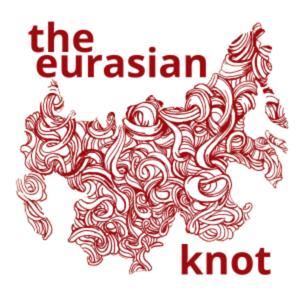

A new youth subculture emerged in the Soviet Union in the late 1940s and early 1950s–the Stiliagi. Roughly translated as “the stylish,” these youths, the majority of whom were men, wore flashy hairstyles and bright colored clothes, danced to jazz, and were obsessed with Western aesthetics. And of course, this style broke Soviet conventions, challenged social norms, and expanded gender performance. Though the exact origin of the Stiliagi is murky, it arose alongside other Western youth subcultures–the beatniks, the mods, the rockers–of the immediate post-WWII libertinism. The Stiliagi put the Soviet Union squarely within the history of a more globalized youth culture. But, what did it mean to be a “stiliagi”? Who were they? How did the style offer alternative forms of Soviet masculinity? How did the Soviet authorities react to these youths? And how did this subculture differ from its Western counterparts? The Eurasian Knot spoke to Alla Myzelev about her new book on the subculture, Stiliagi and Soviet Masculinities, 1945–2010: Fashion as Dissent, to get some answers.
Guest:
Alla Myzelev is a Professor and Chair of the Department of Art History and Museum Studies at SUNY Geneseo. She is currently editing a book titled Challenging Imperial Narratives Through Visual Art and Material Culture in Eastern Europe and Central Asia. Her new book, Stiliagi and Soviet Masculinities, 1945–2010: Fashion as Dissent, is published by Manchester University Press.
Hosted on Acast. See acast.com/privacy for more information.
 View all episodes
 By The Eurasian Knot

4.8
178178 ratings
A new youth subculture emerged in the Soviet Union in the late 1940s and early 1950s–the Stiliagi. Roughly translated as “the stylish,” these youths, the majority of whom were men, wore flashy hairstyles and bright colored clothes, danced to jazz, and were obsessed with Western aesthetics. And of course, this style broke Soviet conventions, challenged social norms, and expanded gender performance. Though the exact origin of the Stiliagi is murky, it arose alongside other Western youth subcultures–the beatniks, the mods, the rockers–of the immediate post-WWII libertinism. The Stiliagi put the Soviet Union squarely within the history of a more globalized youth culture. But, what did it mean to be a “stiliagi”? Who were they? How did the style offer alternative forms of Soviet masculinity? How did the Soviet authorities react to these youths? And how did this subculture differ from its Western counterparts? The Eurasian Knot spoke to Alla Myzelev about her new book on the subculture, Stiliagi and Soviet Masculinities, 1945–2010: Fashion as Dissent, to get some answers.
Guest:
Alla Myzelev is a Professor and Chair of the Department of Art History and Museum Studies at SUNY Geneseo. She is currently editing a book titled Challenging Imperial Narratives Through Visual Art and Material Culture in Eastern Europe and Central Asia. Her new book, Stiliagi and Soviet Masculinities, 1945–2010: Fashion as Dissent, is published by Manchester University Press.
Hosted on Acast. See acast.com/privacy for more information.

821 Listeners

1,067 Listeners

804 Listeners
146 Listeners

351 Listeners
375 Listeners
145 Listeners

22 Listeners

498 Listeners

1,880 Listeners

338 Listeners

146 Listeners

469 Listeners

202 Listeners

77 Listeners