
Sign up to save your podcasts
Or



Based on Podcast App listening data
Gerard Casey, professor emeritus of philosophy at University College, Dublin, joins me to discuss the philosophy of fascism, which he describes as a form of irrationalism. Sponsor: Simple Habit Show notes for Ep. 1474
Dan Fishman recently became executive director of the Libertarian Party. He joins me to discuss (among plenty of other things) his political evolution, where he sees the party going, and whether people are naturally libertarian or anti-libertarian. Show notes for Ep. 1473
Julie Borowski, the popular libertarian content creator, has just released a children's book called Nobody Knows How to Make a Pizza, in which she illustrates how, without a central planner, amazing feats of production that could be carried out (or even fully understood) by no single individual take place. We then discuss the state of the "liberty movement" in 2019. Sponsor: Skillshare Show notes for Ep. 1472
Today I am joined by two libertarians: Dr. Michael Edelstein and Dr. David Ramsay Steele. Together they wrote Three Minute Therapy: Change Your Thinking, Change Your Life, which applies an easily replicated technique to conquering all sorts of undesirable conditions and behaviors: depression, excessive drinking, procrastination, overeating, and many more. Sponsor: Simple Habit Show notes for Ep. 1471
Vince Vaughn has scores of Hollywood films to his credit -- from The Lost World: Jurassic Park to Hacksaw Ridge and many in between -- and has been a Ron Paul supporter since the 2008 presidential campaign. He and Tom discuss Hollywood, libertarianism, and American politics. Show notes for Ep. 1470
Not long ago, the great libertarian foreign policy expert Scott Horton joined me for a full week's worth of episodes. We got some great feedback and a little criticism, so Scott and I decided that replying to critics makes for great episodes, too. So we're talking Syria, Iran, and plenty more in today's episode. Sponsor: Simple Habit Show notes for Ep. 1469
John Locke tries to rest the legitimacy of government on the consent of the people. But can they really give consent? Locke himself admitted that unanimous consent was impossible, but thought the state could be legitimized anyway. Lysander Spooner thought otherwise: if we as individuals do not consent to an arrangement, it cannot be enforced on us. Show notes for Ep. 1468
We conclude Brion McClanahan Week with a discussion of a historical topic that fascinates us both: the Russian Revolution. We then clear up some loose ends and bring this week of history to a close. Sponsor: Simple Habit Show notes for Ep. 1467
Brion McClanahan's podcast tagline is "think locally, act locally." We take a deep dive into what this means, including the federalist/decentralist tradition in America, plus: what about issues that seem to require cooperation beyond the local level? Sponsor: Policy Genius Show notes for Ep. 1466
Well, here's the question nobody is allowed to ask, since even to ask it is to invite anti-intellectual, third-grade-level responses. But presumably a region that generated Thomas Jefferson, George Washington, James Madison, George Mason, James Monroe, Edgar Allen Poe, Mark Twain, William Faulkner, and Walker Percy might have something to be said for it. So as Brion McClanahan Week continues, we take a look at this question. Sponsor: Skillshare Show notes for Ep. 1465
From the publisher's feed
Ranked by our users in the last 21 days
3,954 Listeners
5,578 Listeners
4,865 Listeners
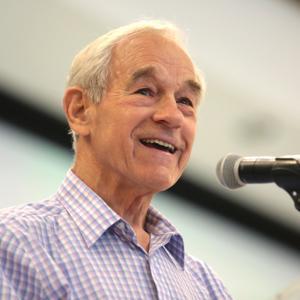
2,265 Listeners
963 Listeners

1,140 Listeners
31 Listeners

326 Listeners
484 Listeners

2,170 Listeners

5,303 Listeners
920 Listeners

499 Listeners

15,943 Listeners
543 Listeners