
Sign up to save your podcasts
Or

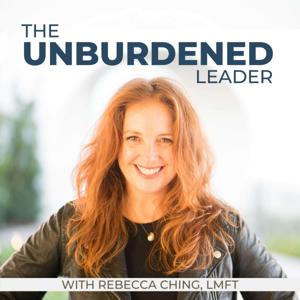


We are seeing conflict move so quickly to chaos these days.
Anger, entitlement and self-preservation can kick into overdrive when you feel devalued. We forget about relationships and fight to be right, no matter the cost.
Civility is pushed aside more and more as we navigate our differences.
The wounds of relational trauma, betrayal, neglect, poverty, racism are playing out in so many spaces of public gatherings and personal relationships.
But now is not the time to throw our hands up and walk away from this messy state of affairs.
Yes, there is a lot happening that takes us out of our space of leading from confidence, clarity and calm. It is inevitable that our emotions will overwhelm us at some point.
But it is essential that we cultivate spaces together that encourage conflict that moves us towards solutions, not sensational soundbites.
We have to look at how we communicate and the language we use. We have to intentionally set expectations and guidelines for what is okay and what is not okay.
We have to lead with dignity, which means doing the deep inner work so we can show up and lead by facing our biases and recognizing the inherent worth of every person.
Today’s guest fosters civil dialogue and inspires communities to build strength, courage and purpose.
Rosalind Wiseman is the founder of Cultures of Dignity; an organization that shifts the way communities think about our physical and emotional wellbeing by working in close partnership with the experts of those communities–young people, educators, policymakers, and business and political leaders.
She is also an internationally recognized author of multiple books, including Queen Bees and Wannabes, the
groundbreaking best-seller and basis for the movie Mean Girls and its subsequent Broadway adaptation.
Listen to the full episode to hear:
Learn more about Rosalind Wiseman:
Learn more about Rebecca:
Resources:
We all grew up being told who was the creative one, who was the smart one, and who was the sporty one. There was no space for anyone to hold a multiplicity of skills and interests.
Of course, none of us hold just one identity, skill or interest.
So an identity crisis–or multiple identity crises–are inevitable.
But an identity crisis can be a powerful turning point in your life and work.
On one hand, you can keep doing what you’ve been doing—what you’re supposed to do. Or you can take a big risk and do something different.
We all have PhDs on what we are supposed to do. We have breathed in the messages on what it means to be a success and responsible. Staying on the current path is oddly comfortable—even when it sucks.
When you decide to honor the desire to grow and make a pivot with your work or take a risk with a significant relationship in your life, you are entering into a stage of growth that can be lonely and a bit disorienting.
But leaders like us know there’s more to life than the status quo.
My guest went through her own shifts in her career and identity and is growing a business and a life that looks very different from her original life plan.
Lindsay Padilla, PhD is an ex-community college professor who accidentally started a business while on the tenure track. Now, as the CEO and co-founder of Hello Audio, Lindsay challenges online industry norms of unfinished courses and unconsumed content with her product.
Listen to the full episode to hear:
Learn more about Lindsay Padilla, PhD:
Learn more about Rebecca:
Leadership and discomfort are inextricably connected.
So much personal and professional development teaches us to figure out the problem and quickly move on.
But true resilience and growth require more than just the decision to “let it go.”
Leading well requires tolerating the discomfort of being seen, not just at your filtered best, but really being seen in your strengths and also when you make a bad decision and navigate the fall-out, respond defensively to criticism, and struggle with your confidence.
Bypassing or shutting down discomfort leads to numbing and disconnecting instead of feeling through the hard things.
It is essential that we get to know the burdens we carry and learn how to heal them so we can lead ourselves and others with more presence and generosity.
On today’s show, it is an honor to give you a window into the friendship I have developed with two colleagues of mine, Natalie Gutierrez and Kim Paulus. These friendships have become so valuable to me because safe, trusted relationships that can hold up a mirror to my growth edges are so rich and valuable.
Natalie and Kim help me kick off a new series for the podcast: The Unburdened Leader Roundtable Discussions, where I have conversations with colleagues, friends, and other leaders on topics we care deeply about.
Natalie Gutierrez is Puerto-Rican LMFT whose work is dedicated to providing trauma-informed psychotherapy to Black, Indigenous, and other People of Color/Mixed race. She supports her clients in healing legacy burdens, ancestral trauma and the impact of colonial trauma.
Kim Paulus is a biracial, queer psychotherapist and IFS clinical consultant in private practice in Oakland, California. With a background in social justice activism, she serves primarily the LGBTQIIA+ and BIPOC communities, including multiracial people and adult children of immigrant parents.
Listen to the full episode to hear:
Learn more about Kim Paulus, LMFT:
Learn more about Natalie Gutierrez, LMFT:
Learn more about Rebecca:
Resources:
Note for Clarity:
A brief explanation of some language and acronyms you will be hearing from Kim, Natalie, and myself in this segment of our roundtable conversation. At the time of this recording, the three of us are in a couple of Internal Family Systems trainings, which we often refer to as IFS. One of these IFS trainings we refer to a lot is a pilot IFS Advanced Training Program (ATP) where we were invited to participate in a year-long training program to become Assistant Trainers (ATs). The three of us are also serving on a leadership team in an IFS Level One training.
Everyone gets angry.
And most people have learned to hide their anger–often at great costs.
There is a LOT of baggage we carry around the emotion of anger.
These burdens come from our faith traditions, culture, family of origin, work, school and inform your relationship with anger today.
We are constantly navigating the many rules of what is ok and what is not ok when it comes to expressing, let alone feeling, anger.
In the process, anger can slowly start to consume us. Anger overwhelms and it feels like it owns us—even as we’re doing our best not to show it.
But contrary to what many of us have been taught, anger is an important and valuable emotion.
You can own your anger instead of your anger owning you.
To own your anger, you’ve got to trust yourself. You’ve got to be able to hang out with the anger you feel so you can identify where it’s coming from and what it’s trying to tell you.
My guest today is no stranger to rumbling with her anger and leaning on IFS to help her better lead her emotions and her responses to them. Sacha Mardou is a cartoonist, author of the graphic novel series, Sky in Stereo, and many webcomics about therapy.
Bringing readers with her on her therapy journey has changed everything for both Sacha and those of us who get to experience the profound impact of her work–making the world feel a little less lonely as we navigate the vulnerability of being human.
Content Alert: There is mention in this conversation of sexual assault. We do not go into detail but it is mentioned in reference to a family member of Sacha’s around the 27 minute mark. Take care and don’t push through if it is too much.
Listen to the full episode to hear:
Learn more about Sacha Mardou:
Learn more about Rebecca:
Resources:
We love to be right. So much so, that we often trade being right for being in relationship.
Without relationships, we cannot experience meaningful change because the change we desire is rooted in relationships, not the certainty of being right.
But dang, the expediency and certainty of being right sure are seductive.
Pursuing being right cultivates the tunnel vision of perfectionism which runs rampant over our curiosity and creativity–the very ingredients needed for us to have a sustained impact.
When we focus more on creating change instead of criticizing ourselves or others, we are freed up to get creative about our sustainability practices and modeling this for others too.
But too often, perfectionism has a party. We want to get it right from the start and fear making mistakes.
Or we worry about sustaining the work we are already doing, so we don't bother starting, counting ourselves out, believing our small actions do not make a difference.
But they do.
Climate solutions require collective action.
Most solutions that are sustainable require collective action and leaders focused on being right end up cultivating conflict and criticism instead.
Leaders who are committed to relationships end up cultivating creativity, community and the collective action we need to create sustainable solutions. We can all start or continue our sustainability journey with this in mind.
My guest today leads many on the imperfect journey of sustainability.
Ashlee Piper is a political strategist turned vegan and eco-lifestyle expert and author of the bestselling–and very funny–book, Give a Sh*t: Do Good. Live Better. Save the Planet. Her work has been featured in/on Washington Post, Real Simple, BuzzFeed, GLAMOUR, NBC, CBS, and ABC, to name a few.
Listen to the full episode to hear:
Learn more about Ashlee Piper:
Learn more about Rebecca:
Resources:
How you lead yourself impacts how you lead others.
And how you lead yourself and others has a ripple effect in all the spaces you live and work.
It really is that simple. And that important.
Unaddressed pain from difficult life experiences and traumas rob us of our capacity for connection.
Unaddressed burdens of trauma impact how you make decisions on everything from parenting to public policy.
Both individual and collective traumas perpetuate disconnection in all the spaces we live and work in.
The ripple effect of disconnection takes us out of our innate ability to genuinely care about the well being of others. We become hyper focused on our own safety - sometimes at extreme costs to others.
When we make decisions based on fear and self-protection, we end up generating more fear and dehumanize the people we lead.
This is weighing us down individually and collectively. Our unaddressed trauma generates very real consequences in our communities.
As my guest today wisely states, we have forgotten how to be human with each other. But when we do remember how to be human with each other, we can create more peaceful, more equitable, and more just communities.
Dr. Robyn Henderson-Espinoza is a Transqueer Activist, Latinx Scholar, and a Public Theologian. They are the Founder of Activist Theology Project, and the author of Activist Theology & their forthcoming book Body Becoming.
Listen to the full episode to hear:
Learn more about Dr. Robyn Henderson-Espinoza:
Learn more about Rebecca:
The commitment to being an engaged citizen is a commitment to being an engaged leader.
When you make the choice to invest your energy into staying informed about social and political issues, you are investing in your leadership.
I’m hearing more and more from leaders who are prioritizing leading with justice, equity, and community care in mind. So if the kind of leader you truly want to be means being an engaged citizen, one who is informed about the social and political issues facing the people they lead, you’re in good company.
But in today’s deeply polarized culture, that’s hard work.
It can feel like resting in the midst of that work is like tapping out of the biggest fight of your life.
But being an engaged citizen requires rest. Rest is not tapping out.
Without rest, you won’t have the energy to question the people & institutions in power. You won’t have the capacity to extend care to those who are often forgotten or underestimated.
Here is a hard truth - many are counting on your fatigue and disconnection. People are literally counting on you not caring.
So what can we do in our circles of influence to encourage others to join us in paying attention? How can we do our parts in leading an engaged citizenry?
Representative Jennifer Konfrst (HD 43) is starting her second term in the Iowa House of Representatives serving residents of Windsor Heights, Clive, and West Des Moines. She was selected by her caucus to serve as Democratic Whip. Rep. Konfrst is an associate professor in Drake University’s School of Journalism and Mass Communication, and has worked in media and communications roles throughout her career.
Listen to the full episode to hear:
Learn more about Rep. Jennifer Konfrst:
Learn more about Rebecca:
Resources
Everybody’s carrying a burden that’s weighing them down.
If you dare to care, it is inevitable you will end up carrying the burdens from grief, betrayal, and rejection.
And these burdens are often unseen.
These invisible struggles fuel loneliness, shame, and despair. Eventually, the unaddressed burdens we carry start to impact our ability to live and lead in ways that are important to us. They take their toll on the quality of our work, our relationships, and our well-being.
Yet, instead of transforming the pains from abuse, betrayal, loss, shame, poverty, chronic health struggles and so on, we see them as a poor reflection on our ability to lead, succeed, and provide.
We have breathed in the clear and emphatic message: Hide your pain.
These toxic messages around struggle take a dangerous toll on how we care for ourselves and others.
To engage our teams, support wellbeing, and lead through change, we must model and explore real and honest emotions.
My guest today is dedicating his life’s work to change culture’s toxic messages around struggle and how we approach the burdens we carry.
I am so thrilled Dr. Frank Anderson came back for a continuation of our important conversation we started last month.
Dr. Frank Anderson is one of the nation's leading mental health professionals as a psychiatrist and psychotherapist. Committed to promoting compassion, hope, healing, and non-violence in the world, Frank specializes in the treatment of trauma and dissociation and is passionate about teaching brain-based psychotherapy and integrating current neuroscience knowledge with the Internal Family Systems model of therapy. He also travels around the world as a proponent and instructor of the IFS modality.
Listen to the full episode to hear:
Learn more about Frank Anderson, MD:
Learn more about Rebecca:
Resources:
Toxic cultures–at home, school, work, in faith communities–make it incredibly hard to do the right thing.
Choosing to risk your reputation or livelihood when you want to move from being a bystander to standing up for what is right is a bind too many face when they want to say ‘no more’ to abuses of power.
Yes, we need to move beyond being passive bystanders and be better allies. Yet I want to acknowledge that the stakes are high in moving from bystander into the spotlight.
It is challenging to speak up when the safety and livelihood of a bystander are pitted against standing up to abuses of power.
The fear of retaliation or becoming a target of abuse is real. So is lack of trust that speaking up will impact change.
Being a bystander and watching harm being done to someone takes its own toll on your health and your confidence when the culture you are in supports secrecy and silence.
My guest today is deeply committed to changing the impact of the bystander effect.
She is calling on leaders to shift organizational cultures of all kinds so bystanders feel empowered to speak up instead of staying silent and colluding with toxic work environments.
Tiffany Bluhm is the author of Prey Tell: Why We Silence Women Who Tell the Truth and How Everyone Can Speak Up. She is a sought after speaker, writer, and co-host of the popular podcast Why Tho, a show answering the existential and nonsensical questions we ask ourselves. As a minority, immigrant woman with a interracial family, she is passionate about women’s equality, justice and dignity.
Listen to the full episode to hear:
Content Warning: This episode includes discussion on the impact of sexual assault and rape culture.
Learn more about Tiffany Bluhm:
Learn more about Rebecca:
From the publisher's feed

2,513 Listeners

111,831 Listeners
279 Listeners

365 Listeners

41,346 Listeners
1,105 Listeners

18,895 Listeners
368 Listeners