
Sign up to save your podcasts
Or

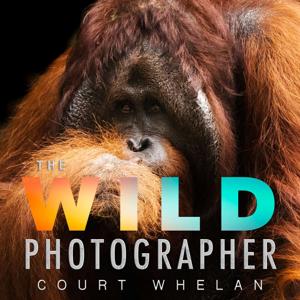


There’s a big difference between taking a photo of wildlife and making a wildlife photograph.
That’s really the heart of this episode. In Wildlife Photography 102 and 103, we move beyond the basics and into the field-tested techniques that help transform a good wildlife sighting into a more captivating, artful, professional-looking image.
This isn’t about needing the fanciest camera or the biggest lens. It’s about learning how to stack the deck in your favor, first with Technique... choosing your angle, understanding light, reading behavior, waiting for the moment, managing your background, and dialing in the right settings so that when the magic happens, you’re ready for it. And, why the best wildlife photographers are often the ones who watch first and shoot second.
Then we shift into the Settings side of the equation: why shooting in RAW is such a game changer, why I love manual mode with Auto ISO, how to think about shutter speed for calm wildlife versus true action, and when to use burst mode or pre-record features to capture moments that happen faster than your brain can react.
The overall goal? To move past the “field guide shot” and create wildlife images that feel more alive, more intentional, and more memorable.
In This Episode
We cover:
Final Thoughts
Wildlife Photography 102 and 103 is really about becoming more intentional and creating art vs. just documenting what you saw. It’s the shift from “I saw something amazing” to “I made something compelling out of the moment.”
That comes from little choices that add up: getting lower, watching the background, waiting for behavior, catching the light in the eye, choosing the right shutter speed, and giving yourself room to edit. None of these techniques require perfection. They just require awareness — and a willingness to slow down, observe, and make decisions before the moment disappears.
Court's Websites
Sponsors and Promo Codes:
There are few things more frustrating in wildlife photography than thinking you nailed the moment… only to later realize the animal is just a little bit soft. That is, you didn't freeze the wildlife movement.
In this episode of The Wild Photographer, we’re diving into one of the most practical, field-tested topics in wildlife photography: what shutter speeds you actually need to freeze motion.
But here’s the important part: not all movement is created equal. A sleeping polar bear, a restless lion, a nursing cub, a walking raccoon (any raccoon photographers out ther?), a sparring bear, a flying bird, and a twitchy little forest bird all require different thinking. And while faster shutter speeds are usually safer, they come with trade-offs: higher ISO, more noise, wider apertures, less depth of field, or the need to lean on de-noise software later.
We’ll start by separating two types of movement: camera movement and subject movement. Camera shake can sometimes be handled with the classic “one over focal length” rule, image stabilization, tripods, monopods, or good bracing technique. But subject movement? That’s a whole different beast — sometimes literally.
From there, we walk through practical shutter speed ranges for different wildlife scenarios, from resting animals all the way up to fast, frenetic movement like birds in flight, pouncing predators, or fast-twitch action. We also talk about when not to freeze motion, because intentional motion blur can be one of the most creative ways to make your wildlife photography stand out.
The goal here isn’t to memorize a rigid formula. It’s to build a mental field guide so that when the action starts, you can make fast, confident decisions — instead of fumbling with settings while the cheetah, bear cub, or twitchy bird does something spectacular and then immediately pretends nothing happened.
Here’s the summary list of shutter speeds discussed in the episode:
Wildlife Scenarios | Recommended Shutter Speed Range
Resting animal / no movement | 1/100 to 1/250 sec
Slightly restless animal / periodic movement | 1/200 to 1/320 sec
Restful interaction — nursing cubs, gentle behavior | 1/250 to 1/500 sec
Steadily moving but calm — slow bear, relaxed walking, gentle movement | 1/320 to 1/600 sec
Playful interaction — gorilla baby playing, active family behavior | 1/500 to 1/800 sec
Walking or trotting mammal | 1/800 to 1/1250 sec
Fast movement — sparring, chasing, rolling, running | 1/1600 to 1/2000 sec
Frenetic movement — birds in flight, pouncing, twitchy action | 1/1600 to 1/3200 sec
Extremely fast wings — hummingbirds, insects, wingbeats | 1/4000 to 1/8000 sec may help, but even this may not fully freeze wing motion
Twitchy birds on branches | Can range from 1/250 to 1/1600 sec, depending on timing
Intentional motion blur | Start around 1/40 sec, then experiment slower
Slow-motion blur experiments | Try 1/20, 1/10, 1/8, 1/5, or 1/2 sec
Panning wildlife | Often around 1/40 to 1/20 sec
Handheld landscapes | Absolute slow end around 1/50 sec, but often safer at 1/200 to 1/250 sec
Tripod landscapes | Much slower shutter speeds are possible because the subject usually isn’t moving, and tripods take out all hand movement.
Court's Websites
Sponsors and Promo Codes:
In this episode of The Wild Photographer, Court digs into one of the most practical, important, and occasionally nerve-wracking topics in travel photography: how to travel with camera gear safely and effectively.
If you’ve ever walked through an airport with thousands of dollars of camera equipment on your back, you know the feeling. You don’t want that bag leaving your side, you don’t want your lenses rattling around, and you definitely don’t want to arrive in Botswana, Alaska, Borneo, or anywhere else only to discover that you missed packing something or have something break in transit.
After 20-plus years of traveling the world as a professional photographer, wildlife guide, and expedition leader, Court has developed a very practical system for getting gear from home to the field and back again. This episode covers everything from choosing the right camera bag to navigating airline restrictions, packing lenses properly, dealing with lithium batteries, deciding whether to bring a laptop, evaluating tripods and monopods, and keeping gear clean in dusty, wet, muddy, salty, or otherwise gear-hostile environments.
The big theme throughout this episode is that traveling well with camera gear is not about bringing every accessory you own or treating your equipment like a museum artifact. It’s about building smart habits, reducing risk, staying organized, and protecting the gear enough that it can do what it’s meant to do--help you make great photos in wild places.
Products Mentioned + Links:
Shimoda Designs Action X40
Camera backpack mentioned by Court as one of his favorite travel and field bags.
https://shimodadesigns.com/action-x40-v2-backpack-black/
Peak Design
Camera bags, clips, straps, tripods, and carry accessories.
https://www.peakdesign.com/
Peak Design Capture Camera Clip
Camera clip that attaches to a backpack strap or belt.
https://www.peakdesign.com/products/capture
Peak Design Camera Straps
Quick-release camera strap system.
https://www.peakdesign.com/collections/straps
Peak Design Carbon Fiber Travel Tripod
Compact travel tripod mentioned by Court.
https://www.peakdesign.com/products/travel-tripod
f-stop Gear
Adventure camera backpacks and modular camera inserts.
https://fstopgear.com/
ORTLIEB Waterproof Backpacks
Waterproof backpack options for wet, rainy, or boat-based travel.
https://us.ortlieb.com/collections/waterproof-backpacks
NOMATIC / McKinnon Battery Case
Battery case mentioned by Court for organizing three camera batteries.
https://www.nomatic.com/products/battery-case
PolarPro
Filters and camera accessories; Court mentions liking a sturdier PolarPro lens cloth that came with a filter.
https://www.polarpro.com/
ProGrade Digital Card Readers
Dedicated memory card readers for SD, CFexpress, and other card types.
https://shop.progradedigital.com/collections/sd-readers
Anker
Charging hubs and USB-C charging accessories.
https://www.anker.com/
Court's Websites
Sponsors and Promo Codes:
In this snapshot episode of The Wild Photographer, Court dives into one of the most beloved, affordable, and surprisingly powerful lenses in photography: the Nifty 50.
A “Nifty 50” is the nickname for a 50mm prime lens with a very fast aperture, often somewhere around f/1.8, f/1.4, or even f/1.2. These lenses are famous for being small, lightweight, relatively inexpensive, and capable of producing beautifully shallow depth of field. In other words, they can give your photos that dreamy background blur, strong subject separation, and low-light flexibility that usually comes with much more expensive gear.
While a 50mm lens may not seem like the obvious choice for nature and wildlife photography, Court makes the case that it deserves a permanent spot in just about every photographer’s kit. It may not be the lens you use all day, every day, but it can become your “X factor” lens — the one you pull out when you want a different look, a creative constraint, or a way to make images that feel a little more cinematic, intimate, or unexpected.
In this episode, Court explains what makes the Nifty 50 so useful, why it’s such a great lens for beginning photographers, how it can help you learn aperture faster, and where it fits into a travel, nature, portrait, cultural, or even video workflow.
Key Takeaways
Court Whelan on YouTube
Court shares weekly photography videos, editing tutorials, on-site video lessons, and practical tips for growing as a photographer.
https://www.youtube.com/@courtwhelan
The Wild Photographer Podcast
If you’re enjoying the show, please consider sharing the podcast with a friend and leave a review on Apple Podcasts, Spotify, or your podcast platform of choice. I truly appreciate it and and appreciate you for listening!
Court's Websites
Sponsors and Promo Codes:
In this episode of The Wild Photographer, Court follows up on his recent conversation about the “rules” of photography by exploring the equally interesting topic: when should we break them?
Photography rules exist for good reason. Things like the rule of thirds, sharp focus, proper exposure, level horizons, golden hour light, and clean composition all help us make stronger images more consistently. They give us a useful framework, especially when we’re learning or working quickly in the field. But as every photographer eventually discovers, those rules are not laws. They are shortcuts, not mandates.
At the end of the day, photography is art. A technically perfect image can fall flat, while a photograph that bends or completely ignores the rules can be the one that draws more attention and pop. Sometimes a slightly blurred subject, an "overly bright" exposure, a centered animal, a tilted horizon, or a chaotic scene full of visual clutter creates more feeling, more story, and more originality than the “correct” version ever could.
In this episode, Court walks through some of his favorite ways to break traditional photography rules with intention. He talks about exaggerated composition, center-weighted subjects, high-key and low-key exposure, motion blur, focusing somewhere other than the eyes, embracing bad weather, shooting at midday, experimenting with minimalism and maximalism, photographing the aftermath of a moment, and even leaning into star trails instead of trying to avoid them.
The big idea is not to throw every rule out the window and hope for the best. It’s to understand the rules well enough that you can recognize when breaking them might create a stronger photograph. When done thoughtfully, breaking the rules gives you more creative control and a way to make images that feel more personal, more memorable, and sometimes a whole lot more fun.
Court's Websites
Sponsors and Promo Codes:
In this snapshot episode of The Wild Photographer, Court shares a quick, practical guide to astrophotography — specifically, how to photograph the Milky Way with strong composition, sharp stars, and a plan for success.
Astrophotography can feel intimidating at first. You’re working in extreme low light, trying to make tiny points of starlight stand out in a big, dramatic way. Plus, you're likely using gear that is specialized, and let's face it, things are more challenging in the pitch dark.
But the good news is that with a solid plan, it's a fairly straightforward formula. With the right lens, a sturdy tripod, thoughtful foreground composition, and a few repeatable camera settings, you can create beautiful night sky images that will really help elevate your nature photography.
Links Mentioned in the Episode:
Sun Surveyor App
A planning app for tracking the sun, moon, and Milky Way, including augmented reality tools for scouting compositions.
https://www.sunsurveyor.com/
Timeanddate Moonrise and Moonset Calculator
Useful for checking moonrise, moonset, moon phase, moon direction, and timing for astrophotography planning.
https://www.timeanddate.com/moon/
Court Whelan on YouTube
Court’s YouTube channel includes photography tutorials, editing walkthroughs, and visual companions to topics discussed on the podcast.
https://www.youtube.com/@courtwhelan
Smallrig LED Light: https://amzn.to/3PlZvTT
Petzl Actik headlamp: https://amzn.to/4nUlwWE
Court's Websites
Sponsors and Promo Codes:
In this episode of The Wild Photographer, Court shares the core lessons he teaches at the beginning of every photography trip. These are the foundational tips that help guests quickly gain more creative control, troubleshoot challenging field conditions, and start making stronger nature and wildlife images from the very first outing.
Whether you’re heading on safari, photographing bears in Alaska, chasing landscapes in Iceland, or simply trying to get more out of your camera, these are the habits that can make a huge difference.
The 7 Things
Court's Websites
Sponsors and Promo Codes:
Ever looked at a photo and thought, “Why does that look so much better than mine?”
In this solo episode, I break down the real, practical ingredients that separate good photos from truly professional ones. I cover 10+ techniques, including special times of day, dialing in your gear, ISO, tripod use, shutter speed, black & white photography, high and low key photography, editing considerations and more.
The more of these techniques you stack, the more pro your photos will become!
Court's Websites
Sponsors and Promo Codes:
In this episode, Court sits down with pro safari photographer and guide, Richard de Gouveia, to get practical about what actually improves your wildlife and landscape images on the ground, from low-light decisions to vehicle positioning and daily image review.
A lot is covered in this episode with so many wonderful takeaways, including best-practices when planning an African photo safari, conservation photography, the best gear, thoughts on improving your odds in photo contests and his advice for sharing photos, particularly on social media (he's got an impressive following).
The thread that ties it all together is intention: making photographs that represent something, not just collecting wildlife sightings.
Key Takeaways:
Court's Websites
Sponsors and Promo Codes:
In this solo deep dive, I walk you through the exact camera setup I use before every shoot, every trip, and sometimes even check between battery or memory card swaps. These aren’t just preferences—they’re the important, yet often-overlooked settings that can make or break your ability to capture fleeting moments in nature photography.
We get into the philosophy behind shooting in manual with auto ISO, why I prioritize speed and readiness for wildlife over anything else, and how I customize my camera to react as fast as the scene unfolding in front of me. From autofocus strategies and drive modes to white balance and RAW vs. JPEG, this episode is all about removing friction so you can focus on what really matters: making great photographs.
Whether you’ve just unboxed a new camera or you want to fine-tune your current setup, think of this as your field-ready blueprint for getting your gear working for you, not against you.
Not all things do I check and reset daily, but here is a quick guide for those that I do look at near-daily:
Court's Websites
Sponsors and Promo Codes:
From the publisher's feed
The Wild Photographer is a podcast for wildlife, nature, landscape, and travel photographers who want to make better photos and get more out of photography.
Hosted by professional…
Episodes cover wildlife photography techniques, camera settings, lenses and gear, composition, landscape and travel photography, editing, creativity, and fieldcraft, along with conversations with professional photographers and visual storytellers.
Whether you're a beginner or an experienced photographer, expect approachable advice you can actually use in the field, plus plenty of adventure, curiosity, and enthusiasm for the craft.

697 Listeners
2,021 Listeners
411 Listeners
293 Listeners
124 Listeners
114 Listeners

120 Listeners
104 Listeners

12 Listeners

15 Listeners
5 Listeners

94 Listeners
42 Listeners

38 Listeners
29 Listeners