
Sign up to save your podcasts
Or



Based on Podcast App listening data
“Religion gives people certainty and it gives people solace,” says Brenda Wineapple in this week’s episode of The World in Time. “And according to
This week on the podcast, Donovan Hohn speaks with Brenda Wineapple, longtime member of the Lapham’s Quarterly editorial board, about her new book, Keeping the Faith: God, Democracy, and the Trial that Riveted a Nation, which narrates and excavates the history of The State of Tennessee v. John Thomas Scopes. That case, tried and adjudicated in 1925, was, in Wineapple’s estimation, the “trial of the century,” pitting Clarence Darrow, the renowned labor lawyer, against William Jennings Bryan, the “boy orator” and three-time Democratic presidential nominee. As Wineapple’s book reveals, many of the conflicts that animated the courtroom drama in Dayton, Tennessee—between democratic majority rule and academic freedom, between the pursuit of scientific truth and the consolations of faith—are with us still, a century after the verdict in the Scopes trial was delivered.
See Privacy Policy at https://art19.com/privacy and California Privacy Notice at https://art19.com/privacy#do-not-sell-my-info.
“There’s nothing more extraordinary than the world we live in,” says Elizabeth Kolbert in this week’s episode of The World in Time. “We are extremely tied up as humans for whatever reason. We have obviously evolved to pay a lot of attention to our fellow humans. But if we look beyond that, even for an instant, we see that the world is an absolutely amazing place. We are surrounded by species that all have long and rich evolutionary histories. They also have extraordinary talents that we can only appreciate by actually learning something about them. That parasitic wasp—it’s just another sort of pesky wasp or whatever. But if you delve into its life cycle, you find that every species has its own form of genius.”
See Privacy Policy at https://art19.com/privacy and California Privacy Notice at https://art19.com/privacy#do-not-sell-my-info.
“Father Mapple is in some strange, almost obscure way, a kind of negative double for Ahab,” says novelist and critic Charles Baxter in this episode of The World in Time. “Like Ahab, he is speaking from a great height. He begins his sermon by issuing orders. He tells all the congregants to sit down. And, you know, they have to listen to him. What other choice do they have? But what is important to me in ‘The Sermon’ is that he—how can I put this? He is the person who wants to bring a sense of proportion. And Ahab is the person who wants you to give up any sense of proportionality. It’s almost impossible to put things into perspective with Ahab. Father Mapple kind of supplies a warning and a possible lens for a reading of the entire novel. What Mapple is saying in his sermon, starting from the Book of Jonah, is that we have to learn humility. It is no use to flee from God. God will find us. And the last paragraph of ‘The Sermon’ is one of the most beautiful things, I think, that Melville ever wrote.”
See Privacy Policy at https://art19.com/privacy and California Privacy Notice at https://art19.com/privacy#do-not-sell-my-info.
“They were against all categories,” says Nicholas Boggs of James Baldwin and the men he loved in this week’s episode of The World in Time. “They really were outsiders, all of them. Sometimes people think, oh, well, he was just drawn to these men who were essentially straight, like he had some kind of complex or something. Maybe. But he was also just drawn to these crazy outsiders. As Yoran Cazac put it, they were ‘eating the same substance,’ and they happened to be of different nationalities and races and even sexualities. I appreciate that they had these complicated relationships where they saw each other across difference for who they were and what they shared. It’s what sustained Baldwin. It’s what enabled him to write. It’s what he wrote about.”
This week on the podcast, Donovan Hohn speaks with biographer Nicholas Boggs about Baldwin: A Love Story, a book three decades in the making. The episode follows James Baldwin on his transatlantic commutes, introducing listeners to four formative—and transformative—friendships with “crazy outsiders” that sustained Baldwin and that organize this new biography. We meet painter Beauford Delaney, the “spiritual father” and artistic mentor Baldwin found in Greenwich Village. In post-war Paris, we meet Lucien Happersberger, the Swiss émigré who would become Baldwin’s lover, muse, and lifelong friend. We meet Engin Cezzar, the “blood brother” who created for Baldwin a home in Istanbul. Finally, Boggs introduces us to Yoran Cazac, the French painter with whom Baldwin collaborated on his “child’s story for adults,” Little Man, Little Man, which Boggs helped bring back into print. Along the way, Boggs and Hohn dwell on the meaning of love in Baldwin’s life and work, and on his yearning for a home “by the side of the mountain, on the edge of the sea.” Hohn and Boggs also spend time with Otto Friedrich, who befriended Baldwin during his Paris years and would become Lewis Lapham’s editor and mentor. The episode concludes with a selection of entries about Baldwin from the journal Friedrich kept in 1949
See Privacy Policy at https://art19.com/privacy and California Privacy Notice at https://art19.com/privacy#do-not-sell-my-info.
From the publisher's feed
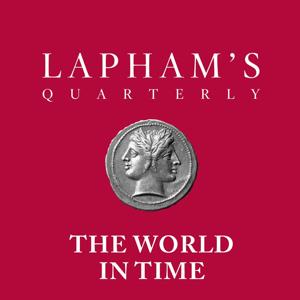
Donovan Hohn, the acting editor of Lapham's Quarterly, interviews historians, writers, and journalists about books that bring voices from the past up to the microphone of the present. New episodes…
Ranked by our users in the last 21 days

6,806 Listeners

312 Listeners

9,172 Listeners

504 Listeners

2,442 Listeners
287 Listeners

1,461 Listeners

134 Listeners

1,026 Listeners

516 Listeners

800 Listeners

624 Listeners

2,069 Listeners

16,055 Listeners

99 Listeners