The media is driven by the enormous profits made during election campaigns. Feeding the fury and the fear of all types is just good for business. Bob McChesney joins Paul Jay on theAnalysis.news podcast.
Transcript
Paul Jay
Hi, I'm Paul Jay. Welcome to theAnalysis.news podcast. And please don't forget there's a donate button at the top of the webpage and we have a matching grant campaign on. A generous donor put up ten thousand bucks: for every dollar you donate, it gets matched. If you're a monthly donor already, your donation will get matched for twelve months. If it's a new monthly subscription, that will get matched for twelve months. So, if you like what we do, now's a good time to donate.
Montage of local news reports
Hi, I'm Fox San Antonio's Jessica Headly. And I'm Ryan Wolfe -- our greatest responsibility is to serve our Treasure Valley communities -- the El Paso/Las Cruces communities -- eastern Iowa communities -- mid-Michigan communities. We are extremely proud of the quality, balanced journalism that CBS 4 News produces -- but we are concerned about problems plaguing our country.
Paul Jay
In many countries, newspapers and television news and media shows make no pretense of being anything other than partisans of political parties. In the United States news still postures as being more objective. But here the partisanship is to the political duopoly. The only politics that's worth covering is the horse race between the Democrats and the Republicans. The urgency of the climate crisis, the threat of nuclear war and militarization, union organizing, protests that aren't violent or enormous, the inequality gap, structural racism -- unless there's a video of egregious police violence -- are rarely considered newsworthy, if covered at all. The major cable news networks have lost even the pretense of impartiality, with the Fox model of throwing red meat to the base now fully adopted by CNN and MSNBC. The degeneration of political discourse is a great threat to civil rights and what's left of American democracy. To a large extent, when it comes to the media, it is driven by the enormous profits made during election campaigns. So, feeding the fury and the fear of all types? It's just good for business.
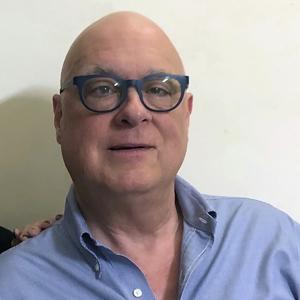
And so, what can we do about it? Now joining us is Robert McChesney. He's a professor emeritus in communication at the University of Illinois at Urbana-Champaign. He's written several books on media and politics, including People Get Ready, The Fight Against the Jobless Economy and a Citizenless Democracy and Blowing the Roof Off the 21st Century: Media, Politics and the Struggle for Post-Capitalist Democracy. Thanks for joining us, Bob.
Robert McChesney
My pleasure, Paul.
Paul Jay
I was just telling Bob off-camera that when my eight-year-old daughter was four, I said to read the cover of Bob's book. And she said, "People get ready to change your clothes" instead of change the world. And then she said, "People get ready to rule the world," which I thought was pretty good. Maybe she was inspired by the book.
Anyway, let's talk about the state of media. So, this election campaign we've just come through. Obviously, Fox's business model is to support the right wing of the Republican Party, not just the Republican Party, although Karl Rove and his type, some of the more center/center-right Republicans have a pride of place there.