
Sign up to save your podcasts
Or



Based on Podcast App listening data
The story of Noah and the flood is about the fact that God is committed to creation, and he’s ready to give new beginnings. He’s ready to give a second chance.
In Genesis 9, God says to Noah and his family the same thing he said to Adam and Eve. In some ways, it gives more detail into what kind of life we’re called into. In a sense, he’s saying, “You’re not really living a fully human life unless you maintain three great relationships.”
He’s calling us into 1) a relationship with the earth, which brings up the issue of ecology, 2) a relationship with all the people of the earth, which brings up the issue of justice, and 3) a relationship with the Lord of the earth, which brings up the issue of grace.
This sermon was preached by Dr. Timothy Keller at Redeemer Presbyterian Church on December 10, 2000. Series: Genesis – The Gospel According to God. Scripture: Genesis 9:1-17.
Today's podcast is brought to you by Gospel in Life, the site for all sermons, books, study guides and resources from Timothy Keller and Redeemer Presbyterian Church. If you've enjoyed listening to this podcast and would like to support the ongoing efforts of this ministry, you can do so by visiting https://gospelinlife.com/give and making a one-time or recurring donation.
Some of you are thinking, “The idea of divine judgment is upsetting, outdated, and irrelevant.” My goal is to respectfully show you that you’re absolutely wrong on all three counts.
The story of Noah and the flood is about divine judgment. And if we look at three things being taught in it, we’ll understand the meaning of judgment. And we’ll see what a difference these three things make for our lives.
We’re taught here about 1) the violence of man, 2) the pain of God, and 3) the solution to both.
This sermon was preached by Dr. Timothy Keller at Redeemer Presbyterian Church on December 3, 2000. Series: Genesis – The Gospel According to God. Scripture: Genesis 6:5-13; 7:17-18.
Today's podcast is brought to you by Gospel in Life, the site for all sermons, books, study guides and resources from Timothy Keller and Redeemer Presbyterian Church. If you've enjoyed listening to this podcast and would like to support the ongoing efforts of this ministry, you can do so by visiting https://gospelinlife.com/give and making a one-time or recurring donation.
It’s fratricide, it’s brother killing brother, it’s a sensational story—the story of Cain and Abel. People call this the first case study of murder, but I think that’s missing the point. It’s actually the first case study of life east of Eden.
In Genesis 4, we see three realities are always present in every day, every part of life east of Eden. It shows that in every aspect of life you always have three things operating: sin, grace, and the possibility of salvation.
Let’s look at what this teaches us about 1) the secrecy of sin, 2) the gentleness of grace, and 3) the subtlety of salvation.
This sermon was preached by Dr. Timothy Keller at Redeemer Presbyterian Church on November 26, 2000. Series: Genesis – The Gospel According to God. Scripture: Genesis 4:1-16.
Today's podcast is brought to you by Gospel in Life, the site for all sermons, books, study guides and resources from Timothy Keller and Redeemer Presbyterian Church. If you've enjoyed listening to this podcast and would like to support the ongoing efforts of this ministry, you can do so by visiting https://gospelinlife.com/give and making a one-time or recurring donation.
The Western romantic idea of human nature was that we’re inherently good. But the problem is over the last century, we’ve discovered that oppression and evil have not gone away but rather have erupted with ferocity over and over again regardless of social and political arrangements.
This has created a crisis for the modern secular person. But the book of Genesis not only accounts for what we see, but also gives us enormous hope that there’s something that can be done about it.
Let’s look at what Genesis teaches us about the human condition and the hope for healing through three vivid images: 1) the reaching, 2) the covering, and 3) the sword.
This sermon was preached by Dr. Timothy Keller at Redeemer Presbyterian Church on November 19, 2000. Series: Genesis – The Gospel According to God. Scripture: Genesis 3:20-4:2.
Today's podcast is brought to you by Gospel in Life, the site for all sermons, books, study guides and resources from Timothy Keller and Redeemer Presbyterian Church. If you've enjoyed listening to this podcast and would like to support the ongoing efforts of this ministry, you can do so by visiting https://gospelinlife.com/give and making a one-time or recurring donation.
Earlier in the twentieth century, the intellectuals of the Western world said it was our society and our institutions that were making us bad. If we changed them, then we’d get rid of atrocities, evil, war, racism, and poverty. But it hasn’t worked.
More and more, the Western world is looking back at Genesis, and I believe if you’re smart, you will too. In Genesis, we can see how sin and evil came into the world, and we can see the results. What we have here is a diagnosis and then what God shows us we can do about it.
Let’s look at Genesis 3 to see 1) the disease of sin and evil, and 2) the healing of the disease.
This sermon was preached by Dr. Timothy Keller at Redeemer Presbyterian Church on November 12, 2000. Series: Genesis – The Gospel According to God. Scripture: Genesis 3:7-20.
Today's podcast is brought to you by Gospel in Life, the site for all sermons, books, study guides and resources from Timothy Keller and Redeemer Presbyterian Church. If you've enjoyed listening to this podcast and would like to support the ongoing efforts of this ministry, you can do so by visiting https://gospelinlife.com/give and making a one-time or recurring donation.
At street level there’s still this saccharine view that human beings are basically good and our problems come from our environment. But the Western intellectual world is beginning to see evidence that there’s something inherently evil and violent in us. And if that’s true, there’s almost no hope.
But if you look at Genesis, you have the only hopeful answer for how evil got here: it’s not natural, and therefore, there’s something you can do about it. The Bible says Adam and Eve lost their oneness with God, with their true selves, and with each other. And it says that the way they lost it then is still the way we lose it now.
Let’s look at the three ways Adam and Eve lost things, which are the ways we still lose things: 1) the joke, 2) the lie, and 3) the tree.
This sermon was preached by Dr. Timothy Keller at Redeemer Presbyterian Church on November 5, 2000. Series: Genesis – The Gospel According to God. Scripture: Genesis 2:15-17; 3:1-8.
Today's podcast is brought to you by Gospel in Life, the site for all sermons, books, study guides and resources from Timothy Keller and Redeemer Presbyterian Church. If you've enjoyed listening to this podcast and would like to support the ongoing efforts of this ministry, you can do so by visiting https://gospelinlife.com/give and making a one-time or recurring donation.
We are created for relationship.
One of the key differences I hope to show you between the biblical idea of God and other alternative views of God is in this whole idea of relationship.
Genesis 1 shows us three things: 1) why we need relationships, 2) what kind of relationships we need, and 3) the key to getting relationships.
This sermon was preached by Dr. Timothy Keller at Redeemer Presbyterian Church on October 29, 2000. Series: Genesis – The Gospel According to God. Scripture: Genesis 1:26-27; 2:18-25.
Today's podcast is brought to you by Gospel in Life, the site for all sermons, books, study guides and resources from Timothy Keller and Redeemer Presbyterian Church. If you've enjoyed listening to this podcast and would like to support the ongoing efforts of this ministry, you can do so by visiting https://gospelinlife.com/give and making a one-time or recurring donation.
The book of Acts is all about the earliest Christianity. It shows us something about the character of the earliest Christianity, especially about where the church got its power. The book of Acts, but also the Bible in general, is bound to surprise you. No matter what your culture or what your class, no matter what conceptions and categories you come to the Bible with, it will smash some of them.
This story in Acts about Philip and the Ethiopian is the same way. It will show us the inclusivity of Christianity; the exclusivity of Christianity; and the grounding for both. Most people see Christianity as either inclusive or exclusive, but the fact is Christianity is both.
This sermon was preached by Dr. Timothy Keller at Redeemer Presbyterian Church on March 3, 2013. Series: Acts: The Gospel in the City. Scripture: Acts 8:26-40.
Today's podcast is brought to you by Gospel in Life, the site for all sermons, books, study guides and resources from Timothy Keller and Redeemer Presbyterian Church. If you've enjoyed listening to this podcast and would like to support the ongoing efforts of this ministry, you can do so by visiting https://gospelinlife.com/give and making a one-time or recurring donation.
Something is going on with work in our culture. We’ve lost our rhythms of work and rest. And work is becoming a crisis issue.
In Genesis 1 and 2, work and rest come up in the very beginning of creation. This tells us that understanding work and rest is at the very essence of living a human life.
Let’s look at what this says about 1) what we’re called to do (which is work), 2) how we’re called to do it, and 3) what we need in order to do it.
This sermon was preached by Dr. Timothy Keller at Redeemer Presbyterian Church on October 22, 2000. Series: Genesis – The Gospel According to God. Scripture: Genesis 1:26-2:2; 2:7-9, 15.
Today's podcast is brought to you by Gospel in Life, the site for all sermons, books, study guides and resources from Timothy Keller and Redeemer Presbyterian Church. If you've enjoyed listening to this podcast and would like to support the ongoing efforts of this ministry, you can do so by visiting https://gospelinlife.com/give and making a one-time or recurring donation.
If you live in North America or Europe, the question almost everyone has in mind when they read Genesis 1 is “How?” They ask, “How did it happen? How long did it take?”
But how questions aren’t as important as why questions. What you really need to know about this world is why did God make it? What is it for? Why do we feel the way we feel about it? How do we live in it?
Let’s look at what Genesis teaches us about 1) how the world began, but most importantly, 2) why the world began.
This sermon was preached by Dr. Timothy Keller at Redeemer Presbyterian Church on October 15, 2000. Series: Genesis – The Gospel According to God. Scripture: Genesis 1:1-8, 31.
Today's podcast is brought to you by Gospel in Life, the site for all sermons, books, study guides and resources from Timothy Keller and Redeemer Presbyterian Church. If you've enjoyed listening to this podcast and would like to support the ongoing efforts of this ministry, you can do so by visiting https://gospelinlife.com/give and making a one-time or recurring donation.
From the publisher's feed
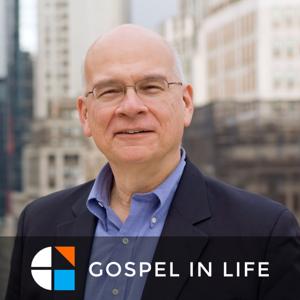
Sermons by Timothy J. Keller (1950-2023), founding pastor of Redeemer Presbyterian Church in New York City, co-founder of Redeemer City to City, and the author of numerous books, including The Reason for God, The Prodigal God, Making Sense of God and The Meaning of Marriage. His thirty-one books have sold more than six million copies and have been translated into twenty-nine languages.
For more sermons and resources, visit www.gospelinlife.com.
Ranked by our users in the last 21 days

1,653 Listeners
1,124 Listeners
3,945 Listeners

2,265 Listeners

19,473 Listeners
1,454 Listeners

1,125 Listeners
1,477 Listeners

6,011 Listeners

2,186 Listeners

2,054 Listeners
340 Listeners
220 Listeners
1,816 Listeners
739 Listeners