
Sign up to save your podcasts
Or



Based on Podcast App listening data
Paul prays that we’d see the evidence of God’s mighty power at work in the world.
And in Ephesians 2, we see one of the main ways we can be sure God’s power is at work. It’s the real heart of what Ephesians says about the church. And that is that inside the church, people who could never get along outside the church, are now living together in peace.
Paul says God has addressed one of the main problems the human race has ever had: 1) what is the problem? 2) what is God’s solution for it? and 3) how did he bring it about?
This sermon was preached by Dr. Timothy Keller at Redeemer Presbyterian Church on November 6, 2011. Series: A Study of Ephesians: Who is the Church? Scripture: Ephesians 2:11–18.
Today's podcast is brought to you by Gospel in Life, the site for all sermons, books, study guides and resources from Timothy Keller and Redeemer Presbyterian Church. If you've enjoyed listening to this podcast and would like to support the ongoing efforts of this ministry, you can do so by visiting https://gospelinlife.com/give and making a one-time or recurring donation.
Christians talk about being saved. But what does it mean to be saved?
Whatever we say we think it means, we should be meaning what’s said here in Ephesians 2. This is one of the richest passages in all the Bible word for word on what it means to be saved. And it says twice that we’re saved through faith.
Notice it easily breaks into three parts: 1) the life we’re saved from, 2) the life we’re saved for, and 3) how we get from here to there.
This sermon was preached by Dr. Timothy Keller at Redeemer Presbyterian Church on October 30, 2011. Series: A Study of Ephesians: Who is the Church? Scripture: Ephesians 2:1–10.
Today's podcast is brought to you by Gospel in Life, the site for all sermons, books, study guides and resources from Timothy Keller and Redeemer Presbyterian Church. If you've enjoyed listening to this podcast and would like to support the ongoing efforts of this ministry, you can do so by visiting https://gospelinlife.com/give and making a one-time or recurring donation.
Many people say they don’t believe in Christianity. But in all my years as a minister, I’ve seldom talked to anybody who rejected Christianity and actually knew what they rejected.
If you’re uninterested in Christianity, you need to know what it is you’re rejecting. And if you are a Christian, you need to figure out if you’re living consistently. In these first verses of Ephesians, Paul gives an amazing picture of what it means to be a Christian.
This passage shows us that being a Christian means three things: 1) truth, 2) hope, and 3) glory.
This sermon was preached by Dr. Timothy Keller at Redeemer Presbyterian Church on October 16, 2011. Series: A Study of Ephesians: Who is the Church? Scripture: Ephesians 1:11–16.
Today's podcast is brought to you by Gospel in Life, the site for all sermons, books, study guides and resources from Timothy Keller and Redeemer Presbyterian Church. If you've enjoyed listening to this podcast and would like to support the ongoing efforts of this ministry, you can do so by visiting https://gospelinlife.com/give and making a one-time or recurring donation.
No matter how long a sentence is, if you find the subject and the predicate, you can figure out the point of the sentence. In the original Greek, there are 202 words in this one sentence that spans from verse 3 to 14 of Ephesians 1.
The subject of this great sentence is God and everything God is doing. And the predicate shows that everything God’s doing is happening toward an end. There is a plan for history, and Jesus is the point of the plan.
Let’s take a look at these three things: 1) there’s a plan, 2) what’s in the plan, and 3) Jesus is the point of the plan.
This sermon was preached by Dr. Timothy Keller at Redeemer Presbyterian Church on October 9, 2011. Series: A Study of Ephesians: Who is the Church? Scripture: Ephesians 1:8-11.
Today's podcast is brought to you by Gospel in Life, the site for all sermons, books, study guides and resources from Timothy Keller and Redeemer Presbyterian Church. If you've enjoyed listening to this podcast and would like to support the ongoing efforts of this ministry, you can do so by visiting https://gospelinlife.com/give and making a one-time or recurring donation.
We’re looking at an astonishing claim. In the New Testament, the word “blessing” doesn’t just mean what we mean by it today. It’s closer to shalom. It means every joy and every benefit your heart and soul needs and longs for.
And in Ephesians 1:3, we’re told if you’re a Christian you have already been blessed (past tense) with every spiritual blessing there is. What in the world could that mean?
Let’s look at the text with these questions: 1) How do we get every spiritual blessing? 2) What is every spiritual blessing? 3) Why can we have every spiritual blessing? and 4) How do you know you have every spiritual blessing?
This sermon was preached by Dr. Timothy Keller at Redeemer Presbyterian Church on October 2, 2011. Series: A Study of Ephesians: Who is the Church? Scripture: Ephesians 1:1-8.
Today's podcast is brought to you by Gospel in Life, the site for all sermons, books, study guides and resources from Timothy Keller and Redeemer Presbyterian Church. If you've enjoyed listening to this podcast and would like to support the ongoing efforts of this ministry, you can do so by visiting https://gospelinlife.com/give and making a one-time or recurring donation.
In Jonah, the antagonists are the religious, moral people. It’s us. It’s the city-disdaining, city-phobic, religious, moral people. We’re the antagonists, and God is the protagonist.
It all comes down to this last question when God says, “Should I not have compassion? Should I not love that great city?” This is what the story is about. It’s about God’s love for a big, unbelieving, unjust, violent, pagan city.
We can learn about three things here: 1) God’s call to the city, 2) God’s view of the city, and 3) God’s love for the city.
This sermon was preached by Dr. Timothy Keller at Redeemer Presbyterian Church on October 14, 2001. Series: The Church in the City. Scripture: Jonah 4:1-11.
Today's podcast is brought to you by Gospel in Life, the site for all sermons, books, study guides and resources from Timothy Keller and Redeemer Presbyterian Church. If you've enjoyed listening to this podcast and would like to support the ongoing efforts of this ministry, you can do so by visiting https://gospelinlife.com/give and making a one-time or recurring donation.
History tells us the Assyrian empire brought cruelty and massacre to a new level. It was a violent empire that slaughtered helpless people. And Jonah’s response to it is anger. He wants them punished.
Yet, in the book of Jonah, we see one of the greatest surprising turns of all the stories in the Bible. God refuses to accept either the violence of Nineveh or the poisonous anger of Jonah.
Let’s look at three things that this text tells us about violence: 1) the surprising sources of violence, 2) the remarkable strategy we should take with violence, and 3) the ultimate solution for violence.
This sermon was preached by Dr. Timothy Keller at Redeemer Presbyterian Church on October 7, 2001. Series: The Church in the City. Scripture: Jonah 3:1-4:5.
Today's podcast is brought to you by Gospel in Life, the site for all sermons, books, study guides and resources from Timothy Keller and Redeemer Presbyterian Church. If you've enjoyed listening to this podcast and would like to support the ongoing efforts of this ministry, you can do so by visiting https://gospelinlife.com/give and making a one-time or recurring donation.
Jonah’s spirituality was fine for his old world and his old situations. But when he’s faced with a new situation, it just collapses.
Then, when he’s in the belly of the fish, Jonah begins to reflect and pray, and as the prayer moves along, we see he has a spiritual breakthrough. Now the new situation is something he can handle. How do we, too, move to the next level?
By looking at Jonah’s prayer we learn about 1) the key to spiritual transformation, 2) the method of spiritual transformation, 3) the marks of spiritual transformation, and 4) the continual need for it.
This sermon was preached by Dr. Timothy Keller at Redeemer Presbyterian Church on September 30, 2001. Series: The Church in the City. Scripture: Jonah 2:1-3:3.
Today's podcast is brought to you by Gospel in Life, the site for all sermons, books, study guides and resources from Timothy Keller and Redeemer Presbyterian Church. If you've enjoyed listening to this podcast and would like to support the ongoing efforts of this ministry, you can do so by visiting https://gospelinlife.com/give and making a one-time or recurring donation.
Jonah runs away for two reasons: fear and hate.
God has told Jonah to go to Nineveh to warn them, but Jonah refuses. He’s afraid to put himself in the midst of his enemies, but he’s also filled with hate toward them. So the book of Jonah addresses in a real way the questions “What do I do about my fear?” and “What do I do about my anger?”
Let’s notice three features of the story: 1) the story sea shows us who we are, 2) the religious sailors show us the wrong thing to do about it, and 3) the willing substitute shows us the right thing to do about it.
This sermon was preached by Dr. Timothy Keller at Redeemer Presbyterian Church on September 23, 2001. Series: The Church in the City. Scripture: Jonah 1:4-17.
Today's podcast is brought to you by Gospel in Life, the site for all sermons, books, study guides and resources from Timothy Keller and Redeemer Presbyterian Church. If you've enjoyed listening to this podcast and would like to support the ongoing efforts of this ministry, you can do so by visiting https://gospelinlife.com/give and making a one-time or recurring donation.
Words like sin, sinner, heathen and heretic have been used for centuries to exclude and oppress people. That’s one reason we need the book of Jonah.
Jonah gives a concept of sin that can’t be used to oppress people. In fact, it shows that it’s one thing to believe in sin and another thing to understand it in your own heart. Jonah was a prophet, but there was a kind of sin in his heart that flew under his radar—until it blew up.
Let’s look at four features in the narrative that each tell us something about sin: 1) the coming word, 2) the running man, 3) the deathly sleep, and 4) the stormy hope.
This sermon was preached by Dr. Timothy Keller at Redeemer Presbyterian Church on September 9, 2001. Series: The Church in the City. Scripture: Jonah 1:1-10.
Today's podcast is brought to you by Gospel in Life, the site for all sermons, books, study guides and resources from Timothy Keller and Redeemer Presbyterian Church. If you've enjoyed listening to this podcast and would like to support the ongoing efforts of this ministry, you can do so by visiting https://gospelinlife.com/give and making a one-time or recurring donation.
From the publisher's feed
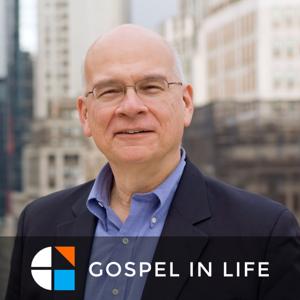
Sermons by Timothy J. Keller (1950-2023), founding pastor of Redeemer Presbyterian Church in New York City, co-founder of Redeemer City to City, and the author of numerous books, including The Reason for God, The Prodigal God, Making Sense of God and The Meaning of Marriage. His thirty-one books have sold more than six million copies and have been translated into twenty-nine languages.
For more sermons and resources, visit www.gospelinlife.com.
Ranked by our users in the last 21 days
1,653 Listeners
1,124 Listeners
3,945 Listeners

2,265 Listeners

19,473 Listeners
1,454 Listeners

1,125 Listeners
1,477 Listeners

6,011 Listeners

2,186 Listeners

2,054 Listeners

340 Listeners

220 Listeners
1,816 Listeners
739 Listeners