
Sign up to save your podcasts
Or



Based on Podcast App listening data
We’re in the second of a two-part series on the devil and the conflict between supernatural forces of good and supernatural forces of evil.
In Part 1, I made my case for why I think it’s immanently sensible to say there really is a devil. And we talked about Satan’s weapons and strategies. If you go through the Bible all the way back to Adam and Eve, what is Satan’s strategy? He’s not possessing them. He’s lying to them. On the basis of that understanding, we’re going to proceed and look at the Christian’s weapons and strategies.
If you want to defeat the forces of evil and be successful in the battles of life, you must put on the full armor of God. What is that? In this passage, we can learn 1) when to put it on, 2) what it is, 3) how to put it on, and 4) whom to remember when you do.
This sermon was preached by Dr. Timothy Keller at Redeemer Presbyterian Church on February 5, 2012. Series: A Study of Ephesians: Who is the Church? Scripture: Ephesians 6:14-24.
Today's podcast is brought to you by Gospel in Life, the site for all sermons, books, study guides and resources from Timothy Keller and Redeemer Presbyterian Church. If you've enjoyed listening to this podcast and would like to support the ongoing efforts of this ministry, you can do so by visiting https://gospelinlife.com/give and making a one-time or recurring donation.
The devil. Spiritual warfare.
In Africa, Latin America, Asia, most places in the world, the idea of spiritual warfare—of a conflict between spiritual good and spiritual evil—is not an unusual concept. Many people in many parts of the world think this helps make sense of reality. But here in the Western world, we find it a foreign concept.
Let’s look at this passage on spiritual warfare, and let’s notice 1) whom we fight, 2) what we fight, and 3) how we fight.
This sermon was preached by Dr. Timothy Keller at Redeemer Presbyterian Church on January 29, 2012. Series: A Study of Ephesians: Who is the Church? Scripture: Ephesians 6:10-13.
Today's podcast is brought to you by Gospel in Life, the site for all sermons, books, study guides and resources from Timothy Keller and Redeemer Presbyterian Church. If you've enjoyed listening to this podcast and would like to support the ongoing efforts of this ministry, you can do so by visiting https://gospelinlife.com/give and making a one-time or recurring donation.
What it means to be a Christian is to be theologically driven—it means stuff about the cross, and grace, and redemption. And all those things have an effect on how we live in every area of our practical lives.
It’s helpful to look at the big picture and to see how Christ really is Lord of every area of life. In Ephesians 6, two of those areas are laid out for us: work and family.
Let’s take a look at this under these three headings: 1) Jesus and your work, 2) Jesus and your family, and 3) Jesus and your life.
This sermon was preached by Dr. Timothy Keller at Redeemer Presbyterian Church on January 22, 2012. Series: A Study of Ephesians: Who is the Church? Scripture: Ephesians 6:1-9.
Today's podcast is brought to you by Gospel in Life, the site for all sermons, books, study guides and resources from Timothy Keller and Redeemer Presbyterian Church. If you've enjoyed listening to this podcast and would like to support the ongoing efforts of this ministry, you can do so by visiting https://gospelinlife.com/give and making a one-time or recurring donation.
Ephesians 5 is like a fair number of people in New York City. It’s both rich and famous.
Because it’s so rich, you could work through it word by word and get quite a bit out of it. But it’s also advantageous to do what we’re going to do, which is to fly over the whole thing. In this way, we’ll get a panoramic view of the immense biblical wisdom on this subject of marriage.
What we learn about marriage here is 1) what it is, 2) what it does, 3) what it needs, and 4) what it shows.
This sermon was preached by Dr. Timothy Keller at Redeemer Presbyterian Church on January 15, 2012. Series: A Study of Ephesians: Who is the Church? Scripture: Ephesians 5:21–33.
Today's podcast is brought to you by Gospel in Life, the site for all sermons, books, study guides and resources from Timothy Keller and Redeemer Presbyterian Church. If you've enjoyed listening to this podcast and would like to support the ongoing efforts of this ministry, you can do so by visiting https://gospelinlife.com/give and making a one-time or recurring donation.
Christianity is not just a vitamin supplement. It doesn’t just come into your life and give you a little boost to live a better form of the life you’re living. It’s a sweeping revolution that affects every part of you.
In Ephesians 5, we have a long passage on what it means to live the Christian life. And it’s not that we live in a certain way and, therefore, become Christians. It’s that we become Christians and, therefore, live in a certain way—because we’re saved not by what we do but by what Christ has done.
In this passage, there are three important keys to understanding what it means to live the Christian life. It entails 1) knowing sin and walking in obedience, 2) knowing the time and walking in wisdom, and 3) knowing the Lord and walking in joy.
This sermon was preached by Dr. Timothy Keller at Redeemer Presbyterian Church on January 8, 2012. Series: A Study of Ephesians: Who is the Church? Scripture: Ephesians 5:5–21.
Today's podcast is brought to you by Gospel in Life, the site for all sermons, books, study guides and resources from Timothy Keller and Redeemer Presbyterian Church. If you've enjoyed listening to this podcast and would like to support the ongoing efforts of this ministry, you can do so by visiting https://gospelinlife.com/give and making a one-time or recurring donation.
We all want to change. I don’t know anybody who doesn’t say, “I really need to change.” And one of the greatest things about Christianity is Christianity gives you the resources to change.
Jesus Christ was born into this world to give us second birth. The idea of being born again means radical change. Often we don’t quite know how change actually happens. But Ephesians 4 gives four concrete principles for how the gospel helps us change.
What does change mean to Christians? It means you have to 1) make a decision, and 2) change from the inside. And you do that by 3) transforming your thinking, and 4) being captivated by him.
This sermon was preached by Dr. Timothy Keller at Redeemer Presbyterian Church on December 12, 2011. Series: A Study of Ephesians: Who is the Church? Scripture: Ephesians 4:17–24.
Today's podcast is brought to you by Gospel in Life, the site for all sermons, books, study guides and resources from Timothy Keller and Redeemer Presbyterian Church. If you've enjoyed listening to this podcast and would like to support the ongoing efforts of this ministry, you can do so by visiting https://gospelinlife.com/give and making a one-time or recurring donation.
In Ephesians 4, we find a pretty remarkable argument.
The argument has three parts. The flow of the argument is that even though we have the life of the trinity in us, we live in spiritual immaturity until we’re willing to do the hard work of developing and creating unity in the church.
Let’s take a look at each part: 1) the life of the trinity, 2) we live in spiritual immaturity, and 3) do the hard work of developing and creating unity in the church.
This sermon was preached by Dr. Timothy Keller at Redeemer Presbyterian Church on December 4, 2011. Series: A Study of Ephesians: Who is the Church? Scripture: Ephesians 4:1–16.
Today's podcast is brought to you by Gospel in Life, the site for all sermons, books, study guides and resources from Timothy Keller and Redeemer Presbyterian Church. If you've enjoyed listening to this podcast and would like to support the ongoing efforts of this ministry, you can do so by visiting https://gospelinlife.com/give and making a one-time or recurring donation.
Thinking about the gospel of Jesus Christ leads Paul to pray in a particular way—in a passionate way.
Usually people in those days prayed standing. Paul kneels—it’s a sign of great emotion and solemnity. And what does he so passionately pray for? That his readers—and that also means us—would be strengthened with the power of the Spirit.
Let’s explore this: 1) Why is that so important? 2) What is it? and 3) How do we get it?
This sermon was preached by Dr. Timothy Keller at Redeemer Presbyterian Church on November 27, 2011. Series: A Study of Ephesians: Who is the Church? Scripture: Ephesians 3:14–21.
Today's podcast is brought to you by Gospel in Life, the site for all sermons, books, study guides and resources from Timothy Keller and Redeemer Presbyterian Church. If you've enjoyed listening to this podcast and would like to support the ongoing efforts of this ministry, you can do so by visiting https://gospelinlife.com/give and making a one-time or recurring donation.
Most teachers tend to overlook or go past this particular passage in Ephesians 3.
Here’s the reason. In the middle of the first sentence, there’s a dash. Paul just breaks off and goes into a digression, literally a sidebar, and he doesn’t come out of it until verse 13. This really is a sudden thought he had. And yet, what’s in here is so practical.
In here we’re going to learn 1) the hardness of life, 2) the wonder of grace, 3) the brilliance of the church, and 4) the freedom that comes.
This sermon was preached by Dr. Timothy Keller at Redeemer Presbyterian Church on November 20, 2011. Series: A Study of Ephesians: Who is the Church? Scripture: Ephesians 3:1–13.
Today's podcast is brought to you by Gospel in Life, the site for all sermons, books, study guides and resources from Timothy Keller and Redeemer Presbyterian Church. If you've enjoyed listening to this podcast and would like to support the ongoing efforts of this ministry, you can do so by visiting https://gospelinlife.com/give and making a one-time or recurring donation.
There’s a problem. We aren’t what we are.
The book of Ephesians is ultimately about the church. Paul very directly talks about what the church is and who the church is. These are some of the most powerful passages on that subject that you’re ever going to find.
And in Ephesians 2, we’re being told 1) what we were, 2) what we are, and 3) how we can really become what we are.
This sermon was preached by Dr. Timothy Keller at Redeemer Presbyterian Church on November 13, 2011. Series: A Study of Ephesians: Who is the Church? Scripture: Ephesians 2:19–22.
Today's podcast is brought to you by Gospel in Life, the site for all sermons, books, study guides and resources from Timothy Keller and Redeemer Presbyterian Church. If you've enjoyed listening to this podcast and would like to support the ongoing efforts of this ministry, you can do so by visiting https://gospelinlife.com/give and making a one-time or recurring donation.
From the publisher's feed
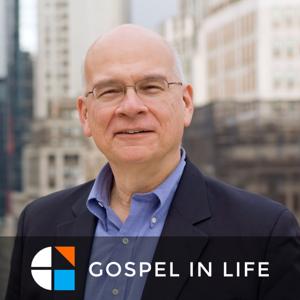
Sermons by Timothy J. Keller (1950-2023), founding pastor of Redeemer Presbyterian Church in New York City, co-founder of Redeemer City to City, and the author of numerous books, including The Reason for God, The Prodigal God, Making Sense of God and The Meaning of Marriage. His thirty-one books have sold more than six million copies and have been translated into twenty-nine languages.
For more sermons and resources, visit www.gospelinlife.com.
Ranked by our users in the last 21 days
1,653 Listeners
1,124 Listeners
3,945 Listeners
2,265 Listeners

19,473 Listeners
1,454 Listeners

1,125 Listeners
1,477 Listeners

6,011 Listeners
2,186 Listeners

2,054 Listeners
340 Listeners

220 Listeners
1,816 Listeners
739 Listeners