
Sign up to save your podcasts
Or



Based on Podcast App listening data
Jesus’ teaching about money here is triggered by an event: a Pharisee gets upset that Jesus didn’t wash his hands before he ate his food.
The ceremonial washings of the Old Testament were visual aids for the idea that you need to approach God with a clean heart. But the Pharisees had turned religion into a matter of externalities. Jesus slams that whole idea. He refuses to emphasize the external over the internal, but he also refuses to pit the external against the internal. Instead, Jesus says true religion is living externally out of an inner reality.
Jesus applies this to the issue of financial giving, teaching us three things about our attitude toward our possessions and our giving: 1) there’s an external aspect, 2) there’s an internal aspect, and 3) there’s a spiritual motor that energizes and drives both.
This sermon was preached by Dr. Timothy Keller at Redeemer Presbyterian Church on November 14, 1993. Series: Modern Problems; Ancient Solutions. Scripture: Luke 11:37-42.
Today's podcast is brought to you by Gospel in Life, the site for all sermons, books, study guides and resources from Timothy Keller and Redeemer Presbyterian Church. If you've enjoyed listening to this podcast and would like to support the ongoing efforts of this ministry, you can do so by visiting https://gospelinlife.com/give and making a one-time or recurring donation.
Everyone points to a different reason for why the city has problems. The futurologists will say, “Technology has doomed the city. We don’t need to live in proximity anymore.” The liberals will say, “Racism has doomed the city.” The conservatives will say, “Big government and taxes have doomed the city.” Many Christians will say, “God has doomed the city for its wickedness.”
But what the Bible says about the city is far more optimistic and far more pessimistic than anything you’ll find in the newspapers. It’s far more hopeful and yet far more realistic than any of the defenders or the detractors of the modern city.
The Bible teaches 1) that God invented the city, 2) why God invented the city, and 3) that God sends us into the city.
This sermon was preached by Dr. Timothy Keller at Redeemer Presbyterian Church on November 7, 1993. Series: Modern Problems; Ancient Solutions. Scripture: Genesis 11, Proverbs 11.
Today's podcast is brought to you by Gospel in Life, the site for all sermons, books, study guides and resources from Timothy Keller and Redeemer Presbyterian Church. If you've enjoyed listening to this podcast and would like to support the ongoing efforts of this ministry, you can do so by visiting https://gospelinlife.com/give and making a one-time or recurring donation.
Guilt is a lot like an iceberg. You don’t see much above the surface, but if you really look, you’ll see it’s under everything. So how do you deal with a guilty conscience?
In Psalm 51, David has been plunged—through the shock of recognizing the magnitude of evil he’s done—into the depths. Imagine the guilt, the shame, the horror, the self-hatred. He’s plunged into an emotional and spiritual dungeon. And yet this psalm is a record of his rescue. There’s no good human explanation for how he got out. But he got out.
Here’s how he did it: he made two critical distinctions. He learned 1) the distinction between remorse and real repentance, and 2) the distinction between a reprieve and regeneration.
This sermon was preached by Dr. Timothy Keller at Redeemer Presbyterian Church on October 31, 1993. Series: Modern Problems; Ancient Solutions. Scripture: Psalm 51.
Today's podcast is brought to you by Gospel in Life, the site for all sermons, books, study guides and resources from Timothy Keller and Redeemer Presbyterian Church. If you've enjoyed listening to this podcast and would like to support the ongoing efforts of this ministry, you can do so by visiting https://gospelinlife.com/give and making a one-time or recurring donation.
Of the articles and books I survey on worry or anxiety, they almost always say, “The things you’re worried about may never happen. So don’t think about them.” But in Psalm 27, David does the opposite: he visualizes the worst things that can happen. Why? Because he wants to have a strategy of life that can stand up to anything.
Psalm 27 has a refreshing realism, even though it’s full of tremendous promises. It shows that you can have a way of dealing with anger, anxiety, and fear that assumes the worst things may and can happen.
How can you have a strategy that will enable you to face any of stresses of life? By 1) dwelling, 2) gazing, and 3) seeking.
This sermon was preached by Dr. Timothy Keller at Redeemer Presbyterian Church on October 24, 1993. Series: Modern Problems; Ancient Solutions. Scripture: Psalm 27.
Today's podcast is brought to you by Gospel in Life, the site for all sermons, books, study guides and resources from Timothy Keller and Redeemer Presbyterian Church. If you've enjoyed listening to this podcast and would like to support the ongoing efforts of this ministry, you can do so by visiting https://gospelinlife.com/give and making a one-time or recurring donation.
A Newsweek cover story said that after a 30-year spree, our entire society is waking up with a monstrous hangover, facing a values vacuum. It said that we realize unlimited personal freedom is not the way to build a society, but now we face the question of whose values we should use.
If you think the Bible’s answer to the values vacuum is simply “Let’s get back to traditional values,” you don’t understand how penetrating and nuanced and sophisticated the biblical answer is.
What is the biblical answer to the search for values? Psalm 19 tells us three things: 1) so-called “moral values” must be based on universal moral absolutes, 2) submission to God’s moral absolutes do not enslave—they liberate, and 3) God’s moral absolutes will destroy you unless they have assumed the right role in your life.
This sermon was preached by Dr. Timothy Keller at Redeemer Presbyterian Church on October 17, 1993. Series: Modern Problems; Ancient Solutions. Scripture: Psalm 19.
Today's podcast is brought to you by Gospel in Life, the site for all sermons, books, study guides and resources from Timothy Keller and Redeemer Presbyterian Church. If you've enjoyed listening to this podcast and would like to support the ongoing efforts of this ministry, you can do so by visiting https://gospelinlife.com/give and making a one-time or recurring donation.
When it comes to building up identity and self-esteem, I’m afraid Americans are very pragmatic—and our pragmatism gets to us. Our books and articles say if you want self-esteem, you should lose weight, change your friends, switch your career, and so on. But nobody asks why. They don’t like to think about the underlying theory.
It’s important to understand that there are certain reigning theories of identity formation. Unless you recognize them and analyze them, you’ll just pick them up like a virus.
Let’s divide our inquiry into two parts: 1) what the world says is the way to find out who you are and 2) what the Bible says is the way to find out who you are.
This sermon was preached by Dr. Timothy Keller at Redeemer Presbyterian Church on October 10, 1993. Series: Modern Problems; Ancient Solutions. Scripture: Psalm 8.
Today's podcast is brought to you by Gospel in Life, the site for all sermons, books, study guides and resources from Timothy Keller and Redeemer Presbyterian Church. If you've enjoyed listening to this podcast and would like to support the ongoing efforts of this ministry, you can do so by visiting https://gospelinlife.com/give and making a one-time or recurring donation.
A fool can be brilliant and a fool can be stupid. Foolishness is not a function of your intelligence. Foolishness is a function of how you use your intelligence.
The Bible says every human being is born with a heavy streak of foolishness. It’s like a deposit. It’s foolishness, according to the Bible, that destroys our sense of God’s reality. And it’s a common reason why people have trouble believing God is real.
The Bible tells us 1) foolishness is a proud willfulness that keeps us from learning, 2) foolishness is a superficiality that makes it impossible to see our own heart commitments as alternatives to believing in God, and 3) foolishness can’t understand grace.
This sermon was preached by Dr. Timothy Keller at Redeemer Presbyterian Church on October 3, 1993. Series: Modern Problems; Ancient Solutions. Scripture: Psalm 14.
Today's podcast is brought to you by Gospel in Life, the site for all sermons, books, study guides and resources from Timothy Keller and Redeemer Presbyterian Church. If you've enjoyed listening to this podcast and would like to support the ongoing efforts of this ministry, you can do so by visiting https://gospelinlife.com/give and making a one-time or recurring donation.
There is a thirst in the human heart that will not be denied. It cannot be denied. That thirst is for transcendence.
Transcendence is intimacy with the infinite. Psalm 63 is about the search for transcendence. It says there is irreducible knowledge, there is terrible thirst, and there’s only one resolution for it.
Psalm 63 tells us 1) the human heart needs transcendence and 2) how the human heart can find transcendence.
This sermon was preached by Dr. Timothy Keller at Redeemer Presbyterian Church on September 26, 1993. Series: Modern Problems; Ancient Solutions. Scripture: Psalm 63.
Today's podcast is brought to you by Gospel in Life, the site for all sermons, books, study guides and resources from Timothy Keller and Redeemer Presbyterian Church. If you've enjoyed listening to this podcast and would like to support the ongoing efforts of this ministry, you can do so by visiting https://gospelinlife.com/give and making a one-time or recurring donation.
A plant without roots is at best a tumbleweed. Is a tumbleweed freer than an oak tree? Yeah, it’s free to be blown about forever.
There is what the Bible calls a rootlessness and a weightlessness about our society right now. Many of the problems you face today are that you’ve been affected deeply by this weightlessness we experience in our culture and society.
The roots of this rootlessness were addressed long ago in Psalm 1, which tells us 1) the diagnosis of rootlessness and 2) the prescription for rootlessness.
This sermon was preached by Dr. Timothy Keller at Redeemer Presbyterian Church on September 19, 1993. Series: Modern Problems; Ancient Solutions. Scripture: Psalm 1.
Today's podcast is brought to you by Gospel in Life, the site for all sermons, books, study guides and resources from Timothy Keller and Redeemer Presbyterian Church. If you've enjoyed listening to this podcast and would like to support the ongoing efforts of this ministry, you can do so by visiting https://gospelinlife.com/give and making a one-time or recurring donation.
Have you in this modern world learned how to become happy and stay happy?
I hope you don’t think that’s a trivial question. Because if you read the psychology books, the urban planning books, the biochemistry books, the political science books, they’re really about this problem: we’re not happy. How can we be happy?
The Bible has always said the issues that make you happy or unhappy are profoundly cosmic and spiritual. In Psalm 1, we see 4 principles: 1) happiness is possible, 2) happiness is fundamental, not superficial, 3) happiness can never be found directly, and 4) happiness is something you choose.
This sermon was preached by Dr. Timothy Keller at Redeemer Presbyterian Church on September 12, 1993. Series: Modern Problems; Ancient Solutions. Scripture: Psalm 1.
Today's podcast is brought to you by Gospel in Life, the site for all sermons, books, study guides and resources from Timothy Keller and Redeemer Presbyterian Church. If you've enjoyed listening to this podcast and would like to support the ongoing efforts of this ministry, you can do so by visiting https://gospelinlife.com/give and making a one-time or recurring donation.
From the publisher's feed
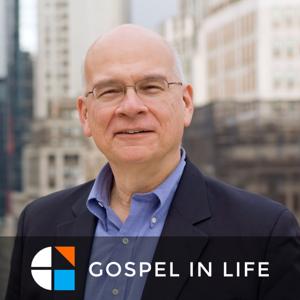
Sermons by Timothy J. Keller (1950-2023), founding pastor of Redeemer Presbyterian Church in New York City, co-founder of Redeemer City to City, and the author of numerous books, including The Reason for God, The Prodigal God, Making Sense of God and The Meaning of Marriage. His thirty-one books have sold more than six million copies and have been translated into twenty-nine languages.
For more sermons and resources, visit www.gospelinlife.com.
Ranked by our users in the last 21 days
1,653 Listeners
1,124 Listeners
3,945 Listeners

2,265 Listeners

19,473 Listeners
1,454 Listeners

1,125 Listeners
1,477 Listeners

6,011 Listeners
2,186 Listeners

2,054 Listeners
340 Listeners

220 Listeners
1,816 Listeners
739 Listeners