
Sign up to save your podcasts
Or



Based on Podcast App listening data
Jesus, in Matthew 18, uses a word for conversion that means to turn completely around and face in a whole new direction. That’s a perfect image of what Christian conversion really is.
Christian conversion is a radical inner transformation. But it’s not so much a replacing of what you are as a re-facing of what you are. Your temperament doesn’t go away; your culture doesn’t go away. But everything you are is now lived on a whole new basis.
The case study of Cornelius the centurion teaches us four important facts. Christian conversion comes 1) through God’s initiative, 2) through the challenge to religion, 3) through the transformation of the Holy Spirit, and 4) through the words of the gospel.
This sermon was preached by Dr. Timothy Keller at Redeemer Presbyterian Church on November 30, 2003. Series: The Necessity of Belief. Scripture: Acts 10:27-47.
Today's podcast is brought to you by Gospel in Life, the site for all sermons, books, study guides and resources from Timothy Keller and Redeemer Presbyterian Church. If you've enjoyed listening to this podcast and would like to support the ongoing efforts of this ministry, you can do so by visiting https://gospelinlife.com/give and making a one-time or recurring donation.
Christianity was originally never understood as a set of teachings that one took on. Christianity was a power that took you up. It completely turned you inside out, transformed you from the inside.
The classic example is the conversion of Paul. Paul was an abusive, violent zealot. He went from someone who was deeply unhappy and restless to someone who was utterly unflappable, absolutely content. How? A radical, deep conversion.
We all need to know how to live deeply converted lives. And though Paul’s conversion is dramatic, it shows three things involved in every conversion: 1) an untame God, 2) a stubborn fact, and 3) a radical relationship.
This sermon was preached by Dr. Timothy Keller at Redeemer Presbyterian Church on November 23, 2003. Series: The Necessity of Belief. Scripture: Acts 9:1-19.
Today's podcast is brought to you by Gospel in Life, the site for all sermons, books, study guides and resources from Timothy Keller and Redeemer Presbyterian Church. If you've enjoyed listening to this podcast and would like to support the ongoing efforts of this ministry, you can do so by visiting https://gospelinlife.com/give and making a one-time or recurring donation.
Christianity was born into a society hostile to its claims. And the claim that was most revolting to that society is also what our society sees as the most repugnant: the shocking claim that salvation is found in no one else.
It’s critical to realize this claim was as implausible in the Greco-Roman world as it is in ours. The Roman Empire was every bit as religiously pluralistic as our society, if not more. If they were as revolted as we were, why did so many believe it?
Acts 4 shows us four important things: 1) the claim was an implication, not arrogation, 2) the claim is no more exclusive than the claim of religious relativism, 3) this exclusive claim led to a transformation of identity, and 4) this exclusive claim led to the most inclusive human community the world had ever seen.
This sermon was preached by Dr. Timothy Keller at Redeemer Presbyterian Church on October 26, 2003. Series: The Necessity of Belief. Scripture: Acts 4:8-14, 31-37.
Today's podcast is brought to you by Gospel in Life, the site for all sermons, books, study guides and resources from Timothy Keller and Redeemer Presbyterian Church. If you've enjoyed listening to this podcast and would like to support the ongoing efforts of this ministry, you can do so by visiting https://gospelinlife.com/give and making a one-time or recurring donation.
When the Jewish exiles got to Babylon, they found a huge city—hostile, big, brutal—and it was filled with other exiles, with different people groups and radically different views. Our culture is not so different.
Liberals feel our country is so conservative that they’re pulling their hair out, and conservatives feel our country is so liberal that they’re pulling their hair out. Both groups feel like exiles. Millions of ethnic minorities feel like exiles. So how do you respond to a city that’s hostile to your views? How do you live in a fragmented society?
God’s answer to the Jewish exiles is astounding. In it, we see three things: 1) wrong ways to relate to the city, 2) God’s way to relate to the city, and 3) how to get the power to do it.
This sermon was preached by Dr. Timothy Keller at Redeemer Presbyterian Church on October 5, 2003. Series: The Necessity of Belief. Scripture: Jeremiah 29:4-14.
Today's podcast is brought to you by Gospel in Life, the site for all sermons, books, study guides and resources from Timothy Keller and Redeemer Presbyterian Church. If you've enjoyed listening to this podcast and would like to support the ongoing efforts of this ministry, you can do so by visiting https://gospelinlife.com/give and making a one-time or recurring donation.
We live in a fragmented culture. There’s no consensus about the big questions of what’s right and wrong and true. Jeremiah is a prophet in this same situation—he lived and wrote in a fragmented culture.
One of the challenges of a fragmented culture is living in the cafeteria of different worldviews, religions, and systems of thought. It’s typical to respond by saying, “I don’t think anybody has the answer.” But Jeremiah shows us that this very statement is ignorant of how the heart works.
Jeremiah shows us that we need to see three things about the human heart: 1) the radical faith of every heart, 2) the radical flaw in every heart, and 3) the radical cure for every heart.
This sermon was preached by Dr. Timothy Keller at Redeemer Presbyterian Church on September 7, 2003. Series: The Necessity of Belief. Scripture: Jeremiah 17:5-17.
Today's podcast is brought to you by Gospel in Life, the site for all sermons, books, study guides and resources from Timothy Keller and Redeemer Presbyterian Church. If you've enjoyed listening to this podcast and would like to support the ongoing efforts of this ministry, you can do so by visiting https://gospelinlife.com/give and making a one-time or recurring donation.
Jesus Christ says not just “I was resurrected,” but “I am the resurrection.” Present tense. He comes after his resurrection with his arms full of newness.
I don’t know why we get into gift-giving at Christmas—I think we ought to be getting into it at Easter. Because as soon as Jesus Christ shows up risen from the dead, he is giving out all kinds of gifts of newness.
Let’s look at these gifts and divide them into two parts: 1) there is the gift of faith, and 2) there are all the rest of the gifts that come out of that.
This sermon was preached by Dr. Timothy Keller at Redeemer Presbyterian Church on April 15, 1990. Scripture: John 20:10-29.
Today's podcast is brought to you by Gospel in Life, the site for all sermons, books, study guides and resources from Timothy Keller and Redeemer Presbyterian Church. If you've enjoyed listening to this podcast and would like to support the ongoing efforts of this ministry, you can do so by visiting https://gospelinlife.com/give and making a one-time or recurring donation.
We’ve been looking at the life of Jesus and we come now to the risen Jesus.
At the end of the gospel of Luke, the risen Jesus does four things that change the lives of his disciples forever. And because he’s the risen Jesus, he can do the very same things for us right now.
Jesus 1) answers the doubts of their minds by arguing with them, 2) satisfies the needs of their hearts by eating with them, 3) reforges the direction of their lives by sending them, and 4) shows them his hands and his feet.
This sermon was preached by Dr. Timothy Keller at Redeemer Presbyterian Church on April 20, 2003. Series: The Meaning of Jesus Part 3; Seeing Him. Scripture: Luke 24:36-49.
Today's podcast is brought to you by Gospel in Life, the site for all sermons, books, study guides and resources from Timothy Keller and Redeemer Presbyterian Church. If you've enjoyed listening to this podcast and would like to support the ongoing efforts of this ministry, you can do so by visiting https://gospelinlife.com/give and making a one-time or recurring donation.
The night Jesus was betrayed has a theme: darkness, night. Right in the middle of the passage, Jesus makes an odd statement: “But this is your hour—when darkness reigns.” What that must mean is the physical darkness is a representation of something deeper.
There’s a darkness that blinds the eyes, and then there’s a darkness that blinds the heart and the mind and the soul. It’s a spiritual darkness. This is the thing Jesus came to deal with. Because he came to deal with it, there’s a solution for it.
There are three incidents that happened in the physical dark. The first two tell us about our condition, and the third tells us what Jesus has come to do about it. The incidents: 1) the soldiers reject Jesus, 2) the disciples reject him, and 3) even his Father rejects him.
This sermon was preached by Dr. Timothy Keller at Redeemer Presbyterian Church on April 13, 2003. Series: The Meaning of Jesus Part 3; Seeing Him. Scripture: Luke 22:39-64.
Today's podcast is brought to you by Gospel in Life, the site for all sermons, books, study guides and resources from Timothy Keller and Redeemer Presbyterian Church. If you've enjoyed listening to this podcast and would like to support the ongoing efforts of this ministry, you can do so by visiting https://gospelinlife.com/give and making a one-time or recurring donation.
One of the great questions of history is, “Why in the world did the early Christians adopt the cross as their main symbol?”
All the other founders of the great religions died old and successful. In absolute contrast, you have Jesus, who dies at age 33, ignominiously, in agony, abandoned by everyone. But on the night before he died, Jesus gave his disciples the interpretation, the meaning of his death on the cross, and when it was all over, it changed them and the world.
Jesus tells us four life-changing principles about his death: 1) Jesus’ death is the center of history, 2) Jesus’ death is the foundation for a radically new, profoundly different community, 3) Jesus’ death is the solution to the great mystery, and 4) Jesus’ death is appropriated personally.
This sermon was preached by Dr. Timothy Keller at Redeemer Presbyterian Church on April 6, 2003. Series: The Meaning of Jesus Part 3; Seeing Him. Scripture: Luke 22:14-34.
Today's podcast is brought to you by Gospel in Life, the site for all sermons, books, study guides and resources from Timothy Keller and Redeemer Presbyterian Church. If you've enjoyed listening to this podcast and would like to support the ongoing efforts of this ministry, you can do so by visiting https://gospelinlife.com/give and making a one-time or recurring donation.
The last week of Jesus’ life addresses not just our minds or our wills, but our hearts. We are to see Jesus, to meet Jesus.
As Luke shows us the last days of Jesus’ life, all the doctrines and themes will be narratively depicted in the most vivid way. They’re driven home so we can really see Jesus and have an existential encounter with him.
Jesus’ triumphal entry into Jerusalem shows us who he is, what he can do for us, why he can do it, and how he can do it. In other words, it shows us 1) he’s the actual king, 2) he’s the transformational king, 3) he’s the paradoxical king, and 4) he’s the confrontational king.
This sermon was preached by Dr. Timothy Keller at Redeemer Presbyterian Church on March 30, 2003. Series: The Meaning of Jesus Part 3; Seeing Him. Scripture: Luke 19:28-40; 45-48.
Today's podcast is brought to you by Gospel in Life, the site for all sermons, books, study guides and resources from Timothy Keller and Redeemer Presbyterian Church. If you've enjoyed listening to this podcast and would like to support the ongoing efforts of this ministry, you can do so by visiting https://gospelinlife.com/give and making a one-time or recurring donation.
From the publisher's feed
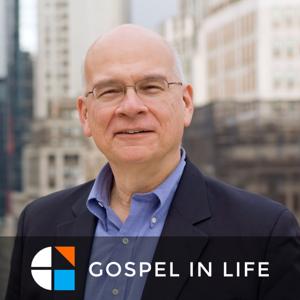
Sermons by Timothy J. Keller (1950-2023), founding pastor of Redeemer Presbyterian Church in New York City, co-founder of Redeemer City to City, and the author of numerous books, including The Reason for God, The Prodigal God, Making Sense of God and The Meaning of Marriage. His thirty-one books have sold more than six million copies and have been translated into twenty-nine languages.
For more sermons and resources, visit www.gospelinlife.com.
Ranked by our users in the last 21 days
1,653 Listeners
1,124 Listeners
3,945 Listeners

2,265 Listeners

19,473 Listeners
1,454 Listeners

1,125 Listeners
1,477 Listeners

6,011 Listeners
2,186 Listeners

2,054 Listeners
340 Listeners
220 Listeners
1,816 Listeners
739 Listeners