
Sign up to save your podcasts
Or



Based on Podcast App listening data
If you ask the question, “Why should a believer in the gospel of Jesus Christ be passionately involved with the poor?” this text gives you the answers.
Isaiah 61 is the last of the Servant songs, a prophecy about the Servant of the Lord. And Jesus Christ preached from this in his first sermon. When Jesus reads this, he’s saying, “This is the essence of my mission. I have come to bring good news for the poor.” What does that mean?
The three reasons why a believer in the gospel of Jesus Christ should be deeply involved with the life of the poor are 1) because of the future, 2) because of the present, and 3) because of the past.
This sermon was preached by Dr. Timothy Keller at Redeemer Presbyterian Church on March 28, 2010. Series: The Songs of the Servant (from Isaiah). Scripture: Isaiah 58:6-10.
Today's podcast is brought to you by Gospel in Life, the site for all sermons, books, study guides and resources from Timothy Keller and Redeemer Presbyterian Church. If you've enjoyed listening to this podcast and would like to support the ongoing efforts of this ministry, you can do so by visiting https://gospelinlife.com/give and making a one-time or recurring donation.
This is a text of realism. There are many promises in the Bible about the great blessings Jesus’ salvation brings. In Isaiah 57, we have a reminder that we still live in a world filled with tragedy, difficulty, and suffering.
The salvation we get from Jesus is by no means an exemption from the same brokenness that everyone else in the world is experiencing. Rather, the salvation is wonderful because it gives us the resources to face the brokenness in a way we never could without it.
In this chapter, let’s look at 1) what we face in life as Christians, 2) how we should try to face it, and 3) why we can be assured that we’ll be able to.
This sermon was preached by Dr. Timothy Keller at Redeemer Presbyterian Church on March 21, 2010. Series: The Songs of the Servant (from Isaiah). Scripture: Isaiah 57:12-21.
Today's podcast is brought to you by Gospel in Life, the site for all sermons, books, study guides and resources from Timothy Keller and Redeemer Presbyterian Church. If you've enjoyed listening to this podcast and would like to support the ongoing efforts of this ministry, you can do so by visiting https://gospelinlife.com/give and making a one-time or recurring donation.
For some, when they hear that salvation is absolutely free, their first response is to say, “If I really believed that, then I wouldn’t have any incentive to live a good life.”
To that, I would say, “If, when you lose all fear of being smacked by God, you lose all incentive to live a good life, then the only incentive you ever had was fear. You need a better incentive.” See, if you realize the implications of the costly love of Jesus, it’s going to change your whole life.
Isaiah 56 shows that when we receive salvation 1) it creates a new concern for living justly in the world, 2) it creates a new kind of community of believers who are absolutely equal before God and radically accepting of differences, and 3) we get an everlasting name that will never be cut off.
This sermon was preached by Dr. Timothy Keller at Redeemer Presbyterian Church on March 14, 2010. Series: The Songs of the Servant (from Isaiah). Scripture: Isaiah 56:1-8.
Today's podcast is brought to you by Gospel in Life, the site for all sermons, books, study guides and resources from Timothy Keller and Redeemer Presbyterian Church. If you've enjoyed listening to this podcast and would like to support the ongoing efforts of this ministry, you can do so by visiting https://gospelinlife.com/give and making a one-time or recurring donation.
What did Jesus come into the world to do?
In the final chapters of Isaiah, a mysterious figure called the Servant of the Lord is prophesied. This figure is going to come into the world and bring God’s salvation. And the New Testament writers identify this prophesied Servant of the Lord as Jesus.
Isaiah 50 is the third of the Servant songs, and it 1) tells us about the life we ought to live, 2) shows us where to get the power to live that life, and then 3) explains why that power works.
This sermon was preached by Dr. Timothy Keller at Redeemer Presbyterian Church on February 14, 2010. Series: The Songs of the Servant (from Isaiah). Scripture: Isaiah 50:4-11.
Today's podcast is brought to you by Gospel in Life, the site for all sermons, books, study guides and resources from Timothy Keller and Redeemer Presbyterian Church. If you've enjoyed listening to this podcast and would like to support the ongoing efforts of this ministry, you can do so by visiting https://gospelinlife.com/give and making a one-time or recurring donation.
Isaiah prophesies about a mysterious figure called the Servant of the Lord. In the New Testament, the writers identify the Servant of the Lord with Jesus Christ.
These prophecies tell us some things about Jesus, about his work, about what he brings, and about ourselves that we learn nowhere else. Many of the prophecies are called songs, the servant songs. Let’s introduce ourselves to this servant, and therefore, to what this tells us about Jesus Christ.
The first of the servant songs is in Isaiah 42. We see depicted here 1) a servant king, 2) a healing king, and 3) a suffering king.
This sermon was preached by Dr. Timothy Keller at Redeemer Presbyterian Church on January 31, 2010. Series: The Songs of the Servant (from Isaiah). Scripture: Isaiah 42:1-9.
Today's podcast is brought to you by Gospel in Life, the site for all sermons, books, study guides and resources from Timothy Keller and Redeemer Presbyterian Church. If you've enjoyed listening to this podcast and would like to support the ongoing efforts of this ministry, you can do so by visiting https://gospelinlife.com/give and making a one-time or recurring donation.
If you thought when you became a Christian you were leaving the fight to get into peace and tranquility, Paul says you were wrong. The Christian life is a fight. But now you have divine resources.
We come now to the last piece of the armor of God: “the sword of the Spirit, which is the Word of God.” At the beginning and at the end of talking about how to live a victorious Christian life, Paul talks about the Bible. It shows that everything we do in putting on the armor is a matter of taking Scripture and digesting it, applying it, working it out.
Let’s look at how 1) the truth is in the beginning of the armor, 2) the truth is at the end of the armor, and 3) how to take it up.
This sermon was preached by Dr. Timothy Keller at Redeemer Presbyterian Church on April 12, 1992. Series: Spiritual Warfare – The Armor of God. Scripture: Ephesians 6:14-18.
Today's podcast is brought to you by Gospel in Life, the site for all sermons, books, study guides and resources from Timothy Keller and Redeemer Presbyterian Church. If you've enjoyed listening to this podcast and would like to support the ongoing efforts of this ministry, you can do so by visiting https://gospelinlife.com/give and making a one-time or recurring donation.
Fiery arrows do not come all throughout the battle. When do they come? Right when you’ve decided to storm the stronghold of the enemy.
We’re looking at the armor of God—it’s an illustration Paul uses as a way of saying we have everything we need to meet the battles of life, but we must make use of those resources. And in looking at the shield of faith, we see that the more we decide to get our lives together, the more likely we are to find fiery arrows coming at us.
This passage on the shield of faith teaches us: 1) God lets Satan send us fiery trials, 2) we should expect fiery trials, and 3) faith is not a passive thing.
This sermon was preached by Dr. Timothy Keller at Redeemer Presbyterian Church on March 29, 1992. Series: Spiritual Warfare – The Armor of God. Scripture: Ephesians 6:14-18.
Today's podcast is brought to you by Gospel in Life, the site for all sermons, books, study guides and resources from Timothy Keller and Redeemer Presbyterian Church. If you've enjoyed listening to this podcast and would like to support the ongoing efforts of this ministry, you can do so by visiting https://gospelinlife.com/give and making a one-time or recurring donation.
If you’re trying to do anything more important than to just get ahead in life, you’ll know the shield of faith is extremely important. Because let’s face it: the enemy attacks at the front line.
Your front line is the place where you go out on a limb to do something because you know it’ll make a difference—perhaps in this neighborhood, this city. When you go to the front line, there are all sorts of flying missiles with your name on them.
That’s the reason we’re talking about this piece of armor: the shield of faith. Let’s look at 1) what it is, 2) when you need it, and 3) how to put it on.
This sermon was preached by Dr. Timothy Keller at Redeemer Presbyterian Church on March 22, 1992. Series: Spiritual Warfare – The Armor of God. Scripture: Ephesians 6:10-20.
Today's podcast is brought to you by Gospel in Life, the site for all sermons, books, study guides and resources from Timothy Keller and Redeemer Presbyterian Church. If you've enjoyed listening to this podcast and would like to support the ongoing efforts of this ministry, you can do so by visiting https://gospelinlife.com/give and making a one-time or recurring donation.
Paul says a Christian should be characterized by readiness, a spiritual buoyancy that comes from the use of the gospel of peace.
We’re looking at the armor of God and we’re in the third part of our examination of the shoes and this one little phrase about the gospel of peace.
There are three basic parts this phrase teaches us: 1) there is a joy through the gospel, 2) that brings peace with God, and 3) that brings peace with people.
This sermon was preached by Dr. Timothy Keller at Redeemer Presbyterian Church on March 8, 1992. Series: Spiritual Warfare – The Armor of God. Scripture: Ephesians 6:14-18.
Today's podcast is brought to you by Gospel in Life, the site for all sermons, books, study guides and resources from Timothy Keller and Redeemer Presbyterian Church. If you've enjoyed listening to this podcast and would like to support the ongoing efforts of this ministry, you can do so by visiting https://gospelinlife.com/give and making a one-time or recurring donation.
When Paul talks about shoes, he’s talking about a kind of spiritual athleticism.
The idea behind the armor of God is that God has given us all sorts of things we aren’t using. The shoes were part of the armor, and the shoes of the Roman soldier had to be gripping, tough, and light. The only kind of shoes in our culture that need these qualities are athletic shoes.
We’re going to continue our look at the shoes of the readiness of the gospel of peace by looking at 1) what is spiritual athleticism, 2) what you have to have for spiritual athleticism, and 3) how to develop spiritual athleticism.
This sermon was preached by Dr. Timothy Keller at Redeemer Presbyterian Church on March 1, 1992. Series: Spiritual Warfare – The Armor of God. Scripture: Ephesians 6:14-18.
Today's podcast is brought to you by Gospel in Life, the site for all sermons, books, study guides and resources from Timothy Keller and Redeemer Presbyterian Church. If you've enjoyed listening to this podcast and would like to support the ongoing efforts of this ministry, you can do so by visiting https://gospelinlife.com/give and making a one-time or recurring donation.
From the publisher's feed
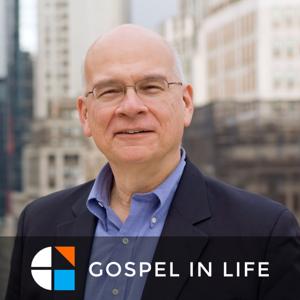
Sermons by Timothy J. Keller (1950-2023), founding pastor of Redeemer Presbyterian Church in New York City, co-founder of Redeemer City to City, and the author of numerous books, including The Reason for God, The Prodigal God, Making Sense of God and The Meaning of Marriage. His thirty-one books have sold more than six million copies and have been translated into twenty-nine languages.
For more sermons and resources, visit www.gospelinlife.com.
Ranked by our users in the last 21 days

1,653 Listeners
1,124 Listeners
3,945 Listeners

2,265 Listeners

19,473 Listeners

1,454 Listeners

1,125 Listeners
1,477 Listeners

6,011 Listeners

2,186 Listeners

2,054 Listeners

340 Listeners

220 Listeners
1,816 Listeners

739 Listeners