
Sign up to save your podcasts
Or

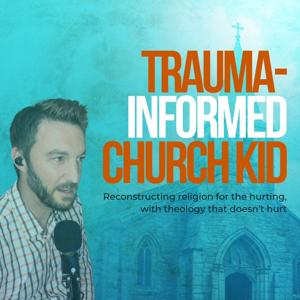


Season 2 Episode 4 of the Trauma-Informed Church Kid podcast
The deliverer of Abraham's family returns to his people, but the job is not yet done. Pharaoh likes his power, he likes having his slaves, and he isn't about to let them leave. In fact, he makes it much worse for them: forcing them to work with fewer materials and then blaming them when they can't do what they used to. The appearance of Adonai in his throne room has strengthened his resolve: like clay in the sun, he hardens and cracks. Will Abraham's family do the same? Can they endure the suffering and come out on the other side?
Join us as we look at Exodus 4-6, examining the response of Pharaoh and the Hebrews to the appearance of God in their midst. We will look at what "hardening" means, and see if this is something God is to blame for. We will explore how abusive systems never welcome deliverance, and how that deliverance can often be slow and painful. We will ponder the features of abusive systems, and identify them in the narrative: collusion/complicity, victim-blaming, pointing fingers, and the like. We will listen to the complaints of the people to Moses, and Moses to God, that He simply isn't doing enough to make things right. In the end, we take a long and hard look at the role of suffering in the process of healing, and attempt to understand how to be both strengthened (in a good way) and softened by suffering.
I hope you will join me on this journey to find resurrection on the other side of deconstruction! Please like, subscribe, and/or leave a comment!
----more----
SHOW NOTES/REFERENCES
https://www.cambridge.org/core/journals/classical-quarterly/article/abs/divinity-of-the-pharaoh-in-greek-sources/10B843BD8305A47AFB789F70AF0E7D11
https://www.historyandmyths.com/2025/02/egyptian-creation-myths-legends-gods.html
https://www.psychologytoday.com/us/blog/get-out-of-your-mind/200901/a-human-life-is-not-a-problem-to-be-solved
----more----
SUBSCRIBE/FOLLOW LINKS Spotify: https://open.spotify.com/show/0LQnbcTTqZUGfMLliJCJim...
Apple: https://podcasts.apple.com/.../trauma.../id1760390486
Podbean: https://churchkidpod.podbean.com/
X: @churchkidpod
FB DISCUSSION GROUP https://www.facebook.com/share/g/17ATR1fAsd/
Season 2 Episode 3 of the Trauma-Informed Church Kid podcast
The family of Abraham has been enslaved and oppressed by the head of the superpower of the day. One man who grew up within that empire discovered that he identified with the "stranger" and is forced to leave -- to become a "stranger in a strange land". Those who remain behind groan with a deep, soul-level pain to their Father. He "remembers and knows" them, like a mama bear hearing her cub's cries of pain. Adonai is coming near to bring comfort and judgment: to cause to be the things that currently are not.
Join us as we look at Exodus 3-4, examining the incident at the burning bush and understanding God's Name better. We will look at what the "mountain of God" is, and begin to understand sacred space. We will explore the figure of the "Angel of the Lord" and his relationship to the Second Person of the Trinity. We will ponder if there is a fundamental difference between the Jesus of the New Testament, and the God of the Old. We will listen to Moses' protests about his calling, and see the true role of divine anger or wrath. In the end, we center our understanding of God's response to trauma as "He Who Causes to Be" -- as Creator, as Father, as Redeemer, and as Husband.
I hope you will join me on this journey to find resurrection on the other side of deconstruction! Please like, subscribe, and/or leave a comment!
SHOW NOTE REFERENCES
Dr Michael Heiser -- YHWH
Dr Michael Heiser -- The Two Powers in heaven
Kenites
The Angel of the Lord
----more----
SUBSCRIBE/FOLLOW LINKS
Spotify: https://open.spotify.com/show/0LQnbcTTqZUGfMLliJCJim...
Apple: https://podcasts.apple.com/.../trauma.../id1760390486
Podbean: https://churchkidpod.podbean.com/
X: @churchkidpod
FB DISCUSSION GROUP https://www.facebook.com/share/g/17ATR1fAsd/
Season 2, Episode 2 of the Trauma-Informed Church Kid podcast.
At the beginning of Exodus, the family of Abraham is in trouble. They have settled in the land of a foreign empire, but they are treated with fear and suspicion as strangers. What will become of the ones who will be the light to the nations?
We're not sure how or when exactly this came about, but in time the empire of Egypt does what all empires do: they treat humans as disposable. In service of building monuments to their own name and out of fear of those who are different, a series of Pharaohs enslave and oppress the family of Abraham. Does Adonai hear them; does he even care?
Join us as we look at Exodus 1-2, examining the difficult and uncomfortable issue of slavery in the Bible. We will look at the nature of "the stranger", and why Adonai cares so much about them. We will explore what the Scriptures say about the generational vortex of sin, reflect on the history of slavery in America and the West, wrestle with the complexities of a God who works with humans as they are, confess the bad which is in the Bible and the evil and wicked ways in which it has been used, and uncover the good that might be hard to see in the Scriptures. In the end, we center our understanding of slavery on the one who "took the form of a slave" (Phil 2:7) and opened the way to perfection for all the images of God -- oppressor and oppressed alike.
----more----
I hope you will join me on this journey to find resurrection on the other side of deconstruction! Please like, subscribe, and/or leave a comment!
SUBSCRIBE/FOLLOW LINKS
Spotify: https://open.spotify.com/show/0LQnbcTTqZUGfMLliJCJim...
Apple: https://podcasts.apple.com/.../trauma.../id1760390486
Podbean: https://churchkidpod.podbean.com/
X: @churchkidpod
FB DISCUSSION GROUP https://www.facebook.com/share/g/17ATR1fAsd/
Season 2, Episode 1 of the Trauma-Informed Church Kid podcast!
Spotify: https://open.spotify.com/show/0LQnbcTTqZUGfMLliJCJim...
Apple: https://podcasts.apple.com/.../trauma.../id1760390486
Podbean: https://churchkidpod.podbean.com/
X: @churchkidpod
Is the House of David TV series, currently streaming on Amazon Prime, any good? Is it closer to "The Ten Commandments" or "Prince of Egypt" or "Exodus: Gods and Kings"? Or is it just like all the other examples -- and there are far too many -- of cringey, cheap, contrived, and cloying faith-based media? What about its use of extra-biblical traditions? Can we trust the filmmakers to finally give us art that is beautiful, accurate, and moving?
This is the penultimate episode in Season 1, in another bonus review. This is mostly spoiler-free, although it does get into details which are also in the biblical narrative. I turn my somewhat-jaded eye (and heart) onto this adaptation of the story of David and Goliath, and find myself pleasantly surprised and cautiously hopeful for the future of Christian media. I hope this is one more waypoint on your journey to find resurrection on the other side of deconstruction!
What is the center of a person? Why does our heart need to be pure? How does God heal the broken-hearted? If our heart is sick, do we have free will? How can we be more free -- by choosing what we want, or choosing well? How do we "see" with the "eyes of the soul" what to choose? Is this even possible when that "eye" is darkened? What is the difference between soul and spirit? Is the soul created at the same time as the body, and how can it exist apart from the body? What does that mean, and how does that relate to the Resurrection body? What about final judgment? How can we have a secure soul-attachment to our bodies?
This is the (finally) final episode of our Anthropology of Adam series, looking at the Greek words for heart, will, mind/spirit, and soul. We will take a close look at how the nous (mind/spirit) is central the health of the soul, and what it means to love Adonai with our whole being. I hope you will join me for a journey to find resurrection on the other side of deconstruction!
The Mind and the Heart in the Christian East and West
Nous - OrthodoxWiki
Nathan Jacobs Podcast -- apokatastasis
Saint Origen - First Things
What in Tarnation? | Ancient Faith Ministries
Soul, Heart, and Mind: Orthodox video
Powers of the Soul: Orthodox video
What is "nature"? Did the first Christians change this because of Greek philosophy? What is a "person"? Whom am I, underneath all the "masks"? What does it mean to be Self-led, or self-controlled? What does it mean to partake of the divine nature, and how do we do that? What are passions, and how did we get them? How do we overcome them? Do we have a sin(ful) nature? Is it even possible for flesh to seek after God? And what purpose did the Law of God serve in this goal? What does it mean for our nature -- and person -- to find its rest in God?
This is the third of four in our Anthropology of Adam series. This one covers the Greek words for body, flesh, nature, being/essence, person, and individual/subject. This covers a ton of philosophical ground, but I hope it doesn't hurt your head too much. I always pray it doesn't hurt your heart. I hope that you can join me on this journey to find resurrection on the other side of deconstruction!
Orthodox Apologetics: Prosopon and Hypostases
St Gregory of Nyssa: Differentiating Ousia and Hypostasis | Eclectic Orthodoxy
The Christian Transformation of Greek Philosophical Concepts ---- The Distinction of ousia and hypostasis in the Formation of the Trinitarian Formula “One ousia and three hypostaseis”.
Basil ousia and hypostasis
Greek Trinitarian Terms in the Early Church (Part 1) – Krisis & Praxis
Anthropological background: The human composite and spiritual healing
Substance, Nature, and Human Personhood
The "Sinful Nature" Translation Dilemma and the Upcoming NIV Revision - Jason Staples
Our Heart is Restless Until It Rests in You - Augustine -
What is the human heart, according to the Bible? Is it the seat of thoughts, or emotions? How is it related to our desires and our wills? Is it "desperately wicked"? Can we trust our feelings? What does it mean to have our "bowels moved" for someone else, and is it really as gross as it sounds? Does God feel toward us like a Father, or like a Mother? Or does he just demand blood to satisfy his anger?
This is the second of three four "Anthropology of Adam" episodes, where we will look at the words in the Hebrew Bible which represent who adam is. Along the way, we learn that our hearts are deep, murky waters with thoughts and intentions that can either incline toward or away from Adonai. We also discover that Adonai himself is inclined toward us, with a gut-level compassion that comes out of his "womb". I hope you will join us on a journey to find resurrection on the other side of deconstruction.
What is "the flesh"? What is the best way to think of and treat our bodies? What is the relationship between the spirit and the body? Is our spirit the essence of who we really are? Or is that our soul? Is that something other than our body? Do we have souls or not? And will our bodies be part of the new heavens and new earth?
What are spiritual beings? Are they some kind of ethereal substance, or just in our minds? Are things in our minds real? Where do our thoughts come from? What about ideas? Can spiritual beings influence us, and in what ways do they do so? Is that the same as being "possessed"? What does it mean to conform our wills to theirs? And what does it mean to actually have "free" wills?
In this episode, we take a look at what it means to be human, and what it means to be a spiritual being, and explore the overlap of the two. Along the way, we discover that humans are permeable creatures: designed to have our wills interact with the wills of the spiritual realm. In the end, we try to understand how all this relates to everyday life and becoming better "spiritual beings" ourselves. I hope you will join me on the journey of finding resurrection on the other side of deconstruction!
But We Have the Mind of Christ | Ancient Faith Ministries
The Most Important Question -- Nathan Jacobs Podcast
What's a Spirit When It's at Home? | Ancient Faith Ministries
Bible Project video on spiritual beings
Stimulus - Reaction - Response graphic
From the publisher's feed
19,470 Listeners

612 Listeners

2,057 Listeners
245 Listeners

129 Listeners

15,941 Listeners
243 Listeners

38 Listeners
14 Listeners
17 Listeners