
Sign up to save your podcasts
Or

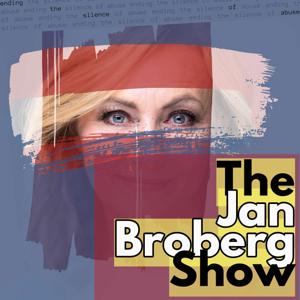


In this episode of Trauma Interrupted, Jan Broberg sits down with Dr. Kate Lund, licensed clinical psychologist, resilience expert, author of Bounce and her new release Step Away: The Keys to Resilient Parenting, for a conversation about what it actually takes to build resilience, in ourselves and in the kids we're raising.
Dr. Kate traces her path into psychology back to a childhood diagnosis of hydrocephalus and decades of managing a chronic medical condition, and the two explore how early struggle can shape a life's calling. They talk candidly about how trauma doesn't always surface right away, sometimes it takes decades, and why healing as an adult is one of the most powerful things a parent can model for their children.
The conversation moves through practical, usable tools: a simple breathing technique called the relaxation response, the power of daily gratitude journaling, a self-compassion exercise that sparked real breakthroughs in Jan's own survivor community, and honest talk about comparison culture, social media, and letting go of perfectionism.
Above all, this episode keeps circling back to one idea: there is always possibility on the other side of a challenge.
Where To Find Dr. Lund:
KateLundSpeaks.com
Insta: @dr_kate_lund
Resilient Parenting with Dr. Kate (Podcast)
The Optimized Mind (Podcast)
Buy Dr. Kate’s Books:
Step Away: The Keys to Resilient Parenting
Bounce: Help Your Child Build Resilience and Thrive in School, Sports and Life
If you or someone you know is experiencing emotional distress or suicidal ideation, please access the resources below:
National Suicide and Crisis Lifeline: Call/Text 988
National Sexual Assault Hotline (RAINN) : 1-800-656-HOPE (4673)
National Alliance for Mental Illness: 1-800-950-6264
🎧 LISTEN & SUBSCRIBE
🍎 Apple Podcasts
🎵 Spotify
▶️ YouTube
❣️ JAN BROBERG FOUNDATION
🌐 JanBrobergFoundation.org
🫂 Survivor Circle (free community)
⏳ T.I.M.E. Program
🔎 SPOT6
📖 The Jan Broberg Story (book)
🗞️ Newsletter
📲 CONNECT
📷 Instagram
🎶 TikTok
✍️ Share Your Story
💌 Fan Mail
Support the show
[Content Warning]: Discussions of childhood trauma, family violence, compulsive coping behaviors, religious and cultural trauma tied to LGBTQ identity and shame, and grief following the death of a parent.
What happens when the anger you've been taught to suppress finally has somewhere to go? In this episode of Trauma Interrupted, Jan Broberg sits down with Devin Scott, LMSW, NBC-HWC, and founder of Find Your Meaning, to talk about the parts of trauma recovery that don't get talked about enough: rage, disgust, and the long, non-linear road back to an authentic self.
Devin brings both clinical training and lived experience to this conversation, walking through why anger needs to be permissioned before it can be processed, how a child's disbelief from the adults around them can turn PTSD into complex PTSD, and why the coping strategies that once kept us safe often resemble pieces of who we really are underneath.
The conversation moves through breathwork and embodied consent, Buddhist and yogic frameworks for integrating mind and body, the double bind many LGBTQ people face between social conformity and countercultural pressure, and in one of the episode's most tender turns, what it means to make new meaning after profound loss.
This is a conversation about slowing down, trusting the body, and learning that healing isn't a straight line toward feeling nothing. It's learning to read the pain, the anger, and the grief as information, and building a life that can hold all of it.
Where To Find Devin M. Scott:
Find Your Meaning
If you or someone you know is experiencing emotional distress or suicidal ideation, please access the resources below:
National Suicide and Crisis Lifeline: Call/Text 988
National Sexual Assault Hotline (RAINN) : 1-800-656-HOPE (4673)
National Alliance for Mental Illness: 1-800-950-6264
🎧 LISTEN & SUBSCRIBE
🍎 Apple Podcasts
🎵 Spotify
▶️ YouTube
❣️ JAN BROBERG FOUNDATION
🌐 JanBrobergFoundation.org
🫂 Survivor Circle (free community)
⏳ T.I.M.E. Program
🔎 SPOT6
📖 The Jan Broberg Story (book)
🗞️ Newsletter
📲 CONNECT
📷 Instagram
🎶 TikTok
✍️ Share Your Story
💌 Fan Mail
Support the show
[Content Warning]: Discussions of childhood trauma, addiction, feelings of isolation, abandonment wounds
What does it actually take to heal, not manage, not cope, but truly heal, from the wounds we carry from childhood? In this episode of Trauma Interrupted, Jan Broberg sits down with Jessica Baum, licensed mental health counselor, founder of the Relationship Institute of Palm Beach, and author of the new book SAFE, to explore what the neuroscience of healing really tells us.
Jessica brings her expertise in interpersonal neurobiology and attachment theory to some of the questions survivors ask most: Why can't I just heal on my own? Why do my closest relationships feel the most unsafe? Why do I keep repeating the same patterns no matter how many self-help books I read?
The answer, she explains, lives in the body, in streams of implicit memory laid down long before we had words for what was happening to us. And the path is not a solo one. Healing, Jessica argues, requires at least one anchoring relationship: a safe nervous system to hold space while we revisit and integrate what we could not process alone.
Jan shares her own journey openly in this conversation, her experience of intergenerational trauma, the abandonment wounds she carried into adult relationships, and the moment when being truly believed by another person accelerated her healing in ways decades of effort had not.
Jessica also introduces her free Wheel of Attachment tool and a 40-minute bonus conversation with her mentor Bonnie Badenoch.
Where To Find Jessica:
Insta: @JessicaBaumLMHC
Buy Jessica's Books:
Safe: An Attachment-Informed Guide to Building More Secure Relationships
Anxiously Attached
Bonus Goodies From Jessica:
Wheel of Attachment (PDF)
Bonus 40-min conversation with Bonnie Badenoch
If you or someone you know is experiencing emotional distress or suicidal ideation, please access the resources below:
National Suicide and Crisis Lifeline: Call/Text 988
National Sexual Assault Hotline (RAINN) : 1-800-656-HOPE (4673)
National Alliance for Mental Illness: 1-800-950-6264
🎧 LISTEN & SUBSCRIBE
🍎 Apple Podcasts
🎵 Spotify
▶️ YouTube
❣️ JAN BROBERG FOUNDATION
🌐 JanBrobergFoundation.org
🫂 Survivor Circle (free community)
⏳ T.I.M.E. Program
🔎 SPOT6
📖 The Jan Broberg Story (book)
🗞️ Newsletter
📲 CONNECT
📷 Instagram
🎶 TikTok
✍️ Share Your Story
💌 Fan Mail
Support the show
[Content Warning]: Discussions of childhood sexual abuse, trauma responses, addiction, and intergenerational trauma
What happens when talk therapy takes you as far as it can go, and something still feels missing?
In this episode of Trauma Interrupted, Jan Broberg sits down with Christina Prokos, intuitive coach, shaman, and author of Embrace Your Shadows, a practical guide to inner child and shadow work. Christina has spent fifteen years helping survivors move from knowing their story to feeling relief in their bodies. She works where traditional therapy often plateaus, in the energetic, somatic, and spiritual dimensions of trauma healing.
Jan and Christina explore why shame sits at the center of almost every trauma response, how the body stores what the mind has tried to put away, and what it actually means to give your inner child what it needs. Christina shares her own history of childhood sexual abuse, family dysfunction, and the moment a healer showed up and named the wound she'd never been able to voice.
They also discuss soul retrieval, which is the shamanic process Christina uses with clients who have experienced deep soul loss through prolonged abuse and why healing in community, not isolation, is what moves the needle.
If you've done the work and still feel stuck, this conversation is for you.
Where to find Christina:
ChristinaProkos.com
Soul Thrive (Podcast)
Buy Christina’s Book: Embrace Your Shadows
Insta: @christina_life_spiritual_
Youtube: @christinaprokoslifespiritu6689
If you or someone you know is experiencing emotional distress or suicidal ideation, please access the resources below:
National Suicide and Crisis Lifeline: Call/Text 988
National Sexual Assault Hotline (RAINN) : 1-800-656-HOPE (4673)
National Alliance for Mental Illness: 1-800-950-6264
🎧 LISTEN & SUBSCRIBE
🍎 Apple Podcasts
🎵 Spotify
▶️ YouTube
❣️ JAN BROBERG FOUNDATION
🌐 JanBrobergFoundation.org
🫂 Survivor Circle (free community)
⏳ T.I.M.E. Program
🔎 SPOT6
📖 The Jan Broberg Story (book)
🗞️ Newsletter
📲 CONNECT
📷 Instagram
🎶 TikTok
✍️ Share Your Story
💌 Fan Mail
Support the show
[Content Warning]: Discussion of childhood sexual abuse, grooming
Trauma doesn't just leave emotional scars; it rewires the brain. In this episode of Trauma Interrupted, Jan Broberg sits down with Dr. Hector Rodriguez, an integrative psychiatrist, founder of White Butterfly Clinic in Miami, and holder of both a medical degree and a Master of Divinity. Dr. Hector brings a rare combination of neuroscience and soul-level care to a field that too often reduces people to their symptoms.
Together, Jan and Dr. Hector explore how traumatic events, especially those experienced in childhood, alter the nervous system, the immune system, and the brain's visual memory centers. Dr. Hector explains how SPECT brain imaging allows him to actually see trauma patterns in the brain, often uncovering buried wounds that no other test has been able to find. He shares the story of a patient in his late 60s who spent decades unable to sleep, only to discover through EMDR that a single witnessed assault at age four had quietly shaped his entire life.
The conversation moves through developmental trauma, the neuroscience of grooming, how freeze responses get mislabeled as weakness, and the delicate work of teaching children resilience without passing on generational fear. Dr. Hector also speaks openly about his own journey as a Cuban immigrant, his theological training, and why he believes the people who have had to rebuild themselves from the ground up are often the ones who change the world.
If you've ever been told to just get over it, dismissed by a doctor who couldn't find anything wrong, or wonder why certain things still affect you after all this time, this episode is for you.
Where To Find Dr. Hector Rodriguez:
White Butterfly Clinic
If you or someone you know is experiencing emotional distress or suicidal ideation, please access the resources below:
National Suicide and Crisis Lifeline: Call/Text 988
National Sexual Assault Hotline (RAINN) : 1-800-656-HOPE (4673)
National Alliance for Mental Illness: 1-800-950-6264
🎧 LISTEN & SUBSCRIBE
🍎 Apple Podcasts
🎵 Spotify
▶️ YouTube
❣️ JAN BROBERG FOUNDATION
🌐 JanBrobergFoundation.org
🫂 Survivor Circle (free community)
⏳ T.I.M.E. Program
🔎 SPOT6
📖 The Jan Broberg Story (book)
🗞️ Newsletter
📲 CONNECT
📷 Instagram
🎶 TikTok
✍️ Share Your Story
💌 Fan Mail
Support the show
[Content Warning]: Discussions of child sexual assault/abuse, neglect, child sexual exploitation, discussion of sexual acts, mild language
Kat Emrick grew up in a single-parent household in Michigan, moving between her mother's home and her aunt and uncle’s before landing, at around age 12 or 13, largely on her own. She was seeking connection and attention she hadn't found at home, and that vulnerability is exactly what a trafficker exploited.
In this episode of Trauma Interrupted, Jan Broberg sits down with Kat for a searingly honest conversation about what backyard trafficking actually looks like, not the high-profile Epstein-level cases that make headlines, but the everyday, neighborhood-level exploitation of kids that nobody wants to believe is happening. Kat shares how she was recruited, what the grooming process felt like from the inside, and what it meant to be a 13-year-old having sex with men in their suburban homes while their family photos looked down from the walls.
They also talk about what comes after: four marriages, four children, taking part in advocacy as a birth doula, and the persistent reality that trauma doesn't just end when the exploitation does. Kat is blunt, funny, self-aware, and unsparing, about the systems that failed her, the police who didn't believe her, and the ongoing lack of support available to survivors today.
This is a conversation about what we miss when we dismiss the "troubled teenager" in our neighborhood. And it's a conversation about what it takes to use your voice anyway.
Where To Find Kat:
Insta: @emotionalsupportbae
Mentioned Resources:
S.A.S.S. (Sexual Assault Survivor Stories)
If you or someone you know is experiencing emotional distress or suicidal ideation, please access the resources below:
National Suicide and Crisis Lifeline: Call/Text 988
National Sexual Assault Hotline (RAINN) : 1-800-656-HOPE (4673)
National Alliance for Mental Illness: 1-800-950-6264
🎧 LISTEN & SUBSCRIBE
🍎 Apple Podcasts
🎵 Spotify
▶️ YouTube
❣️ JAN BROBERG FOUNDATION
🌐 JanBrobergFoundation.org
🫂 Survivor Circle (free community)
⏳ T.I.M.E. Program
🔎 SPOT6
📖 The Jan Broberg Story (book)
🗞️ Newsletter
📲 CONNECT
📷 Instagram
🎶 TikTok
✍️ Share Your Story
💌 Fan Mail
Support the show
[Content Warning]: Discussion of child sexual abuse, suicidal ideation, intrusive thoughts of self-harm, and youth suicide.
What happens when the body holds a secret the mind hasn't found yet? In this episode of Trauma Interrupted, Jan Broberg sits down with Roanna (Ro) White, Australian educator, advocate, and entrepreneur, whose healing journey began not with a memory, but with a physical sensation she couldn't ignore.
Ro spent years managing high-functioning depression, gut health issues, and a nervous system that never seemed to rest. It wasn't until she entered somatic therapy that the body began to tell its story: a childhood sexual abuse experience she had no conscious memory of, buried since she was around four years old. From the first crack of awareness, Ro walked a long road, through CBT, antidepressants, insomnia, intrusive thoughts, and eventually toward something that looked a lot like freedom.
In this conversation, Jan and Ro explore what it means to heal when you don't know what you're healing from, why so many women in their 40s are only just beginning to process childhood trauma, and how community, service, and radical honesty became Ro's most powerful medicines. Ro also shares the inspiration behind her upcoming book, The Quiet Crisis, and her "hire a friend" connection platform Ynkyer, both born from her own experience of feeling profoundly alone while surrounded by people.
If you've ever thought something is off but couldn't name it, this episode is for you.
Where To Find Ro:
Insta: @One.Ro.Many.Roads
Youtube: @oneromanyroads
Keep Your Eyes Out For What’s Coming Up For Ro:
Upcoming Book: The Quiet Crisis: Understanding and Healing Loneliness in the Modern World (Find It On Amazon Upon Release)
Ynkyer (Still in development phase in Australia)
Mentioned Resources:
Workaway
If you or someone you know is experiencing emotional distress or suicidal ideation, please access the resources below:
National Suicide and Crisis Lifeline: Call/Text 988
National Sexual Assault Hotline (RAINN) : 1-800-656-HOPE (4673)
National Alliance for Mental Illness: 1-800-950-6264
🎧 LISTEN & SUBSCRIBE
🍎 Apple Podcasts
🎵 Spotify
▶️ YouTube
❣️ JAN BROBERG FOUNDATION
🌐 JanBrobergFoundation.org
🫂 Survivor Circle (free community)
⏳ T.I.M.E. Program
🔎 SPOT6
📖 The Jan Broberg Story (book)
🗞️ Newsletter
📲 CONNECT
📷 Instagram
🎶 TikTok
✍️ Share Your Story
💌 Fan Mail
Support the show
[Content Warning]: Discussion of childhood sexual abuse, sexual assault in a carceral setting, and graphic statistics related to child sexual abuse material and human trafficking.
What if the very thing you've been hiding is the thing that could set you free?
Sonny Von Cleveland is an author, speaker, and survivor who spent most of his childhood enduring sexual abuse by multiple perpetrators, beginning before he could form reliable memories of it. At 16, facing the compounded wreckage of an unprotected childhood, he entered the prison system and spent 18 years inside. Today he has recently been appointed as Director of Public Engagement and Content with Our Rescue and works alongside Operation Light Shine to fight child sexual exploitation and trafficking at the source.
In this conversation with Jan Broberg, Sonny introduces a framework he calls comparative trauma syndrome, the damaging habit of ranking our pain against someone else's, and based on that, deciding we're not worthy of healing. He and Jan explore why speaking about trauma isn't re-traumatizing but strengthening, why voice is the one healing tool no one can take from you, and what it actually means to interrupt your own trauma cycle.
They also go deep on Operation Light Shine's intercept task forces, the staggering gap in government funding for child exploitation prevention, and what every parent and every social media user can do right now to protect children.
Where To Find Sonny:
Buy Sonny’s book: Hey White Boy: Conversations of Redemption
Conversations of Redemption on Youtube
Our Rescue
Mentioned Resources:
Man’s Search for Meaning by Victor Frankl
Operation Light Shine
Hunting Warhead
If you or someone you know is experiencing emotional distress or suicidal ideation, please access the resources below:
National Suicide and Crisis Lifeline: Call/Text 988
National Sexual Assault Hotline (RAINN) : 1-800-656-HOPE (4673)
National Alliance for Mental Illness: 1-800-950-6264
🎧 LISTEN & SUBSCRIBE
🍎 Apple Podcasts
🎵 Spotify
▶️ YouTube
❣️ JAN BROBERG FOUNDATION
🌐 JanBrobergFoundation.org
🫂 Survivor Circle (free community)
⏳ T.I.M.E. Program
🔎 SPOT6
📖 The Jan Broberg Story (book)
🗞️ Newsletter
📲 CONNECT
📷 Instagram
🎶 TikTok
✍️ Share Your Story
💌 Fan Mail
Support the show
[Content Warning]: Discussions of childhood sexual abuse, physical and emotional abuse, parental betrayal, chronic trauma-related physical illness, and medical dismissal.
When doctors can't find anything wrong, it doesn't mean nothing is wrong; it may mean they're looking in the wrong place. In this episode, Jan sits down with Dr. David Clarke, a gastroenterologist-turned-pioneer in neuroplastic medicine, to explore the real, physical ways that trauma lives in the body long after the abuse has stopped. From a patient with one bowel movement a month to a man with 55 years of unexplained stomach pain, Dr. Clarke's stories aren't just remarkable — they're a roadmap for anyone who has ever been dismissed, misdiagnosed, or told to just get over it. This conversation is for every survivor who has wondered why their body still hurts.
Dr. David Clarke is a board-certified gastroenterologist and president of the Association for the Treatment of Neuroplastic Symptoms (ATNS), a volunteer-led nonprofit he founded to bring science-backed treatment to the millions of people whose physical symptoms are rooted in stress, trauma, and adverse childhood experiences. His book They Can't Find Anything Wrong is used as a medical school textbook in Slovenia and can be found in libraries across multiple continents.
Where To Find Dr. David Clarke:
They Can’t Find Anything Wrong by Dr David Clarke
Be Sure To Visit: Symptomatic.me
Dr. David Clarke’s Podcast: The Story Behind The Symptoms
If you or someone you know is experiencing emotional distress or suicidal ideation, please access the resources below:
National Suicide and Crisis Lifeline: Call/Text 988
National Sexual Assault Hotline (RAINN) : 1-800-656-HOPE (4673)
National Alliance for Mental Illness: 1-800-950-6264
🎧 LISTEN & SUBSCRIBE
🍎 Apple Podcasts
🎵 Spotify
▶️ YouTube
❣️ JAN BROBERG FOUNDATION
🌐 JanBrobergFoundation.org
🫂 Survivor Circle (free community)
⏳ T.I.M.E. Program
🔎 SPOT6
📖 The Jan Broberg Story (book)
🗞️ Newsletter
📲 CONNECT
📷 Instagram
🎶 TikTok
✍️ Share Your Story
💌 Fan Mail
Support the show
For the first time, Royce Rendon tells his story in full on Trauma Interrupted with Jan Broberg.
Content advisory: child sexual abuse, childhood neglect and abuse, addiction, and suicide.
Jan Broberg sits down with Royce Rendon, a survivor, writer, and advocate, to get the deep dive into his story that hasn't been publicly discussed before. Beginning with a short video about his story reaching millions of people and in this episode he talks, without holding back, about the parts that video could not hold: the childhood behind it, and the aftermath that came after.
Royce describes growing up as the child of a parent living with addiction, and what it does to a kid to become the adult in the room before they are ready. He talks about the pressure survivors face to perform a “good” recovery, the loneliness of healing in public, and how hard it was to find trauma-informed care. He and Jan talk honestly about the justice system, about what happens when a case does not move forward, and about why reporting still matters even when it feels like it doesn't.
It is a heavy conversation, and also a hopeful one. Royce ends with three dreams he is keeping alive, and a reminder that survivors get to decide for themselves what justice and healing look like.
This is the kind of conversation we made Trauma Interrupted for. Honest, survivor to survivor, with nothing performed and nothing exploited.
Where To Find Royce:
Insta: @RoyceRendon
Mentioned Resources:
The Crime Victims Treatment Center (New York)
If you or someone you know is experiencing emotional distress or suicidal ideation, please access the resources below:
National Suicide and Crisis Lifeline: Call/Text 988
National Sexual Assault Hotline (RAINN) : 1-800-656-HOPE (4673)
National Alliance for Mental Illness: 1-800-950-6264
🎧 LISTEN & SUBSCRIBE
🍎 Apple Podcasts
🎵 Spotify
▶️ YouTube
❣️ JAN BROBERG FOUNDATION
🌐 JanBrobergFoundation.org
🫂 Survivor Circle (free community)
⏳ T.I.M.E. Program
🔎 SPOT6
📖 The Jan Broberg Story (book)
🗞️ Newsletter
📲 CONNECT
📷 Instagram
🎶 TikTok
✍️ Share Your Story
💌 Fan Mail
Support the show
From the publisher's feed
Our Purpose
Trauma Interrupted with Jan Broberg exists to change the way trauma is understood, discussed, and healed. It is the primary public-facing voice of the…
Why It Matters?
Trauma narratives are often fragmented, sensationalized, or oversimplified. Survivors are either ignored or reduced to their worst moments. Trauma Interrupted reframes trauma as a human experience, not an identity, and recovery as a collective responsibility, not an individual burden.
The podcast is not just storytelling, it is movement-building media.

5,559 Listeners

10,442 Listeners
9,083 Listeners

2,763 Listeners

9,966 Listeners
13,695 Listeners
25,752 Listeners
10,269 Listeners
5,852 Listeners

2,453 Listeners
351 Listeners

29,187 Listeners
420 Listeners
8,373 Listeners
688 Listeners