
Sign up to save your podcasts
Or



Trey Knowles' Messenger RNA is a sharp, satirical comedy set where imagination and conspiracy collide. With playful humor, Trey spins the outrageous premise of Nazi extraterrestrial chemists secretly inserting RNA into American DNA—an operation he jokingly ties back to Operation Paperclip. The crowd laughs at the wild absurdity, but the real punchline sneaks up on them: what if something as ordinary as the vegetables we eat carried hidden RNA capable of influencing behavior?
With a mischievous grin, Trey delivers the twist—if one day you suddenly start thinking like Trump, how would you know your DNA hadn't been swapped with “Trump RNA”? Blending conspiracy-style storytelling with clever punchlines, Messenger RNA becomes a hilarious, thought-provoking ride that keeps audiences laughing while questioning the strange ideas of the modern age.
A bold and unforgettable comedy experience from Trey Knowles, Messenger RNA leaves the audience entertained, amused, and wondering just how far imagination can go.
Trey Knowles' Warning to the Skywatchers is an allegorical comedy layered with hidden meaning and symbolic critique. Through satire and imaginative storytelling, Knowles delivers a message directed at secret societies he believes operate behind the scenes of global power. Using humor as his vehicle, he warns these shadowy figures that their influence and carefully constructed schemes are temporary and ultimately destined to fail.
In the narrative, Knowles speaks of allies “from another world”—figures portrayed as advanced guardians equipped with extraordinary technology. These beings stand as protectors of humanity, ensuring that destructive forces do not prevail. His appeal is not merely personal; it is framed as a defense of his people and, more broadly, of humankind. He suggests that without these powerful protectors, secret networks would have already driven the world toward ruin.
Blending spiritual symbolism and science-fiction imagery, the video presents a dramatic warning to those Knowles calls the “Skywatchers.” In his allegory, the Skywatchers represent factions who attempt to monitor, study, or exploit these otherworldly forces for their own agenda. He portrays them as misguided and morally hollow—figures who misunderstand the nature of the beings they seek to control and who attempt to weaponize what they do not comprehend.
Ultimately, Warning to the Skywatchers stands as a provocative fusion of satire and symbolism, challenging hidden power structures while framing its message through cosmic imagery and moral confrontation.
Trey Knowles' “White People vs. Extraterrestrial White People” is a sharp and humorous comedy set in which he playfully explores the difference between ordinary white people and their supposed extraterrestrial counterparts living among us.
Through satire and imaginative storytelling, Knowles presents two contrasting groups. One group represents real people who strive to follow the will of God, care about humanity, and protect the Earth. The other group, however, represents deceptive forces that have no concern for the well-being of the planet or its people.
In the story, these “Extraterrestrial White People” symbolize beings who seek control rather than harmony. If they cannot dominate the Earth through power and influence, they would rather see the planet destroyed so that no one else can enjoy it. They build themselves up by exploiting the mistakes of others, presenting themselves as figures of justice while quietly benefiting from the wrongdoing that exists in the world.
Knowles uses humor and exaggeration to highlight a deeper idea: that true righteousness is measured not by appearance or claims of authority, but by actions that align with justice, truth, and the will of God.
Trey Knowles' “White People Are Innocent” is a satirical and thought-provoking work that uses humor and imagination to explore the topic of race in America. In the song, Knowles presents a playful concept: the historical mistreatment of Black and Indigenous people was not truly carried out by ordinary white people, but by “aliens” disguised among them—beings who do not follow the will of God. In this symbolic sense, anyone who acts in opposition to God's will becomes like an alien to His truth.
Through this imaginative perspective, the song invites listeners to step back from division and reflect on a deeper message about unity, forgiveness, and spiritual awareness. Beneath the humor lies the idea that humanity's real struggle is not simply against one another, but against unseen influences that promote deception, hatred, and conflict.
This theme reflects the message found in Ephesians 6:12: “For our struggle is not against flesh and blood, but against the rulers, against the authorities, against the powers of this dark world and against the spiritual forces of evil in the heavenly realms.”
By blending satire, storytelling, and spiritual reflection, “White People Are Innocent” encourages listeners to move beyond surface-level divisions and instead seek truth, love, and unity among all people.
In “Wales vs. Congo,” Trey Knowles delivers a bold and hilarious comedic performance in which he goes head-to-head with Satan himself. In the story, Satan arrives in the Congo with one goal—to steal, exploit, and destroy. Attempting to bargain for control of Congo's vast resources, he offers the world in exchange for what rightfully belongs to the people.
But Trey isn't buying it. With sharp wit and fearless humor, Trey shuts the deal down and sends Satan packing back to Wales. Along the way, he exposes the real “elephant in the room”—the hidden powers and systems established in high places that profit from exploitation while pretending to offer help.
Refusing to sell out Congo's wealth, Trey declares that its resources belong to the people and ultimately to God. In a biting moment of satire, he identifies Satan as the “white Lucifer” and the “red dragon from Wales,” blending biblical imagery with historical commentary. The “red dragon” directly echoes the imagery of the Book of Revelation, where the dragon symbolizes Satan, while also referencing the famous red dragon on the Welsh flag.
Through humor, symbolism, and fearless commentary, “Wales vs. Congo” becomes more than a comedy—it's a clever confrontation of exploitation, power, and spiritual deception, all wrapped in Trey Knowles' unmistakable style.
Trey Knowles' “Hate Chicago 60606” is a comedic routine in which he humorously explains his dislike for Chicago, focusing on what he sees as the city's sinfulness. He jokingly portrays the 60606 zip code as “the devil's zip code,” claiming it's a place where much wrongdoing occurs. Throughout the performance, Knowles highlights his frustrations with the city and even praises Donald Trump as someone who could help “clean up” the devil's work in Chicago.
His “hate” is less about the city itself and more about what it represents—systems that exploit people while pretending to be the center of progress.
“Blessed and Alive – September 2, 2025” by Trey Knowles is an allegorical comedy that tells the story of a powerful yet corrupt ruler whose life is miraculously spared by God.
Rather than responding with humility or mercy, the ruler chooses violence, taking the lives of others instead of valuing the grace he received. Through this symbolic parable, Trey Knowles blends spiritual commentary with humor, even connecting the message to his personal fear of fishing—joking that the devil does not spare lives but simply blows people out of the water.
The narrative continues as the ruler launches another missile strike on September 15, 2025, revealing an ongoing pattern of wickedness. Moving into 2026, the allegory portrays the ruler persisting in destructive actions, emphasizing the recurring cycle of power without repentance and mercy rejected despite divine warning.
Trey Knowles' “America is Like Julius Caesar” is a comedic take on America's character, likening the nation to Julius Caesar—proud, arrogant, and self-important. Through humor, Knowles highlights how America often acts in ways that contrast with God's humility, while also raising questions about where this attitude shows up and who originally shaped the nation.
Trey Knowles' Hollywood Judgement Day is a thought-provoking comedy that uses allegory to examine the spiritual principle that those who bless Israel will be blessed, and those who curse Israel will be cursed. In the story, Trey wrestles with a provocative question: What if Europe, America, and even the churches have misunderstood who they are blessing—and in doing so, are cursing the true Israel through hatred toward certain groups of people based on skin color? By raising this tension, Trey challenges his audience to think more deeply about faith, identity, and accountability. Drawing on Matthew 25:40—“The King will reply, ‘Truly I tell you, whatever you did for one of the least of these brothers and sisters of mine, you did for me'”—the narrative emphasizes the weight of influence. Those who lead others away from the spirit of God risk placing a spiritual burden upon them. In contrast, those who guide people to live in alignment with God's spirit become a source of blessing.
Trey Knowles' “Lady Liberty”
In this allegorical comedy, Trey Knowles portrays Lady Liberty as a tempting serpent—whispering that you can be your own god and do whatever you please. He draws a sharp parallel to the serpent in the Garden of Eden, challenging the idea of “the land of the free and the home of the brave” by exposing the deceptive freedom it represents.
From the publisher's feed
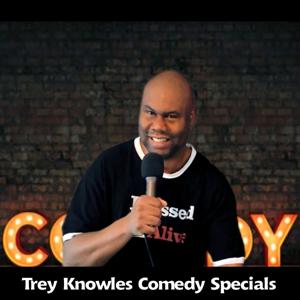
Step into a world where the ordinary becomes unforgettable. Trey Knowles Comedy brings everyday life to the spotlight, transforming familiar moments into laugh-out-loud stories that resonate with audiences everywhere. With a natural, easygoing style, Trey Knowles delivers clean, relatable humor rooted in real experiences—awkward encounters, daily frustrations, and the small details we all recognize but rarely stop to laugh about.
What sets Trey apart is more than just his punchlines—it's his perspective. Blending sharp observational comedy with thoughtful storytelling, he crafts performances that go beyond entertainment. His work often carries deeper meaning, exploring themes like faith, truth, deception, and the human experience in today's world. Through allegory, subtle satire, and clever biblical references, Trey creates a unique balance of humor and insight.
Trey Knowles Comedy isn't just about making people laugh—it's about making them think, reflect, and see life differently. With every set, he invites audiences to find humor in their own lives while uncovering meaning beneath the surface.