
Sign up to save your podcasts
Or

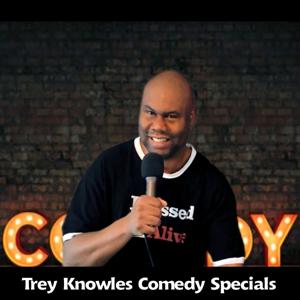


In “Pawns of America,” Trey Knowles turns the stage into a chessboard — and asks one bold question: Are we players… or pieces?
Blending sharp allegory with fearless satire, Trey explores the idea that the real battle isn't just political or cultural — it's spiritual. With dramatic humor and layered metaphors, he compares modern America to a strategic game where powerful forces move people like pawns, targeting their desires, fears, and ideologies to keep them divided.
Through clever punchlines and exaggerated storytelling, Trey unpacks how manipulation, gaslighting, and greed can steer entire populations. He jokes about the “Haves,” the “Have-Nots,” and the “Have-a-Little, Want More” crowd — the middle stuck in between — trying to play it safe in a high-stakes poker game of power.
But at its core, this isn't just political satire. It's spiritual comedy with an edge. Trey challenges the audience to armor up, stand firm, and refuse to be controlled by whatever “principalities” are trending this election cycle.
Provocative. Thought-provoking. Unapologetically bold.
This is “Pawns of America.”
Trey Knowles' “Behavior of Matter” is a wild allegory comedy in which celestial AI invaders adopt human mannerisms and arm the Slavs with deadly know‑how to assert their dominance. In branding one‑third of Earth's population “inferior,” these so‑called “master race” experiments implode, unleashing a riotous Slavonic Apocalypse. Brimming with sharp wit and imaginative twists, this satire will keep your mind--and your funny bone--on its toes.
In his 2025 comedy special “Leo,” Trey Knowles jokes about the newly elected Pope, playfully insisting that he's not about to call that man “father.” He laughs at the coincidence that Pope Leo happens to be connected to Chicago's 60606 zip code, adding his own comedic spin to the moment.
With his signature humor, Trey reminds audiences of Yeshua's teaching not to call any man on earth “father,” because there is only one Father in heaven. Through satire and wit, he nudges listeners to think about the weight we place on religious titles, encouraging them to seek spiritual truth over earthly labels.
Trey Knowles' “Surrogate” is an allegorical comedy that explores the intersection of faith, technology, and the condition of the human spirit. Through satire and symbolic storytelling, the performance reflects on humanity's growing dependence on technological power while questioning what is lost when spiritual guidance is replaced by human innovation and self-reliance.
Within the narrative, a character inspired by Elon Musk is portrayed as a modern, Brainiac-like figure—an inventor whose pursuit of advancement borders on attempting to control creation itself. In contrast, Trey Knowles appears as Clerk Kent, a messenger figure delivering a cautionary warning: humanity must exercise humility, repent, and resist the temptation to assume the role of God.
Core Themes Explored in “Surrogate” Faith vs. Technology: The comedy examines the tension between trust in divine purpose and reliance on technological solutions, suggesting that innovation should not replace spiritual grounding. Human Hubris: Through satire, the story highlights the risks of unchecked ambition when individuals attempt to reshape life or creation without moral restraint. Repentance and Humility: The narrative calls for self-reflection, encouraging audiences to recognize human limitations and respect the sacred boundaries of creation.
The Human Spirit: Beneath the humor lies an affirmation of humanity's spiritual resilience, emphasizing faith, conscience, and moral responsibility in an increasingly technological world. Together, these elements create a thought-provoking comedic parable about modern society's relationship with faith, morality, and innovation. Disclaimer: This work is presented as comedy and satire. The jokes and portrayals are intended for entertainment and artistic expression and are not meant to be taken literally or as factual statements.
Trey Knowles' “Archetype” is an allegorical comedy about an orchestrated kingdom that plants seeds—like the seeds in Jack and the Beanstalk—in order to possess and destroy the avatars of the earth for the benefit of their royal master.
The comedy opens with Trey Knowles witnessing the arrival of the naked Terminator—symbolizing the falling angels—descending from the sky and unleashing chaos upon the avatars of the world. The Terminator begins manufacturing weapons and distributing them among the people, orchestrating conflicts that cause them to destroy one another. By arming both sides of every conflict, the Terminator becomes like a prostitute of war, selling destruction to all.
Yet the Terminator pretends to be righteous, proclaiming, “I have nothing to do with this—these people are uncivilized sinners,” while secretly watching them annihilate one another with the very weapons he supplied.
Meanwhile, the children of Hagar and Rachel suffer the consequences, as the weapons of the Terminator bring devastation upon them. Drones rain destruction from the sky. Trey Knowles references Terminator: Rise of the Machines as a visual metaphor to illustrate this archetype—comparing it to the naked conqueror archetype embodied by figures like Alexander the Great, who spread chaos and conquest across nations.
In this allegorical comedy, Trey Knowles speaks directly to the avatars of the world about the nature of archetypes—forces that influence cultures and civilizations. These archetypes can transform nations, turning places like Saudi Arabia into something resembling Las Vegas, reshaping societies and cultures into the opposite of their original nature.
“Archetype” ultimately explores the contrast between the archetypes of good and evil—the seeds from which actions and kingdoms grow. The message is rooted in the ancient passage from Genesis 3:15:
“And I will put enmity between you and the woman, and between your offspring and hers; he will crush your head, and you will strike his heel.”
Through satire, symbolism, and comedy, Trey Knowles reveals the ongoing struggle between these two seeds—the seed of destruction and the seed of redemption.
In his comedic allegory Mankind of a Man, Trey Knowles humorously explores themes of race and genetics through satire. He playfully contrasts the idea that a Black couple might have a white baby—something people may consider possible—with the clearly unrealistic notion of a baby having animal-like hair.
Through this lighthearted yet thought-provoking approach, Knowles reflects on society's assumptions about race, heredity, and human identity. Using humor to address complex ideas, he encourages the audience to think more deeply about the biblical passage in Genesis: “Let us make mankind in our image, in our likeness.”
When hypocrites judge you, they will eventually consume their own judgment. In this comedy special, Trey Knowles challenges what it truly means to be the “target audience.” Some will miss the full picture because they focus on fragments instead of the whole message. The target audience he speaks to is not defined by popularity—but by discernment.
There are those who can no longer distinguish good from bad, or bad from good. Emphasizing one word is not the same as guarding what you allow into your heart and mind. “What agreement is there between righteousness and unrighteousness?” This question becomes both a conviction and a comedic tension point throughout the special.
Trey Knowles openly confesses his desire to stop feeding his heart and mind with things that corrupt his spirit. Some who watch—those truly meant to receive it—will be blessed. Others will respond differently, depending on the compromises they are holding onto internally. As Jesus declared in Matthew 6:24, “No one can serve two masters.
Either he will hate the one and love the other, or he will be devoted to the one and despise the other.” God and the spirit of this world stand in complete opposition. It is impossible to fully love one without rejecting the other.
Those who attempt to hold onto both will become unstable in all their ways. This comedy special delivers darts of conviction and change to those who are willing to watch it in its entirety.
As written in Ephesians 1:4, “Even before He made the world, God loved us and chose us in Christ to be holy and without fault in His eyes.” “Target Audience” is more than comedy—it is confrontation, confession, and a call to choose.
Trey Knowles' No is a bold, laugh-out-loud comedy special that turns one small word into a powerful weapon against chaos, temptation, and everyday foolishness. With sharp wit, relatable stories, and fearless honesty, Trey takes the audience on a hilarious journey through life's absurd moments — from awkward encounters to spiritual wake-up calls — all while reminding us of the freedom found in setting boundaries. More than just jokes, No delivers truth wrapped in humor, showing how saying “no” to ungodliness and worldly distractions can lead to a life that's disciplined, joyful, and purpose-driven. This special blends faith, culture, and comedy into a refreshing experience that will have you laughing, thinking, and nodding your head in agreement. Get ready to laugh hard, think deeper, and reclaim the power of one simple word — No.
Trey Knowles' Wonderland brings bold, faith-driven comedy that explores culture and the spiritual influences that often stand in opposition to God. In this stand-up special, Trey dives headfirst into a world of skepticism—critiquing everything from Walt Disney to psychics, sorcerers, and modern spiritual trends. With sharp humor, sarcasm, and biblical insight, he challenges the illusions and deceptions shaping our minds and lifestyles. Through laughter and truth, Trey encourages audiences to reject the lies of the world, rebuke the enemy, and seek God above all else. Wonderland opens our eyes to hidden truths—things we often overlook unless we're truly paying attention. So, are you ready to venture into the world of Wonderland? “The thief comes only to steal, kill, and destroy” — your mind, your focus, and your attention—tempting you to idolize a life that was never meant for you. Will you allow yourself to wander through Wonderland, or will you devote yourself to God and watch the enemy flee? Trey Knowles' Wonderland is more than comedy—it's a wake-up call, revealing what many fail to see in today's world.
From the publisher's feed
Step into a world where the ordinary becomes unforgettable. Trey Knowles Comedy brings everyday life to the spotlight, transforming familiar moments into laugh-out-loud stories that resonate with audiences everywhere. With a natural, easygoing style, Trey Knowles delivers clean, relatable humor rooted in real experiences—awkward encounters, daily frustrations, and the small details we all recognize but rarely stop to laugh about.
What sets Trey apart is more than just his punchlines—it's his perspective. Blending sharp observational comedy with thoughtful storytelling, he crafts performances that go beyond entertainment. His work often carries deeper meaning, exploring themes like faith, truth, deception, and the human experience in today's world. Through allegory, subtle satire, and clever biblical references, Trey creates a unique balance of humor and insight.
Trey Knowles Comedy isn't just about making people laugh—it's about making them think, reflect, and see life differently. With every set, he invites audiences to find humor in their own lives while uncovering meaning beneath the surface.