
Sign up to save your podcasts
Or

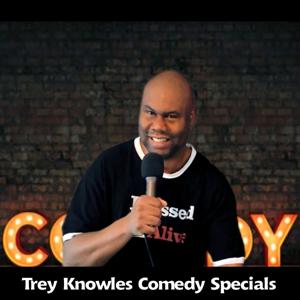


Trey Knowles' “Surrogate” is an allegorical comedy that explores the intersection of faith, technology, and the condition of the human spirit. Through satire and symbolic storytelling, the performance reflects on humanity's growing dependence on technological power while questioning what is lost when spiritual guidance is replaced by human innovation and self-reliance.
Within the narrative, a character inspired by Elon Musk is portrayed as a modern, Brainiac-like figure—an inventor whose pursuit of advancement borders on attempting to control creation itself. In contrast, Trey Knowles appears as Clerk Kent, a messenger figure delivering a cautionary warning: humanity must exercise humility, repent, and resist the temptation to assume the role of God.
Core Themes Explored in “Surrogate”
Faith vs. Technology: The comedy examines the tension between trust in divine purpose and reliance on technological solutions, suggesting that innovation should not replace spiritual grounding.
Human Hubris: Through satire, the story highlights the risks of unchecked ambition when individuals attempt to reshape life or creation without moral restraint.
Repentance and Humility: The narrative calls for self-reflection, encouraging audiences to recognize human limitations and respect the sacred boundaries of creation.
The Human Spirit: Beneath the humor lies an affirmation of humanity's spiritual resilience, emphasizing faith, conscience, and moral responsibility in an increasingly technological world.
Together, these elements create a thought-provoking comedic parable about modern society's relationship with faith, morality, and innovation.
Disclaimer: This work is presented as comedy and satire. The jokes and portrayals are intended for entertainment and artistic expression and are not meant to be taken literally or as factual statements.
Trey Knowles' People Shouted is an allegorical comedic opera that reimagines a historic chant for a new century. In the song, crowds proclaim, “Trump has outvoted his millions, Obama outvoted his tens of millions,” echoing the biblical refrain, “Saul has slain his thousands, and David his tens of thousands.”
Blending political satire with operatic performance, Knowles revives an ancient comparison of public acclaim and leadership rivalry, transforming it into a modern chorus of public opinion. People Shouted uses humor, symbolism, and dramatic vocal expression to present an allegorical comedy that reflects how societies celebrate, compare, and elevate their leaders through collective voices.
Trey Knowles' “Azazel: The United States 5-Star General” is an allegorical comedy that fuses dark humor with pointed social satire. The story imagines a powerful U.S. five-star general overtaken by the ancient entity Azazel, whose influence quietly spreads into the minds of prominent technology innovators, including Elon Musk and Palmer Luckey. Under this unseen spiritual manipulation, advanced artificial intelligence and autonomous weapon systems are accelerated toward a future that threatens humanity itself.
Through satire and symbolic storytelling, Knowles challenges audiences to reflect on the difference between humanity as divine image-bearers and a society increasingly shaped by corruption, ambition, and unchecked technological power. The narrative uses comedy to raise unsettling questions about influence, control, and the moral direction of modern innovation—inviting readers to consider whether progress is always guided by human conscience.
Drawing from Jewish apocryphal tradition, particularly the Book of Enoch, Azazel is depicted as a fallen being who introduced forbidden knowledge to humankind, including warfare and destructive arts. In Knowles' allegory, this ancient symbolism is reimagined for the modern age, transforming technological advancement into a stage for spiritual and ethical conflict wrapped in dark comedic insight.
Trey Knowles' “Babylon Crypto Project” draws inspiration from the biblical warning, “do not love money,” emphasizing the danger of becoming consumed by wealth rather than living with spiritual balance and contentment. Rooted in Hebrews 13:5 — “Keep your lives free from the love of money and be content with what you have” — the work explores how obsession with financial power can corrupt human values and distort purpose. Through allegorical comedy, Knowles examines a world where money is no longer a tool but an idol. As society elevates wealth to divine status, currency transforms into a controlling force—symbolized as a living parasite that feeds on ambition, fear, and dependency. Babylon Crypto Project humorously yet provocatively reveals the consequences that unfold when humanity worships profit over principle and allows material gain to govern the soul.
Trey Knowles' Warning to the Skywatchers is an allegorical comedy layered with hidden meaning and symbolic critique. Through satire and imaginative storytelling, Knowles delivers a message directed at secret societies he believes operate behind the scenes of global power. Using humor as his vehicle, he warns these shadowy figures that their influence and carefully constructed schemes are temporary and ultimately destined to fail.
In the narrative, Knowles speaks of allies “from another world”—figures portrayed as advanced guardians equipped with extraordinary technology. These beings stand as protectors of humanity, ensuring that destructive forces do not prevail. His appeal is not merely personal; it is framed as a defense of his people and, more broadly, of humankind. He suggests that without these powerful protectors, secret networks would have already driven the world toward ruin.
Blending spiritual symbolism and science-fiction imagery, the video presents a dramatic warning to those Knowles calls the “Skywatchers.” In his allegory, the Skywatchers represent factions who attempt to monitor, study, or exploit these otherworldly forces for their own agenda. He portrays them as misguided and morally hollow—figures who misunderstand the nature of the beings they seek to control and who attempt to weaponize what they do not comprehend.
Ultimately, Warning to the Skywatchers stands as a provocative fusion of satire and symbolism, challenging hidden power structures while framing its message through cosmic imagery and moral confrontation.
Trey Knowles' Harvest Food is a satirical allegorical comedy built around a simple but thought-provoking question: “What kind of harvest do you want to gather?” In the story, Trey asks American audiences what they do with spoiled or unhealthy food.
Most respond that bad fruit is discarded and cannot be kept. The audience does not realize they have been led into a moral trap, and through their own words they unknowingly pronounce judgment on themselves.
Through humor and irony, the conversation becomes a metaphor about discernment, personal choices, and the consequences of what people cultivate in their lives—spiritually, morally, and culturally.
The audience gradually realizes that the “harvest” represents the values and behaviors a society chooses to celebrate or reject. Using biblical imagery—such as warnings about desolation and the moral decline described in Romans 1—the story presents a call to repentance, humility, and spiritual reflection. Rather than condemning individuals, the allegory challenges readers to examine their own lives, asking what kind of fruit they are producing and what kind of harvest they are preparing.
Trey Knowles' The Yiddish Interpreter is an allegorical satire that delivers a provocative message through sharp comedy and symbolism.
In the story, extremist figures conduct secret conversations in Yiddish about misdirected government funds—money intended for Israeli Ashkenazi Jews and the Rothschild's disappears into powerful financial hands. Meanwhile, a religious authority figure, symbolizing an empire-driven institution, works to distance people from a direct relationship with God.
When Trey Knowles is kidnapped and forced to serve as the interpreter of these concealed discussions, he becomes the unexpected bridge between hidden agendas and public truth.
Through satire, irony, and layered symbolism, the story exposes a deeper spiritual conflict—contrasting corruption and manipulation with the call to personal faith, discernment, and spiritual freedom.
In his stand-up bit “The Vatican Is Stealing,” Trey Knowles delivers a bold and humorous warning to his audience to “watch out for the Vatican,” playfully calling it the ultimate thief. With sharp satire, Trey jokes that if they could steal from Jesus, they could steal from anyone. He quips that they “took” Peter the Apostle and claimed the keys of heaven for themselves.
Keeping his tongue firmly in cheek, Trey pushes the exaggeration even further, teasing that you can't trust your little boys—or even your real estate—around them. Through over-the-top humor, he uses satire to question power, tradition, and institutional authority.
In his 2025 comedy special “Leo,” Trey Knowles jokes about the newly elected Pope, playfully insisting that he's not about to call that man “father.” He laughs at the coincidence that Pope Leo happens to be connected to Chicago's 60606 zip code, adding his own comedic spin to the moment.
With his signature humor, Trey reminds audiences of Yeshua's teaching not to call any man on earth “father,” because there is only one Father in heaven. Through satire and wit, he nudges listeners to think about the weight we place on religious titles, encouraging them to seek spiritual truth over earthly labels.
In “Pawns of America,” Trey Knowles turns the stage into a chessboard — and asks one bold question: Are we players… or pieces?
Blending sharp allegory with fearless satire, Trey explores the idea that the real battle isn't just political or cultural — it's spiritual. With dramatic humor and layered metaphors, he compares modern America to a strategic game where powerful forces move people like pawns, targeting their desires, fears, and ideologies to keep them divided.
Through clever punchlines and exaggerated storytelling, Trey unpacks how manipulation, gaslighting, and greed can steer entire populations. He jokes about the “Haves,” the “Have-Nots,” and the “Have-a-Little, Want More” crowd — the middle stuck in between — trying to play it safe in a high-stakes poker game of power.
But at its core, this isn't just political satire. It's spiritual comedy with an edge. Trey challenges the audience to armor up, stand firm, and refuse to be controlled by whatever “principalities” are trending this election cycle.
Provocative. Thought-provoking. Unapologetically bold.
This is “Pawns of America.”
From the publisher's feed
Step into a world where the ordinary becomes unforgettable. Trey Knowles Comedy brings everyday life to the spotlight, transforming familiar moments into laugh-out-loud stories that resonate with audiences everywhere. With a natural, easygoing style, Trey Knowles delivers clean, relatable humor rooted in real experiences—awkward encounters, daily frustrations, and the small details we all recognize but rarely stop to laugh about.
What sets Trey apart is more than just his punchlines—it's his perspective. Blending sharp observational comedy with thoughtful storytelling, he crafts performances that go beyond entertainment. His work often carries deeper meaning, exploring themes like faith, truth, deception, and the human experience in today's world. Through allegory, subtle satire, and clever biblical references, Trey creates a unique balance of humor and insight.
Trey Knowles Comedy isn't just about making people laugh—it's about making them think, reflect, and see life differently. With every set, he invites audiences to find humor in their own lives while uncovering meaning beneath the surface.