
Sign up to save your podcasts
Or

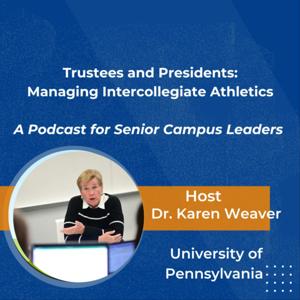


I so pleased to welcome back to the podcast Scott Pattison, Senior Fellow at the Institute of Fiscal Studies and Democracy at the University of Ottawa and the former CEO of the National Governors Association, Scott and his colleagues have been actively engaged in understanding the difficulties that state and local governments face in today's coronavirus world.
We specifically discuss this article about the City of Tuscaloosa's (AL) finances. We also discuss, in more detail, the 2019 report from the Joyce Foundation called "Recruiting The Out-Of-State University", which discusses how public land grant Universities, using their high profile football programs and other outreach activities, are attracting and retaining upper middle income, out-of-state students, instead of low to moderate income minority students from their own states.
This research points to the disconnect that schools like the University of Alabama and its vaunted football program have with instate minorities residents, despite making proclamations they are for "access" and "affordability".
Everything you wanted to know about the latest NCAA updates on Names, Images and Likenesses from two perspectives--from a member of the NCAA working group, Jill Bodensteiner, Athletics Director at Saint Joseph's University, and a sobering letter sent days later to NCAA President Mark Emmert from United States Senators Chris Murphy (CT) and Cory Booker (NJ), reminding all of us just how large the gap is in addressing this issue.
This week, we'll focus on two things: why college athletics should NOT start in Fall 2020 and a conversation with Henry Stoever, the President and CEO of the Association of Governing Boards in Washington, DC. Secondly, I wrote an article titled "Without A Vaccine, There Is No Way College Athletes Can Play This Fall" recently. I realize that headline is jarring. What? No college athletics this fall? How can you say that? How can you make a pronouncement like that? I get it. It was tough to write. I'll explain more in the podcast.
President Stoever discusses the laser focus Trustees need to have today on institutional mission and values, and how that translates to surviving and thriving in the Coronavirus era. It is a conversation worth every minute, as Trustees must fulfill their fiduciary responsibilities at the highest levels today. I hope you'll join us!
TIME magazine named Cowen one of the nation’s Top 10 Best College Presidents and he was one of only four university leaders nationwide to receive the 2009 Carnegie Corporation Academic Leadership Award. In 2010 Cowen was elected to the American Academy of Arts and Sciences, one of the world’s most prestigious honorary societies. That same year he was appointed by President Barack Obama to the White House Council for Community Solutions, which advised the President on ways to reconnect and empower young people who are neither employed nor in school.
We talk a lot about healthcare these days, and how much we admire those who are on the frontlines in our hospitals and in nursing homes. But stop and think for a second about nurses—where do they get their training? What is happening to those institutions in the middle of the coronavirus era? Simply, they matter-alot. Today, we’ll talk with Dr. Paula Langteau, President of an institution which has prepared nurses in South Dakota for decades. Presentation College is able to maintain the academic curriculum while operating virtually, as well as preparing the students to jump right into the front lines as soon as they graduate. They also have a robust athletics program which includes a number of nursing and medical students.
Also, I was interviewed recently by Matt Leon, reporter for KYW Radio in Philadelphia about the financial impact for small college athletic programs in particular, and college athletics in general. I hope that conversation gives you something to think about.
A few weeks ago, I wrote a column for Forbes about what lies ahead for athletics beyond the inevitable furloughs and layoffs. Today, I'll outline some of the strategies organizations should take to embrace the new normal, and not just fall victim to it.
I'm also joined by Dr. Pam Bruzina, professor at the University of Missouri-Columbia, and also their Faculty Athletics Representative to the Tigers Division I athletics program. Some of the topic areas we discussed included: How often do you interact with the President, the Athletic Department, the Faculty Senate (on issues regarding athletics) and any other campus wide committees? What kinds of conversations do you have with each area? Do you deliver presentations to the Board of Trustees? And how often do you interact with the other FARs of the SEC?
This week's podcast will look at two areas important to students and their families--the cost of a degree, and the experience they can expect on campus when they arrive. For the athletics department, there is a key individual outside of the athletic department whose job it is to ensure the athletic experience is consistent with the mission of the college--the Athletics Direct Report, unique to small college programs.
I'm joined by Dr. Lawrence Ward, from Babson College. He is the direct report at Babson, and has led workshops for other Division III schools on the importance of this role. He'll share with us how he navigates the myriad of responsibilities on campus.
We'll also look at some of the research involving student fees, and the evolving disproportionate impact these rising fees are having on student debt, particularly among women undergraduate students.
This podcast takes a deep dive into how Universities' Chief Financial Officers are handling this new era. As table top exercises are discussed, and the short, medium and long term financial impacts are implemented, Susan Whealler Johnston, PhD , President and CEO of the National Association of College and University Business Officers (NACUBO), provides you with an overview of finances in the post-COVID-19 world. Some of our conversation included:
To start off the podcast, Karen looks at the strong headwinds facing higher education and athletics, putting them squarely on the table in front of us. Her belief is we can't fix the problems if we don't acknowledge them. One of the emerging recommendations for small colleges is to become "laser-focused" on their mission and the students they serve. and today you'll hear from an outstanding leader who is doing that right now.
Linda Oubre became the President of Whittier College in 2018. Since then, she has been on a whirlwind journey to reframe the institution as a the leading Hispanic Serving Institution in the United States. 35% of her student population are athletes, and the alumni told her, as she began her tenure, they want a winning football program. Dr. Oubre walks us through her own presidential journey, which began with the athletic director resigning just as she arrived on campus. Today, Whittier is embracing the evolving demographic shift in higher education by becoming the go to campus for Latina females interested in STEM majors.
For more about what athletics can do today, here are some ideas from a recent article in Forbes.com.
From the president to the athletics director, former Vanderbilt University General Counsel Audrey Anderson walks us through the dynamics of the General Counsel's office on the campus of an SEC institution. Anderson, the former General Counsel at Vanderbilt University, explains the size of her portfolio, how she anticipates what the president needs to hear, and how to stay visible and approachable inside the athletics department. She discusses the important relationship with the NCAA Compliance Coordinator, and how important that dotted line reporting relationship was to the University as a whole. And...why the general counsel's office needs to see the contracts ahead of time for the half time performers!
After the conversation, you'll see how valuable a proactive, highly competent general counsel can be at the Division I level.
Also, in this age of #WorkFromHome", could you imagine doing almost anything without the internet? Karen provides some thoughts as to why this once "luxury" item should now be viewed as a "necessity", and regulated as such by the Federal Government, in a recent article on Forbes.com.
From the publisher's feed

31,909 Listeners
50 Listeners

147 Listeners

20,173 Listeners
152 Listeners

150 Listeners

9,062 Listeners

6,071 Listeners

195 Listeners
64 Listeners