
Sign up to save your podcasts
Or

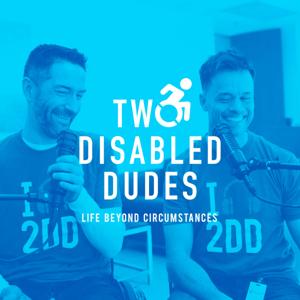


As promised, here is the second half of our interview with Ron Bartek, president and cofounder of the Friedreich’s Ataxia Research Alliance, or FARA. Please note that the audio quality is less than ideal, but still definitely enjoyable.
Along with Ron’s very impressive resume, we found out that he learned to sleep standing up in Army Ranger School. Ron discovered much of what the body could do when deprived of normal physical needs like sleep and food.
Ron shares about the experience of his son Keith’s diagnosis with Friedreich’s ataxia at nine-years-old. A counselor who noticed Keith’s problems with balance and coordination recommended that Keith go to a neurologist for a check-up. At that appointment few months later, Ron and his wife Raychel were told that Keith had Friedreich’s ataxia (FA), a condition they’d never heard of and couldn’t even spell. When they asked what they could do about this diagnosis, the neurologist gave a grim answer - nothing.
To Ron and Raychel that was not an acceptable answer so they began researching FA on their home computer. They learned about all the symptoms of the disorder, and all of their research was very disheartening. However there was one piece of good news - the year prior (this was in 1997), scientists discovered the specific gene that caused FA. Ron and Raychel believed that since the gene was identified, it would be much easier to find a treatment or a cure, but that there was no organization that specifically researched FA. They decided they would change that.
Ron, Raychel, 5 other parents of children with FA, 1 adult patient, and 3 scientists submitted paperwork to the District of Columbia to initiate FARA and become its first board of directors.
One of FARA’s first actions was the submittal of a proposal to the NIH for the first scientific conference on Friedreich’s ataxia. Four months later, the grant was funded by the NIH, and six months later, that conference was held for people allover the world to attend.
Important to note is at that first conference, no drug company wanted to attend (because it’s too rare, they said) and no clinical trials for FA was ever done. Today, multiple drug companies are aligned with FARA. And they are hopeful for a cure.
The source of FARA’s success can be summed up in one word: collaboration. Knowing that FA exists as a rare genetic anomaly is a boring statistic, but meeting FA patients, seeing their strengths and weaknesses, getting to know them - helps to bring out the humanity of those who live with FA.That humanity is central to what FARA is, and who Ron is. Whether he is partnering with a group of scientists and drug companies or following the two stripes on the soldier’s hat in front of him, Ron Bartek recognizes that our strength is found in our ability to collaborate with others.
The idea for the Ataxian Athlete Initiative (AAI) adaptive cycling equipment grant program came when Kyle received a grant from the Challenged Athletes Foundation, which he used to purchase a Catrike recumbent trike. That purchase changed his life: while on it, he didn’t feel as physically limited as he felt most times. Realizing how impactful that grant was for him, he created a grant specifically for people with FA, to purchase adaptive cycling equipment, which is often times cost prohibitive for someone with a disability.
Since 2009, the Ataxian Athlete Initiative has provided 32 individuals with adaptive cycling equipment. The application for 2017 is available now until May 1; any person with ataxia can apply by clicking “Apply for an AAI Grant” at curefa.org/aai, giving information on the applicant and what kind of equipment would work for them. Please remember that this is a competitive application process and funds are limited.
Some tips to consider when applying to the AAI:
And don’t forget that even those who don’t receive full or partial funding from the AAI will receive tips on how to make their application stand out more for other equipment grant programs or for the AAI again in the future.
Some of the links we talked about in this episode:
We are honored to interview Ron Bartek, president and co-founder of the Friedreich’s Ataxia Research Alliance, or FARA. Since both of us have FA, this organization and Ron himself are special to us.
In a word, Ron is a peacemaker. Kyle starts off by reading Ron’s long and impressive bio.. Of special note to Ron is that he was able to be a part of the negotiation team for the Intermediate-Range Nuclear Forces (INF) Treaty between The United States and The Soviet Union. As a school kid, Ron dreamed of being able to know enough about global superpowers that he would be able to help orchestrate peace between the US and the Soviet Union. After an impressive military career, he was a part of the INF Treaty, which helped put an end to the Cold War.
Shortly after that treaty was signed, Ron’s son was diagnosed with the rare disorder Friedreich’s ataxia (FA). Suddenly the world of the rare disease community opened up to him, and he decided to use his ample peacemaking skills in the fight against FA.
For our second interview before Rare Disease Day (Feb 28), we chat with Max Bronstein, Chief Advocacy and Science Policy Officer at The Everylife Foundation for Rare Diseases. The goal of the Foundation is to help advance innovation in the rare disease community; to advance knowledge and methods of support for those with a rare disease, and to ultimately look towards developing and enabling access to treatments or cures.
Max is a scientist at heart; he has been published in Nature and The New England Journal of Medicine which makes him a great ally in raising awareness of rare diseases. He uses his background in his job at The Everylife Foundation in two big ways.
One way that he uses his science background is what he calls regulatory issues. He does this by continuously holding meetings with large health and biotech and pharma partners. He speaks directly to the doctors and scientists at the forefront of cutting edge research in health and medicine and reminds them of the reality of rare diseases, a field often overlooked or forgotten.
Another way that Max is a voice for those in the rare disease community is by working in social policy issues. This is when Max sets up meetings with politicians so that the rare disease community is represented. This involves dialoguing with senators and representatives on Capitol Hill whenever drug costs, talks of healthcare, or any other issue related to the rare disease community arises, and also just to meet with them regularly to remind them of the reality of rare diseases. He regularly goes to both the White House and Congress.
Max explains these to us and walks us through a big success that The Everylife Foundation and other organizations helped push through instituted: the 21st Century Cures Act.
Keep in touch with The Everylife Foundation to keep up with all of their diverse efforts and find out how you can get involved! Visit their website at http://everylifefoundation.org/, follow them on Facebook: https://www.facebook.com/EveryLife4RareDiseases/, and Twitter: @EveryLifeOrg.
From the publisher's feed

91,018 Listeners

37,641 Listeners

43,362 Listeners

38,702 Listeners

26,829 Listeners

111,865 Listeners

56,449 Listeners

335 Listeners
14,362 Listeners

5,080 Listeners

13,011 Listeners

2,047 Listeners

10,763 Listeners

19,273 Listeners

12,497 Listeners