
Sign up to save your podcasts
Or

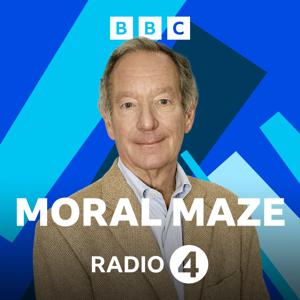

“Unacceptable” Opinions
Have you ever felt that you can’t say what you really think, that your honest opinions have become somehow unacceptable? It’s a common complaint that freedom of speech is being restricted, that more and more views have become inadmissible or rejected as intolerable. On social media, people expressing thoughts that would have hardly raised an eyebrow a generation ago, are viciously attacked and branded as bigots.
If that is a problem - and opinions differ - the government may be about to make it worse. Its Online Safety Bill, going through Parliament just now, is aimed at making the UK the safest place in the world to go online, but there are concerns that it could involve more censorship and less freedom.
It is surely good to have a diverse range of views openly and freely expressed in public, important for democracy for honest discourse and a sure sign of true freedom of speech. But others feel that cleaning up the public space of unsavoury, prejudiced and hateful views makes for a more civilised society. It creates safer, more respectful places for everyone. Offensive comments that were shamelessly expressed in the past about, for example black, gay or trans people are rarer now. Is this evidence that modern values like equality are being widely embraced, or a sign that people feel muzzled and their views, far from going away, are festering into conspiracy theories, extremism and even the threat of violence? Does it matter if the range of views we can express becomes narrower? With Eric Heinze, James Bloodworth, Joe Mulhall and Jeevun Sandher.
Producers: Jonathan Hallewell and Peter Everett
 View all episodes
 By BBC Radio 4

4.6
5151 ratings
“Unacceptable” Opinions
Have you ever felt that you can’t say what you really think, that your honest opinions have become somehow unacceptable? It’s a common complaint that freedom of speech is being restricted, that more and more views have become inadmissible or rejected as intolerable. On social media, people expressing thoughts that would have hardly raised an eyebrow a generation ago, are viciously attacked and branded as bigots.
If that is a problem - and opinions differ - the government may be about to make it worse. Its Online Safety Bill, going through Parliament just now, is aimed at making the UK the safest place in the world to go online, but there are concerns that it could involve more censorship and less freedom.
It is surely good to have a diverse range of views openly and freely expressed in public, important for democracy for honest discourse and a sure sign of true freedom of speech. But others feel that cleaning up the public space of unsavoury, prejudiced and hateful views makes for a more civilised society. It creates safer, more respectful places for everyone. Offensive comments that were shamelessly expressed in the past about, for example black, gay or trans people are rarer now. Is this evidence that modern values like equality are being widely embraced, or a sign that people feel muzzled and their views, far from going away, are festering into conspiracy theories, extremism and even the threat of violence? Does it matter if the range of views we can express becomes narrower? With Eric Heinze, James Bloodworth, Joe Mulhall and Jeevun Sandher.
Producers: Jonathan Hallewell and Peter Everett

7,698 Listeners

887 Listeners

1,064 Listeners
151 Listeners

5,540 Listeners

1,793 Listeners

1,764 Listeners

1,037 Listeners
2,101 Listeners

1,925 Listeners
34 Listeners
36 Listeners
409 Listeners
163 Listeners
40 Listeners
68 Listeners
113 Listeners
684 Listeners

3,172 Listeners

735 Listeners

1,003 Listeners

3,328 Listeners
1,159 Listeners
752 Listeners
42 Listeners