
Sign up to save your podcasts
Or

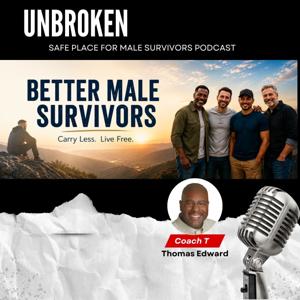


Why do so many survivors become the person everyone depends on?
In this episode of Things Nobody Ever Told Male Survivors, Coach T explores the hidden burden of always being the strong one.
Through the story of James, a man whose identity became built around taking care of everyone else, we examine how childhood sexual trauma often teaches survivors to become self-reliant, responsible, and emotionally self-sufficient long before they're ready.
We'll explore the difference between strength and self-abandonment, responsibility and over-responsibility, and why so many survivors measure their worth by how much they can endure.
With you in this,
Carry Less. Live Free!
THE LIFE NOBODY SEES
Why do so many survivors feel invisible, even when they're surrounded by people who care about them?
In this episode of Things Nobody Ever Told Male Survivors, Coach T explores the hidden loneliness many survivors carry—the feeling that people know what you do, but don't really know you.
Through the story of Andre, a respected educator, mentor, and community leader, we examine how childhood sexual trauma can teach survivors to hide in plain sight. You'll learn how secrecy, self-protection, and emotional invisibility often become survival strategies, and why being truly seen can feel both frightening and healing at the same time.
With you in this,
Carry Less. Live Free!
Life keeps Life'n
This was an episode Coach Thomas featuring Michael Skinner, a male survivor of childhood sexual, physical, and emotional abuse discussing his healing journey and what thriving looks like after trauma. Michael shared his story of abuse by both parents, and his escape through music.
https://www.mskinnermusic.com/book
With you in this,
Carry Less. Live Free!
Why do so many survivors long for connection yet pull away when people get close?
In this episode of Things Nobody Ever Told Male Survivors, Coach T explores one of the most confusing effects of childhood sexual trauma: the fear of intimacy.
Through the story of Miguel, a man engaged to his long-term partner, Daniel, we examine why healthy love can sometimes trigger anxiety, distance, and self-protection. You'll learn how childhood sexual abuse can blur the lines between love, vulnerability, trust, and danger, leaving survivors caught between wanting connection and fearing it at the same time.
With you in this,
Carry Less. Live Free!
Why is asking for help so difficult?
In this episode of Things Nobody Ever Told Male Survivors, Coach T explores one of the most common yet overlooked effects of childhood sexual trauma: hyper-independence.
Through the story of Mark, a successful man who built his life around self-reliance, we examine how abuse can teach survivors that depending on others is risky, vulnerability is dangerous, and the safest person to trust is themselves.
You'll learn how childhood survival strategies often evolve into adult isolation, why accepting support can feel uncomfortable, and how the nervous system continues to favor self-reliance long after the original danger has passed.
If you've ever struggled to ask for help, felt uncomfortable depending on others, or believed you should be able to handle everything alone, this episode may help you understand why.
Because sometimes independence isn't freedom.
It's protection.
With you in this,
Carry Less. Live Free!
Why are so many male survivors exhausted all the time?
In this first episode of Things Nobody Ever Told Male Survivors, Coach T explores one of the most common yet misunderstood symptoms of childhood sexual trauma: chronic exhaustion.
Through the story of David, a successful husband, father, and grandfather who can't understand why life feels so hard, we examine how childhood sexual abuse trains the nervous system to remain vigilant long after the danger has passed.
You'll learn why exhaustion is often more than stress, age, or a busy schedule. It may be the accumulated cost of years spent monitoring, anticipating, protecting, and surviving.
If you've ever wondered why vacations don't fully recharge you, why you feel drained by everyday life, or why you're constantly running on fumes despite doing everything "right," this episode may help you see your exhaustion in a completely different light.
Because sometimes exhaustion isn't the problem.
It's the clue.
With you in this,
Carry Less. Live Free!
Break My Abuse Code™
In “Faith Under Fire,” we explore what happens when childhood sexual abuse occurs inside religious settings or “godly homes,” where authority, obedience, and shame are spiritualized. This episode breaks down how trauma merges faith cues with threat cues, why prayer can trigger panic, and how meaning-making pathways in the brain get distorted by spiritual betrayal. You’ll learn a practical strategy to gently reframe unsafe beliefs, rebuild internal safety, and reclaim spirituality without forcing theology.
With you in this,
Carry Less. Live Free!
Break My Abuse Code™
Why do male survivors destroy things when life starts going well?
Coach T moves into part two of self-sabotaging loop:
With you in this,
Carry Less. Live Free!
Break My Abuse Code™
Why do male survivors destroy things when life starts going well?
In this episode, Coach T introduces the self-sabotage loop as a nervous system response — not a character flaw.
Through the story of Shamus — a composite of real survivor experiences — this episode walks you step-by-step through the internal loop that leads from stability… to collapse. From calm… to chaos. From progress… back to shame.
You’ll hear:
This episode is essential listening for:
If you’ve ever thought, “Why do I keep doing this?” — this is where it starts.
Because once you see the loop… you can interrupt it.
With you in this,
Carry Less. Live Free!
Break My Abuse Code™
Something feels off… but you don’t know how to address it.
With you in this,
Carry Less. Live Free!
Break My Abuse Code™
From the publisher's feed
Helping men impacted by childhood sexual trauma.