
Sign up to save your podcasts
Or

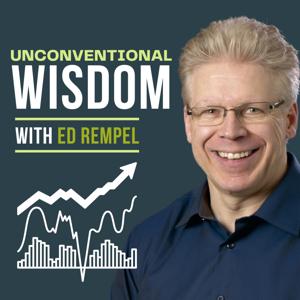


Borrowing money is often part of becoming financially independent.
Whether you're applying for your first credit card, financing a car, paying for school or considering a line of credit, understanding how borrowing works can help you make more confident financial decisions.
The key isn't simply knowing whether debt is good or bad.
It's understanding what you're borrowing for, what it will cost and how it fits into your everyday life.
In Part 1 of our Sage Money in Real Life | Ages 18–25 series, Sabiha Mukadam is breaking down the borrowing options young Canadians are most likely to encounter.
Here's what you'll learn:
The differences between student loans, car loans, credit cards and lines of credit.
Why the monthly payment doesn't always tell you the true cost of borrowing.
How interest rates, repayment terms and fees can affect your finances.
What you should know about building credit and avoiding unnecessary debt.
The important questions to ask before signing a loan or credit agreement.
Borrowing can open doors, but understanding the full financial picture helps you make choices that support your goals without limiting your future flexibility.
Read the article, watch the video or listen to the podcast here: https://edrempel.com/understanding-your-borrowing-options-student-loans-car-loans-credit-cards-lines-of-credit-more/
On July 30, I was diagnosed with prostate cancer.
Just 19 days later, I had surgery. Today, I'm 100% cancer-free!
I'm sharing my story because early detection saved my life.
My cancer was classified as intermediate aggressive, with approximately 80% of my prostate affected. Not the slow growing kind that most men eventually get. Fortunately, it was caught at Stage 1, before it had spread.
This experience has reinforced something I've believed for years: Your health is your most valuable asset. We help people have money. When you have money and health, life can be great.
In my latest video, blog post, and podcast episode, I share:
How early detection made all the difference in my cancer diagnosis
Why I prioritize spending money on preventative healthcare
The four major categories of chronic disease and the importance of early detection
Where Canada's healthcare system falls short on prevention
How not to die from something stupid
Practical steps you can take to be proactive about your health
My message is simple: Don't wait for symptoms to start paying attention to your health.
Click the link for more: https://edrempel.com/early-diagnosis-how-i-beat-cancer/
Want to start building wealth for your children or grandchildren — without creating an overly complicated estate structure?
Two options families may come across are bare trusts and informal "In-Trust For" (ITF) accounts. They are effective ways to invest for your kids or other family members often with little or no tax.
They can be relatively simple, but there are a few important things to understand first:
Who actually owns the money or asset?
Who pays the tax on the investment income?
When does the child gain control of the account?
What happens if the trustee dies or becomes incapable?
Could trust reporting requirements apply?
When does a more formal trust make sense?
The goal isn't to create the most sophisticated structure. It's to choose one that gives your family the ownership clarity, tax treatment, and control you actually want.
In Sabiha Mukadam's latest article, video, and podcast episode she breaks down how bare trusts and ITF accounts work in Canada, and the potential blind spots families should understand before setting one up.
Read the article, watch the video or listen to the podcast here: https://scfplanning.com/advice-from-the-sage-owl/building-wealth-for-the-next-generation-a-guide-to-bare-trusts-and-informal-in-trust-for-accounts-in-canada/
You don't need perfect confidence before making a financial decision.
But you do need a way to decide whether the decision actually works for your financial life.
Before making a big money move, ask yourself:
What problem am I trying to solve?
What happens if I'm wrong?
Can I afford the downside?
How easy—or expensive—is this decision to reverse?
What does waiting cost me?
Whether you're thinking about investing, buying your first home, accepting a new job or making another major commitment, the goal isn't to eliminate uncertainty.
It's to make sure one imperfect decision doesn't become a financial trap.
In Sabiha Mukadam's latest article, video, and podcast episode she walks through a practical framework for deciding when you're ready enough to move forward, and when your numbers may actually be telling you to slow down.
Read the article, watch the video or listen to the podcast here: https://scfplanning.com/youth-corner/how-to-make-financial-decisions-when-you-dont-feel-ready/
When you're planning your estate, it's not just about who gets what.
For some families, the bigger question is: How do I make sure this money actually helps the person I'm leaving it to?
That can be especially important when you're planning for young children, a loved one with a disability, or someone who may need more structure around an inheritance.
In Sabiha Mukadam's latest article for the Sage Owl, she walks through a few trust strategies families may want to understand, including:
Children's Testamentary Trusts
Henson Trusts
Qualified Disability Trusts
Spendthrift Trusts
Discretionary Family Trusts
Each one is designed to solve a different problem — from protecting disability benefits, to delaying access to an inheritance, to giving a trustee more flexibility when family members have different needs.
The goal isn't to make your estate plan more complicated. It's to make sure the structure actually fits the person you're trying to protect.
Read the article, watch the video or listen to the podcast here: https://edrempel.com/protecting-what-matters-most-trust-planning-for-children-dependents-and-vulnerable-beneficiaries-in-canada/
If money is tight, should you focus on building an emergency fund — or keep investing for the future?
The answer does not have to be all or nothing.
In this article, video, and podcast episode for the Youth Corner Sabiha Mukadam looks at:
How to start an emergency fund without feeling overwhelmed
Why even a small cash buffer can make a real difference
How to build your fund in stages, from $250 to several months of expenses
Where a TFSA can fit into your emergency savings strategy
Why a line of credit should be a backup, not your emergency fund
How to balance short-term financial security with long-term investing
The goal is not to choose between protecting yourself today and building wealth for tomorrow. It is to create enough breathing room that an unexpected expense does not derail everything else.
Read the article, watch the video or listen to the podcast here: https://edrempel.com/building-an-emergency-fund-when-money-is-tight-and-how-to-stay-protected-while-you-invest/
As your business grows, your financial structure may need to grow with it.
The structure that makes sense in the early stages of a business may look very different once the company becomes profitable, grows significantly in value, approaches a sale, or becomes part of a longer-term family legacy.
In Sabiha Mukadam's latest article, video, and podcast episode, she looks at how different planning strategies may become relevant at different stages, including:
Family trusts during the growth stage
Holdcos as profits and accumulated wealth increase
Estate freezes as business value grows or succession approaches
Joint Partner and Alter Ego Trusts later in life
Corporate-owned insurance to help create liquidity for future tax obligations
Most business owners don't need every strategy.
The goal is to use the right structure at the right stage — one that supports the business you're building, protects the wealth you've created, and makes future transitions easier for you and your family.
True wealth is not only what you build. It is the security, flexibility, and calm you create around the people who matter most.
Read the article, watch the video or listen to the podcast here: https://edrempel.com/the-right-trust-structure-for-business-owners-in-canada-how-smart-planning-evolves-as-your-business-grows/
Is it risky to retire when the stock market is at an all-time high?
It's a question I get all the time, and the conventional wisdom is usually that you should worry about sequence of returns risk and protect part of your portfolio by moving money into cash or fixed income.
But what does the historical data actually show?
In my latest podcast episode I look at:
Why an all-time high does not necessarily mean markets are riskier
Why I don't believe sequence of returns risk is an issue in a 30-year retirement
What 150 years of market history shows about long-term retirement investing
Why adding cash or fixed income can reduce your long-term growth and retirement cash flow
When fixed income can still make sense — especially if it helps you stay invested during market declines
Why your ability to stay invested may matter far more than what the market is doing on the day you retire
How the 4% Rule fits into a long-term retirement strategy
Why following a proper Financial Plan is usually more important than reacting to market highs and lows
The bottom line: Markets hit all-time highs regularly. Retiring at one does not automatically make your retirement plan unsafe.
For investors with the risk tolerance to stay invested through major market declines, focusing on long-term growth rather than short-term market timing can lead to a much more comfortable retirement.
Read the full article or watch the video on the blog to see what the historical data shows: https://edrempel.com/retiring-at-an-all-time-high-what-history-actually-shows/
You're earning a full-time income, paying your bills, and still wondering: where did all my money go?
That feeling is more common than you might think.
In Sabiha Mukadam's latest blog post, video and podcast for the Youth Corner she shares a simpler way to approach budgeting without making it feel restrictive.
She covers:
A three-bucket system for your income
How to know what you can safely spend
Why automating your money can make budgeting easier
How sinking funds can help with future expenses
What to do when the numbers don't fit perfectly
Why consistency matters more than having a perfect budget
The goal isn't to track every dollar.
It's to create a system that helps you enjoy your life now while still protecting your future.
Read the article, watch the video or listen to the podcast here: https://edrempel.com/budgeting-with-a-full-time-income-without-feeling-restricted/
Sabiha Mukadam has a new podcast episode on debt after separation and how to regain control without panic.
Separation can create significant financial pressure through legal fees, moving costs, two households and debts that may still be shared.
She covers:
The 3 types of post-separation debt
Separating joint and individual liabilities
Financial blind spots to watch for
Debt snowball vs. debt avalanche
A practical 30-day reset plan
One of the key messages is that debt doesn't have to define what happens next. Getting clear on the numbers and creating a structure can make the situation much more manageable.
Worth a read, watch or listen: https://scfplanning.com/financial-planning-in-real-life/debt-after-separation-how-to-regain-control-without-panic/
From the publisher's feed
1,348 Listeners

3,231 Listeners

15 Listeners
948 Listeners

699 Listeners

3,058 Listeners

475 Listeners

2,140 Listeners

80 Listeners
7 Listeners

31 Listeners

16 Listeners

23 Listeners

55 Listeners
18 Listeners