
Sign up to save your podcasts
Or

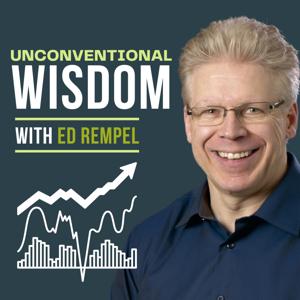


For more than 20 years, Unconventional Wisdom has been where I share financial planning ideas, strategies, and lessons I've learned from helping Canadians build better financial lives.
Today, I'm excited to introduce someone who has been a key part of our team for the last 8 years: Sabiha Mukadam.
Many of you may not know Sabiha, but she works closely with our full-service financial planning clients and has become an important part of helping them build and maintain their financial plans.
Starting next week, Sabiha will be publishing new articles and videos every Tuesday, while my Thursday posts will continue just as they always have.
Sabiha shares the same planning philosophy that has guided my practice for decades, and I'm confident the advice she provides is the same type and quality of advice I give.
You'll see many of the same concepts and ideas discussed on Unconventional Wisdom, but through her own perspective, voice, and areas of focus.
In my podcast episode you'll learn:
Every week, someone tells me they want to retire by 40.
My first question is always the same: why?
The FIRE movement promises freedom decades earlier than traditional retirement.
Online, it's often presented as a fairly simple formula: save aggressively, invest consistently, and escape the workforce early.
But in Canada today, is FIRE actually realistic — or has it quietly become a strategy mostly for high earners, extreme savers, and people willing to take bigger risks than they admit?
I recently sat down with Canadian Press reporter Kumutha Ramanathan to discuss what I've seen from real clients pursuing financial independence and early retirement.
No hype. No fantasy projections. Just the math, the psychology, and the tradeoffs people rarely talk about honestly.
Here's what we covered:
The income level where traditional FIRE actually starts becoming mathematically possible in Toronto
Why one popular version of FIRE may actually be harder than the original approach
The Canadian realities most FIRE discussions barely mention
What early retirees often discover emotionally after leaving work decades early
The five biggest mistakes FIRE communities consistently make
Why disciplined savers can still end up with portfolios that are too small
The difference between needing income and needing cash flow
The first thing I ask anyone who says they want to retire at 40
In my latest podcast episode you'll learn my full answers from the interview, including the parts most FIRE discussions tend to leave out.
Gas prices are up from about $1.30/litre to $1.75/litre across Canada this year.
There is conflict in Iran. Markets are reacting to geopolitical uncertainty once again.
So what should investors actually do during times like this?
Should you move more conservative?
Or is reacting emotionally what hurts investors most?
In my latest video, podcast episode and blog post you'll learn:
If you go conservative, when do you buy back in?
Does politics affect the markets much?
When will a year not be an "uncertain time"?
Does market timing work? What do studies say?
What is the "Go Kart Strategy" of investing?
The one way to time the market effectively.
The good news and bad news of planning for retirement.
What is the one thing most investors get wrong?
Why you need to keep your foot on the gas to get the long-term market returns.
What is Ed's personal strategy?
You've worked hard, built up a few million dollars, and now you're seventy-five, retired, and staring at your portfolio wondering — do I really need to keep riding the stock market rollercoaster?
Or is it finally time to play it safe?
That's the multi-millionaire's dilemma, and it's a lot more common than you might think.
We have seen it many times. Far more money than you will spend during your life.
Continue investing for growth or switch to conservative?
In my latest video, podcast episode and blog post you'll learn:
What is the "Multi-Millionaires' Dilemma"?
Why consider going conservative?
Why consider continuing to invest for growth?
What is the maximum that equities are likely to be down at the end of your life?
What are the odds equities are down over periods of 5, 10, 15 or 20 years?
How much growth are you likely giving up by switching from equities to GICs?
Can the numbers make this clearer?
What is your money for?
Why Ed will be 100% equities his entire life.
Last week, I revealed my longevity journey, introduced some of the explosive developments, and why we may be able to start living significantly longer within the next 10–20 years.
Living with health and vitality past age 100 could become common.
What happens to your money if that happens?
If we live 20 more years, can we actually be retired for those 20 years?
How much more would we need to save—or how much longer would we need to work?
In my latest video and blog post, you'll learn:
Why would we want to live decades longer?
Would it be good for society?
How much more would you have to save to be retired 20 more years?
How many more years would you need to work?
How are these different depending on the allocation of your portfolio?
What is likely to happen to CPP, OAS, company pensions and annuities?
What is likely to happen to life insurance?
Is it really possible to live with health & vitality past age 100?
I am on a longevity journey to try to achieve it.
In my latest video and blog post, I will explain what I have learned & experienced so far and why I believe humans routinely being healthy past 100 is in our near future.
You will learn:
How did Ed's journey get started?
How did Ann passing away ignite it?
What is Ed's journey since then?
What is the core focus of the longevity program Ed joined?
What can we do today to be healthy longer?
Why is it likely humans will live significantly longer in the future?
When are we expected to start living much longer?
What is an exceptional introduction to longevity video by longevity leaders?
Next week's post is about what happens to your money if you are healthy decades longer.
Taxes are far more complex today than they were 10 years ago — and 2026 adds another layer.
There were not many headline changes this year, but several could meaningfully affect your retirement plan, home buying strategy, and long-term tax planning. Complexity is becoming the real story.
In this post and video, you'll learn:
What's new & relevant for you in tax for 2026?
How will the changes affect your life?
How will the changes affect your retirement plan?
What is Ed's advice on the FHSA vs Home Buyers' Plan?
What is the latest on ITF accounts & joint name principal residences?
What is Ed's view on these changes? Why were they done?
Should you really reduce stocks and increase bonds as you get older?
That's been conventional wisdom for decades.
A new international study using long-term data from 39 developed countries challenges both of those assumptions.
The researchers found that a globally diversified all-equity strategy outperformed traditional stock-bond portfolios not only for growth, but even for retirement income reliability and capital preservation.
I presented this research at the Canadian Financial Summit because it directly questions the foundation of conventional wisdom on investing as you age.
In this post and video, you'll learn:
Is this new study a high-quality study?
What does the study prove?
What is the effective way to diversify?
In what 2 ways is diversifying with international stocks better than with bonds?
Why should investors keep the same allocation to stocks as they get older?
Is the all-equity strategy safe?
Should we actually invest 67% into international stocks?
What studies already on my blog agree with this study?
The debate: What questions did readers ask?
What Canadians Are Really Asking About Money Right Now
In this one-off episode, I reflect on the topics listeners have engaged with most over time, and what that reveals about the financial decisions people are really grappling with.
From retirement timing and government benefits to understanding risk, evidence-based investing, and long-term tax strategies, these themes point to a clear desire for clarity over hype.
I also take a moment to say thank you to you the listeners and invite your input on what questions or challenges you'd like addressed in future episodes.
This podcast works best when it reflects what people are actually dealing with, not just what sounds good in theory.
Thank you for listening!
Ed
Ever wondered how you can get the money out of your RRSP with a minimum of tax?
RRSP/RRIF Meltdown Strategies can allow you to withdraw from your RRSP or RRIF with little or no tax.
However, there are some tricky complications, several options, and these strategies are not for everyone.
In my latest video for the Canadian Financial Summit you'll learn:
How does the RRSP/RRIF meltdown strategy help you withdraw from your RRSP with minimum tax?
What does the traditional RRSP/RRIF Meltdown Strategy look like?
Why should it be called the RRIF Meltdown Strategy, not the RRSP Meltdown Strategy?
Why are self-made dividends the secret to an effective RRIF Meltdown Strategy?
What are the 4 tricky complications?
Why does the traditional RRIF Meltdown not melt your RRIF down?
What is the problem with starting it before you retire?
What is the problem with starting it when you retire?
What are the 3 main RRIF Meltdown Strategies?
What are the 4 issues for implementing the RRSP/RRIF Meltdown Strategy effectively?
What are the 6 steps to implementing the RRSP/RRIF Meltdown Strategy effectively?
From the publisher's feed
1,348 Listeners

3,231 Listeners

15 Listeners

948 Listeners

699 Listeners

3,058 Listeners
475 Listeners

2,140 Listeners

80 Listeners
7 Listeners

31 Listeners
16 Listeners
23 Listeners

55 Listeners

18 Listeners