
Sign up to save your podcasts
Or



Based on Podcast App listening data
Tania Cameron says the question of separatism is tied to treaty, and so she brought her Rock the Indigenous Vote campaign to Alberta to help educate communities and encourage them to have their say at the polls. Rosanna hears how communities are mobilizing in Alberta through the courts and at the ballot box, and the authors of Talk Treaty To Me weigh in on how the Alberta referendum presents an opportunity to all Canadians to consider treaty rights and responsibilities.
“Displaced relatives,” not invasive species – that’s how the Friends of Tryon Creek think about plants and people. Rosanna hears from coordinators Lili Yazzi and Lena Ouse-Hicks on how a mission to restore a native forest is also healing relationships between communities. And – how can I put reconciliation into action? That’s what Elin Sandberg Miller asked when she moved to Canada from Sweden. Enter Derek Aronhie:nens Montour, who told her his powerful story of facing racism in the Canadian military. Their friendship kickstarted an ongoing conversation about what it means to bring reconciliation into our everyday lives.
Wapato and fish: these were the first foods of the Portland food scene – before Portland was Portland, of course. Indigenous tribes as far as Canada’s Great Plains traveled down the Columbia River to the U.S Pacific Coast to gather, trade and share. Rosanna takes us to Portland, Oregon to hear from a community builder, an anthropologist and a coffee connoisseur. It’s all part of our latest episode of Unmapped where we look at popular travel destinations through an Indigenous lens.
“It encapsulated all of the injustice that has been done to Indigenous people across Canada.” 10 years ago, Colten Boushie’s death sent shockwaves across Canada and unearthed deep tensions rooted in colonization and systemic racism. Rosanna speaks with the Baptiste family about their healing journey – Colten’s mother, Debbie, fighting for justice, his brother, William, speaking truth to stereotypes, and his uncle Alvin, working through culture and ceremony to prevent future tragedies. We also hear from the family’s lawyer, Eleanore Sunchild, who takes us back to the night Colten died and explains why the details of his death should still matter to Canadians.
From our friends at Pushkin – this is the untold story of America. This summer the United States celebrated the 250-year anniversary of the signing of the Declaration of Independence. When you read the Declaration, you realize it is a list of complaints. The last entry, the climax in our founders’ reasons for rebellion against the Crown, is this: “He has excited… the merciless Indian Savages, whose known rule of warfare, is an undistinguished destruction of all ages, sexes and conditions.”
We have been told the Revolution was fought over taxation and representation. But what the founders were most angry about in our country’s most famous document was Indian affairs. How did generations of Americans miss this?
The first armed rebellion against the Crown was an attack on British forts that traded with tribes. When colonists threw tea into the Boston harbor, they dressed up like members of the Mohawk tribe—not for disguise, but because pretending to be Indian symbolized freedom and rebellion. The founding fathers’ first government failed because Indigenous nations were too powerful; war and diplomacy with Native people is why we have a central federal government.
Hosted and reported by Rebecca Nagle and featuring leading Native historians, First America unveils how the founders’ treatment of Indigenous nations—and their resistance—shaped US democracy. The show does not simply add another blemish to the image of the founding fathers, it reveals the real story of why the colonists rebelled, what kind of government they created, and, crucially, how our current political moment was 250 years in the making.
More episodes of America First are available wherever you get your podcasts, and here: https://podcasts.apple.com/ro/podcast/america-first/id1255352731?l=ro
Have you ever tried gardening by moonlight? Shirli Ewachuk says that thanks to the moon’s connection to water in the ground, the sky, soil and seasons work together to create the juiciest gardens. Shirli tells Rosanna how knowledge like moon planting was passed on by her mother and her aunties — knowledge she now passes on to others. Also on the show, we’ll hear how Gracyn Tanche hopes an upcoming medicine picking workshop will help Dehcho Dene access their land, culture and their Elders' knowledge. And, Marie Anderson shares how taking part in her first medicine picking workshop helped her feel more connected to her Dene identity.
As the place where the Assiniboine and Red rivers meet, The Forks marks an important trade route for Indigenous people that pre-dates colonization by thousands of years. This National Indigenous Peoples Day, Unreserved is live from The Forks on Treaty 1 territory! Rosanna captures some of the magic of this place as communities come together to celebrate and share stories of resilience and resurgence.
An almost forgotten dance is making a comeback on the powwow trail. This weekend the Great Lakes Woodland style dance is one of many styles you’ll find at the Wáhkóhtowin Powwow on Treaty One territory in Winnipeg. Rosanna hears from Anishinaabe dancer Ryerson Whetung about the hopping style that is set to a very fast double beat, as well as the floral work and otter turbans that bring this style’s simple but stunning regalia to life.
Did you know the Declaration of Independence contains a racial slur? When Rebecca Nagle learned that “merciless Indian savages” were a main grievance of America’s founders it changed her perspective on history. The Cherokee journalist tells Rosanna how her search for an Indigenous telling of America’s history created the backbone of a new podcast, First America. And, filmmaker Brad Munoa – a member of the Pachanga band – zooms into what we currently call California to tell a more complete story of that territory in his 10-part docuseries, People of the West. As America prepares to celebrate 250 years as a nation, we hear from Indigenous scholars and creators on the true story of America told through an Indigenous lens.
The story of Tshakapesh and his snaring of the sun is another way of explaining the annular eclipse – it’s one of the Innu stories passed down over thousands of years that is based on precise observations of the night sky. Rosanna speaks with astronomer, Laurie Rousseau-Nepton about the methodologies of her ancestors that showed the connections between climate, the earth, the stars, and us. Also on the show, Haudenosaunee knowledge keeper and astronomer, Samantha Doxtator, who is educating future generations through her portable planetarium and self-proclaimed space nerd, Ajuawak Kapashesit, on his new series “Sky World”.
From the publisher's feed
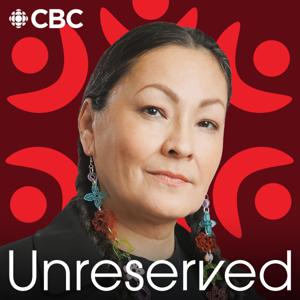
Named one of Audible's Best Canadian Podcasts of 2025. Join Rosanna Deerchild every Friday for vibrant conversations with our cousins, aunties, elders and heroes. Rosanna guides us on the path…
Our award-winning show is rooted in radio, where we’ve spent the last decade becoming a trusted space for Indigenous-led conversations.
We are based in what is now known as Canada. Rosanna hails from O-Pipon-Na-Piwan Cree Nation at South Indian Lake in northern Manitoba, and now lives and works in Winnipeg (Treaty 1).
Ranked by our users in the last 21 days
238 Listeners
257 Listeners
433 Listeners
110 Listeners

407 Listeners
155 Listeners
208 Listeners
366 Listeners
215 Listeners
64 Listeners
2 Listeners

200 Listeners
450 Listeners
2,992 Listeners

83 Listeners
6 Listeners

104 Listeners
4 Listeners
17 Listeners
96 Listeners
12 Listeners
2 Listeners
23 Listeners
14 Listeners