
Sign up to save your podcasts
Or

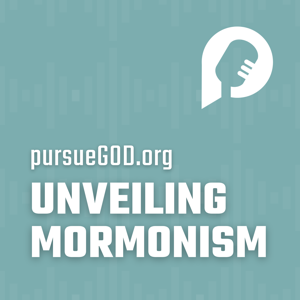


Bo grew up in a strong Mormon family, followed the principles and even served on his LDS mission. He worked for the church as a seminary teacher and married KD in the temple. Then he read the LDS gospel topics and began to seriously question his faith. After almost a decade of searching for answers, Bo and KD finally left the Mormon church. Here's their story.
When many people hear about Mormonism, their first thought is polygamy. The mainstream LDS church continues to try to downplay their polygamist roots. But polygamy in LDS offshoots keeps cropping up in the news. How did polygamy get started? Why did they do it? When did it end? Are Mormons polygamists today?
Joseph Smith and the Origins of PolygamySee the LDS Church’s Gospel Topics Essay on Plural Marriage in Kirtland and Nauvoo
Brigham Young and Utah PolygamySee the LDS Church’s Gospel Topics Essay on Plural Marriage and Families in Early Utah
The End of Polygamy in the LDS ChurchSee the LDS Church’s Gospel Topics Essay on The Manifesto and the End of Plural Marriage
The Survival of Polygamy in the Fundamentalist MovementLDS Church is building temples rapidly all around the world. 300 existing or planned temples worldwide. 168 currently operating, compared to 50 thirty years ago and just 19 fifty years ago. The Bible talks a lot about the temple. Are LDS temples the same? What are they all about?
How Mormons View Their TemplesPeople have a lot of questions about distinctive Mormon practices.
Do a Google search: Do Mormons ______? Results: Do Mormons wash their hair? Can Mormons wear make-up? Can Mormons have french fries? Because LDS do have a number of distinctive practices, this can be confusing. Let’s explore three of them…
The “Word of Wisdom”Note: Much of the content in this podcast can be found in show participant Ross Anderson’s book Understanding the Book of Mormon
The Book of Mormon claims to be an ancient scripture that tells the story of God’s people in the American continent. It was engraved on gold plates and translated by Joseph Smith through the “gift and power of God.”
In fact, Smith claimed that “the Book of Mormon was the most correct of any book on earth, and the keystone of our religion, and a man would get nearer to God by abiding by its precepts, than by any other book” (History of the Church, 4:461).
LDS missionaries seek converts by urging them to read BoM and pray about its divine authenticity.
AnachronismSee: “What Are the Dead Seas Scrolls?”
Note: Much of the content in this podcast can be found in show participant Ross Anderson’s book Understanding the Book of Mormon
The Book of Mormon claims to be an ancient scripture that tells the story of God’s people in the American continent.
LDS challenge: “Either the Book of Mormon is what the Prophet Joseph said it is, or this Church and its founder are false, a deception from the first instance onward…Joseph must be accepted either as a prophet of God or else as a charlatan of the first order…” (Jeffrey R. Holland, “Christ and the New Covenant,” quoted in Ensign, September 2002, 14)
To accept BoM is to accept JS as a prophet, and everything that he stands for.
The Book of Mormon claims can be / should be tested. 1 Thess 5:21 “Test everything that is said. Hold on to what is good.”
ArchaeologyEvidence for the reliability of the Bible: “Three Reasons to Trust the Bible”
DNALDS Church Gospel Topics Essay: Book of Mormon and DNA Studies
Bible PlagiarismBecause the LDS Church claims to be led by divine revelation, major changes in doctrine are startling. If LDS prophets are led by God, one might expect current prophets to agree with previous ones. But the LDS principle of continuing revelation allows new “truths” to supersede past ones. Yet changes in LDS teachings raise the question of whether past prophets were wrong. And what will be said in 50 years about the prophets Mormons revere and obey today? With this in mind, consider some major changes in Mormon doctrine over the years.
PolygamyThe Book of Mormon expressly prohibits polygamy, Jacob 2:27-30: “There shall not any man among you have save it be one wife; and concubines he shall have none.” The 1835 edition of the Doctrine and Covenants (Section 101) agrees:
Inasmuch as this church of Christ has been reproached with the crime of fornication, and polygamy: we declare that we believe, that one man should have one wife; and one woman, but one husband, except in case of death, when either is at liberty to marry again.
Yet in the 1830s, Joseph Smith began exploring the possibility of polygamy. He formally (but secretly) introduced plural marriage in 1843. The doctrine was not embraced openly until 1852, when the Mormons were safely established in Utah. For the next 40 years, polygamy was taught as a requirement for the highest levels of heaven. By the 1880s, an estimated 20-30% of Mormon families practiced polygamy.
Yet polygamy was strongly rejected by the American public as a barbaric practice. The United States government applied increasingly stern measures against it. In 1887, the Edmunds-Tucker Act made polygamy a federal offense and authorized the seizure of LDS Church assets. Polygamous men were imprisoned. Families moved to Mexico and Canada, or went underground. Under pressure to preserve the Church from destruction at the hands of the United States government, LDS President Wilford Woodruff released a statement in 1890 - called “The Manifesto” - declaring his intention to submit to the laws of the land, and advising members of the Church to refrain from entering any illegal marriage. Even so, plural marriages continued to be performed in secret, until polygamy was completed forbidden by the LDS Church in 1904.
Many people, out of faithfulness to Joseph Smith, continued to practice polygamy outside the official LDS Church. Known as “fundamentalists”, several close-knit polygamous communities survive across the western United States to this day. They believe that the mainstream LDS Church is apostate, while they represent original Mormonism..
While plural marriage is now strictly forbidden in the LDS Church, it was never renounced as an eternal principle. The Church permits men to be married in LDS temples “for eternity” to more than one wife. In fact, the current LDS prophet, Russell M. Nelson, is eternally sealed to two women.
After being a mainstay of Mormonism for 50 years, polygamy was shelved so that the LDS Church could survive. But marriage laws in the United States have changed considerably since 1890. Polygamy is no longer prosecuted as a crime. Will LDS prophets reveal that faithful Mormons should practice plural marriage again?
The LDS Church’s Gospel Topics Essays:
Plural Marriage in the Church of Jesus Christ of Latter-day Saints
The Manifesto and the End of Plural Marriage
RacismFor decades, men of black African descent could not hold the LDS priesthood. (In Mormonism, priesthood is the authority to administer key ordinances in God’s name. No women have ever been allowed to hold this priesthood.)
In the 1800s, Mormonism, like most American religions, had a mixed report card on racism. Some early Mormons were pro-slavery, some anti-slavery, and some neutral. During Joseph Smith’s time, two black men were ordained to the LDS priesthood, although this privilege was later revoked. The Book of Mormon reflects the view that dark skin is a curse from God in response to spiritual depravity.
In the Utah period, Mormonism was marked by a demeaning attitude toward blacks. It was commonly taught, well into the 2oth century, that black skin was God’s curse on Cain (Genesis 4:11-15). In LDS thought, a great war in heaven divided God’s spirit children in the premortal existence. Those born black in this life were said to have been less valiant in that heavenly war. Brigham Young, the 2nd LDS Church President and Prophet, had a low view of blacks:
You see some classes of the human family that are black, uncouth, uncomely, disagreeable and low in their habits, wild, and seemingly deprived of nearly all the blessings of the intelligence that is generally bestowed upon mankind. (Journal of Discourses: 7:290-291).
This is why interracial marriage was not allowed and social interaction between the races was officially discouraged well into the 1960s and 1970s. It is also the rationale for denying blacks the priesthood and not allowing them to receive temple ordinances.
Latter-day Saints will argue that the LDS position on blacks and the priesthood was not doctrine, but a matter of policy. Yet in 1949, the Church’s highest leaders spoke clearly against this view:
The attitude of the Church with reference to the Negroes remains as it has always stood. It is not a matter of the declaration of a policy but of direct commandment from the Lord, on which is founded the doctrine of the Church from the days of its organization, to the effect that Negroes may become members of the Church but that they are not entitled to the Priesthood at the present time. (Statement of the First Presidency of The Church of Jesus Christ of Latter-day Saints, August 17, 1949, Archives, The Church of Jesus Christ of Latter-day Saints, Salt Lake City.)
This changed in 1978, when LDS Prophet Spencer W. Kimball announced a revelation that allowed black men to receive the priesthood. Since then, the LDS Church has made several statements condemning racism. They have increased their missionary efforts in Africa and in black communities elsewhere.
We can rejoice that the LDS Church has officially turned away from the evil of racism. But were the LDS prophets in the 1850s right or wrong? Was the First Presidency in 1949 telling the truth? It’s good for any church to change policies that are wrong. But what does it say about a church that claims to be led by divine revelation?
The LDS Church’s Gospel Topics Essay: Race and the Priesthood
TrinityThe historic position of Christianity, based on the Bible, is that there is only one God, who eternally exists in three persons: Father, Son and Holy Spirit. Latter-day Saints deny this idea of God. They envision a “Godhead” of Father, Son, and Holy Ghost who are not one God in three persons, but separate beings who are one in spirit, purpose, and glory. But their view of God has changed over the years.
The way God is depicted in the Book of Mormon is much closer to biblical Trinitarianism. Here is a sampling of just a few examples:
And now, behold, this is the doctrine of Christ, and the only and true doctrine of the Father, and of the Son, and of the Holy Ghost, which is one God, without end. (2 Nephi 31:21)
And after this manner shall ye baptize in my name; for behold, verily I say unto you, that the Father, and the Son, and the Holy Ghost are one; and I am in the Father, and the Father in me, and the Father and I are one. (3 Nephi 11:27)
Behold, I am he who was prepared from the foundation of the world to redeem my people. Behold, I am Jesus Christ. I am the Father and the Son. (Ether 3:14)
Modern Latter-day Saints interpret statements about “one God” and Jesus being “the Father and the Son” in support of current LDS doctrine, but on the face of it, the language itself suggests otherwise.
In the decade after the Book of Mormon was published, the LDS idea of God continued to develop. The Lectures on Faith - published in 1835 as part of LDS scripture - asserted:
Over time, the current LDS view of God emerged. Most modern Latter Day Saints would never accept the idea of a two "personage" Godhead, with the Father as a spirit and the Holy Spirit as the shared "mind" of the Father and the Son.
SummaryBiblical Christianity has certainly changed in its practices over the years. But the core doctrines that define the Christian faith are rooted in the stability of the unchanging Bible. Different interpretations of the Bible come and go in different eras, but the Bible is always the definitive standard against which any interpretation is measured. God continues to speak to his people today, not through the changing ideas of mortal prophets, but through his timeless word, the Bible.
Latter-day Saints revere Joseph Smith as a prophet of God. His role is absolutely central to the claims of Mormonism. LDS Church President Joseph Fielding Smith highlighted this important role:
“Mormonism, as it is called, must stand or fall on the story of Joseph Smith. He was either a prophet of God, divinely called, properly appointed and commissioned, or he was one of the biggest frauds this world has ever seen. There is no middle ground.” (Joseph Fielding Smith, Doctrines of Salvation 1:188. Italics in original)
In light of this, it makes sense to examine the story of Joseph Smith to evaluate what we should think of him. Consider five elements of his story that bear upon this question.
Occult Treasure HuntingMoney digging was a fairly common practice in frontier America in the late 1700s and early 1800s. It involved certain rituals or ceremonies performed to obtain buried treasure. The treasure was thought to be guarded by evil spirits. Joseph Smith as a young man offered his services for hire as a money digger. Smith’s entire family practiced various folk-magic practices, including visions, dreams and occult rituals.
Joseph’s method in finding lost treasure involved the use of a seer stone, which he discovered in 1822 while digging a well for a neighbor. He would place this small rock in his hat and pull his hat up over his face to block out the light. He claimed that he could see supernaturally through the stone to help locate the place where the treasure was buried.
The Vagrant Act, a New York law at the time, defined a disorderly person to include one who pretended to have skill in palm reading, telling fortunes, or discovering where lost goods could be found. In 1826 - during the period while Joseph was supposedly being prepared by God to receive the gold plates containing the Book of Mormon - he was arrested, brought before a judge, and charged with being a “glass-looker” and a disorderly person. The judge determined that Joseph was guilty, though no penalty was administered.
Shortly after this, Joseph stopped money digging but kept the seer stone. It was with this stone that he claimed to find the gold plates and to later produce the Book of Mormon. Historians have documented many points of connection between Joseph’s early occult practices and the origins of the Book of Mormon.
The First VisionJoseph Smith’s “First Vision” is a key part of the LDS story and establishes several unique LDS beliefs. The official account of this vision describes how the 14-year-old Smith, eager to learn the truth about which of the competing Christian churches was true, went to a secluded grove to ask God. There God the Father and Jesus Christ appeared to him and told him not to join any of them, for all of them were apostate. That event launched the prophetic mission of Joseph Smith to restore Jesus’ original church to the earth. The official account, now included in LDS scriptures, was written by Joseph Smith in 1838, 18 years after the events it recounts.
Yet historical research in recent years has uncovered eight other accounts of the First Vision. Some were written by Smith himself, or were recorded by others who heard Smith tell about it. Most of these accounts are earlier than the official version. It appears that over time, the story changed and grew into its final form. In some versions, two personages appear to Smith. In another, only “the Lord” appears. In others, the glorious personage is an angel. In the official version, the personages tell Smith that all churches are corrupt. In another version, this message comes from an angel. In other versions, this message is missing. In some versions, In one version, Smith reports that he was told, “Your sins are forgiven.” But this is absent in other versions. The official account says that Joseph was 14 when he had the vision. Another version, in Smith’s own handwriting, says that he was 15. Others give his age as 17.
The LDS Church’s Gospel Topics Essay: First Vision Accounts
The Kirtland Banking ScandalThe LDS Church was officially founded in 1830 in New York, near Joseph Smith’s home town. By the early 1830s Smith and his followers moved to Kirtland Ohio, where a number of converts had joined the church. New converts from other areas converged on Kirtland to be part of the LDS community. But the church’s presence in Ohio didn’t last long.
There was friction with the locals on a number of points, which led to persecution. But one significant issue emerged when Joseph Smith and other LDS leaders organized an illegal bank in 1836, called the Kirtland Safety Society. Smith not only broke the law to form the bank; he had no expertise in financial matters and hid behind his prophetic mantle to convince others to fund the bank, claiming that the audible voice of God instructed him to establish it. He prophesied that the bank would grow and flourish, surviving when others failed. Yet this bank failed in 1837, releasing a hornet’s nest of creditors who demanded payment, leading to numerous lawsuits and threats of violence. Many in the LDS church at that time lost faith in Smith’s prophetic leadership. Others were convinced that Smith intended to defraud investors from the beginning. Joseph left Kirtland in January 1838 under cover of darkness, never to return again.
FreemasonryFreemasonry was prevalent in the areas where Joseph Smith grew up. In fact, Joseph’s brother Hyrum became a Mason while the family was still living in Palmyra, New York. Some years later, in Nauvoo, Illinois, when the LDS church was at its height, many prominent Latter-day Saints were Masons. Joseph became a Mason in March 1842. Less than two months later, he introduced the core ritual of the LDS temple, the endowment ceremony. Numerous scholars have pointed out the many parallels between the Masonic ritual and the LDS temple ritual, such as: the language of the ritual; the handshakes and other physical signs; the oaths and promises made; the vows of secrecy; the clothing involved in the ceremonies; the presentation of the ritual through drama, and more. Masonic themes and symbols are also reflected in the architecture of the Nauvoo temple, such as the beehive; the sun, moon and stars; the square; and the all-seeing eye. The LDS temple ritual, said by Mormons to have been given by divine revelation, is actually based on Masonic rituals.
PolygamyPlural marriage in Mormonism began with Joseph Smith. He was toying with the principle of polygamy as early as 1831, and began introducing the doctrine shortly thereafter, but the revelation outlining the practice was not written down until 1843. Around 1834, Smith had a sexual relationship with Fanny Alger, a teenager living in his home. Faithful LDS scholars view this as the first of his plural marriages, but early LDS leader Oliver Cowdery described it as a “dirty, nasty, filthy affair.” By 1842, Joseph had married 10 women. That summer, he married six additional women, along with 17 others in 1843. Two of these were only 14 years old. While Mormons have denied it for years, the LDS Church has acknowledged that many of these marriages were physically consummated.
The revelation authorizing plural marriage is found in Doctrine and Covenants 132. There, Joseph’s wife Emma is threatened with destruction if she does not go along with Joseph’s polygamy. (Today, most people would view that as spiritual abuse.) Section 132 also requires plural wives to be virgins. Yet Joseph married a number of women who were already married to other men. The revelation required a man taking plural wives to obtain the permission of his first wife. Yet Joseph married many women without Emma’s knowledge.
The LDS Church’s Gospel Topics Essay: Plural Marriage in Kirtland and Nauvoo
Again, Latter-day Saint leaders have challenged us to consider Joseph Smith’s story, to discern whether he was a prophet of God. These five elements of Joseph’s history give evidence that he was not.
What happens after this life is over? This topic builds on everything we have looked at in the first four lessons of this series to explore what Mormonism teaches about what happens after death, compared to traditional Christian beliefs.
Does Everyone Go to Heaven?The LDS Church teaches that there are three levels of heaven, along with another place called “outer darkness.” As the LDS manual Gospel Fundamentals puts it:
Each of us will be assigned to one of four places, according to how faithful to Jesus Christ we were. We will go to the kingdom we have prepared for by the choices we have made. These four places are the celestial kingdom, the terrestrial kingdom, the telestial kingdom, and outer darkness.
The celestial kingdom is where God the Father lives. It is reserved for only the most worthy Latter-day Saints who lived up to all the laws and ordinances of the LDS gospel. The terrestrial kingdom is the eternal destination for honorable people who never joined Mormonism or for Latter-day Saints who did not fulfill all the requirements for exaltation. The telestial kingdom will be populated by those who followed the beliefs of the world instead of Jesus, including thieves, murderers, adulterers, and false prophets. Outer darkness is reserved for Satan and his demons. According to the Gospel Principles manual, only a very few people will be sent there - those who knew the truth and the power of God but denied him.
By contrast, the Bible talks about only two destinations after this life: heaven and hell. Jesus outlined these two alternatives in John 3:36: “Anyone who believes in God’s Son has eternal life. Anyone who doesn’t obey the Son will never experience eternal life but remains under God’s angry judgment.” In John 5:24, he added, “I tell you the truth, those who listen to my message and believe in God who sent me have eternal life. They will never be condemned for their sins, but they have already passed from death into life.” Thus every human being faces one of these two eternal futures: destruction or life; eternal punishment or eternal joy in God’s presence.
Is Heaven About Becoming a God?Mormons believe that the celestial kingdom has three degrees of glory within it. Those in the highest level can progress eternally toward godhood. Gospel Principles says, “Those who inherit the highest degree of the celestial kingdom, who become gods, must have been married for eternity in the temple...” One LDS definition of “damnation” is “cessation of progress.” In the lower levels of heaven, people are “damned” because only if they had made it to the celestial kingdom could they have progressed toward deity.
As seen in a previous lesson, human beings cannot become gods. But consider also that according to the Bible, the focus in heaven is not on us and our progression, but on our relationship with God. The presence of God is what makes heaven amazing. Revelation 21:3-5 describes what heaven is like:
I heard a loud shout from the throne, saying, “Look, God’s home is now among his people! He will live with them, and they will be his people. God himself will be with them. He will wipe every tear from their eyes, and there will be no more death or sorrow or crying or pain. All these things are gone forever.” And the one sitting on the throne said, “Look, I am making everything new!”
The hope of heaven is God’s presence with his people. Christians look forward to the healing of all sorrow and pain, and the renewal of all things. But this only occurs because “God himself will be with them.” Revelation 21:22-23 builds on this picture:
I saw no temple in the city, for the Lord God Almighty and the Lamb are its temple. And the city has no need of sun or moon, for the glory of God illuminates the city, and the Lamb is its light.
The surpassing glory of heaven is that God the Father and Jesus Christ are there. Everything revolves around them - not around us.
Do Families Last Forever?One doctrine unique to Mormonism is the belief that “families are forever” - at least for those in the celestial kingdom. The LDS publication The Family: A Proclamation to the World explains:
The divine plan of happiness enables family relationships to be perpetuated beyond the grave. Sacred ordinances and covenants available in holy temples make it possible for individuals to return to the presence of God and for families to be united eternally.”
Not only can families be united eternally, the family is the basic unit of exaltation. Without being united to a family for eternity, a person cannot achieve godhood or fulfill the prerogatives of deity.
While forever families may seem appealing, the Bible presents an even better scenario. In Christ, we become part of God’s eternal family. The Bible often portrays Christians as brothers and sisters in Christ. Jesus himself said (Mark 3:33-35), “Who is my mother? Who are my brothers?... Anyone who does God’s will is my brother and sister and mother.” Revelation 19 shows God’s people together as a bride prepared for Jesus. In other words, earthly families will be superseded by a perfect, glorious relationship with God.
For Christians, the focus of eternity is not on our families, our achievements, or our exaltation. The focus is on God, his family, and his exaltation.
One of the biggest questions religion seeks to answer is: “How can a person be right with God?” This is the question of salvation. As we consider what Mormonism teaches about salvation in comparison to historic, biblical Christianity, remember what is at stake: a person’s eternal destiny.
Two Kinds of Salvation?In Mormonism, immortality means that every human being will be resurrected to life after death. LDS apostle Russell M. Nelson taught, “To be saved—or to gain salvation—means to be saved from physical and spiritual death. Because of the Resurrection of Jesus Christ, all people will be resurrected and saved from physical death.” This promise applies to all people regardless of what they believe or how they live. The LDS Gospel Principles manual says, “Because of His Atonement, everyone born on this earth will be resurrected…. This condition is called immortality.”
Exaltation, on the other hand, is limited to those who fulfill a rigorous set of requirements, who will thus attain the highest level of heaven. In his address, Russell Nelson continued:
People may also be saved from individual spiritual death through the Atonement of Jesus Christ, by their faith in Him, by living in obedience to the laws and ordinances of His gospel, and by serving Him. To be exalted—or to gain exaltation—refers to the highest state of happiness and glory in the celestial realm.
Only the most worthy Latter-day Saints - those who keep all their covenants and complete all the required ordinances - will qualify for exaltation. Thus Mormonism blends universalism and exclusivism. One on level, all people are saved. But only the elite are exalted.
By contrast to this, the Bible envisions only one salvation. This salvation has many elements: forgiveness of sins, regeneration to a new life, reconciliation with God, adoption into God’s family, a glorious future resurrection, and more. But the Bible never suggests different kinds of salvation, based on different requirements, for different kinds of people. Jesus said, in Matthew 7:13-14:
You can enter God’s Kingdom only through the narrow gate. The highway to hell is broad, and its gate is wide for the many who choose that way. But the gateway to life is very narrow and the road is difficult, and only a few ever find it.
Only one gateway leads to salvation. As we will see, the few who find it are not those who work the hardest to be worthy.
Is God’s Grace Enough?Latter-day Saints value God’s grace. But they believe people are saved - in the highest sense - by God’s grace plus their own good works. The Book of Mormon outlines this in 2 Nephi 25:23:
For we labor diligently to write, to persuade our children, and also our brethren, to believe in Christ, and to be reconciled to God; for we know that it is by grace that we are saved, after all we can do.
According to this, people are saved by grace, but not by grace alone. Grace only takes effect “after all we can do.” The Pearl of Grace Price makes this clear (Articles of Faith 3): “We believe that through the Atonement of Christ, all mankind may be saved, by obedience to the laws and ordinances of the Gospel.” In other words, Jesus’ atoning work is a necessary precondition for salvation, but it does not actually save anyone from their sins unless they live the right kind of life. Grace merely gives Mormons the opportunity to add the needed good works to obtain forgiveness of sins and eternal life with God.
However, the Bible teaches that grace is the unconditional gift of God to meet our needs. We can be right with God by his grace alone, not by the addition of any good works. Romans 6:23 says, “For the wages of sin is death, but the free gift of God is eternal life through Christ Jesus our Lord.” Because our sin renders us incapable of proving ourselves worthy, eternal life in God’s presence cannot be based on our good works. It can only be a free gift of God. The only basis for our salvation is Jesus’ death on the cross, where he paid the full penalty for our sin.
The very nature of grace makes it impossible for salvation to be a combination of grace and works. Romans 11:16 explains, “And since it is through God’s kindness, then it is not by their good works. For in that case, God’s grace would not be what it really is—free and undeserved.” Grace and works are mutually exclusive. As soon as you add an element of good works to the equation, you lose grace. Think about the nature of gift. If you pay even a small amount for something, it is not a gift, but a purchase.
True salvation is a divine act that makes a person new. So while obedience cannot earn our salvation, it is the natural outcome of being saved, as Ephesians 2:8-10 explain:
God saved you by his grace when you believed. And you can’t take credit for this; it is a gift from God. Salvation is not a reward for the good things we have done, so none of us can boast about it. For we are God’s masterpiece. He has created us anew in Christ Jesus, so we can do the good things he planned for us long ago.
This passage doesn’t fit with the LDS concepts of immortality or of exaltation, because salvation requires faith, but it is “not a reward.” Once we are saved by grace, through faith, we become new creations who begin to do good things - not as the reason for our salvation, but as the result of it.
A Second Chance After Death?Finally, Latter-day Saints believe that a person can receive salvation after they have died. In a manual for LDS college students called Introduction to Family History, we read:
Between the death and the resurrection of the physical body, the spirit lives in the spirit world and has the opportunity to continue to progress toward perfection. Jesus Christ initiated the preaching of the gospel to those in spirit prison. Many in the spirit world anxiously await the blessings of gospel ordinances.
Certain ordinances are required for exaltation, including baptism, temple initiation, and temple marriage. Mormons perform these acts to secure their own exaltation. They also perform them by proxy for people who have died without the opportunity to do so, in hopes that those people will convert to Mormonism in the spirit world and accept the ordinances done on their behalf.
Yet the Bible teaches that this life is the appointed time to get right with God. Hebrews 9:27 says, “...each person is destined to die once and after that comes judgment...” This means our eternal destiny is fixed at death. This is why biblical Christians are eager to help our friends and family understand the wonderful grace of God in Jesus Christ. Our sins can be forgiven and we can have eternal life with God based on what Jesus did for us, not because of any good or worthy deeds we do. But we only have this life to place our faith in him.
From the publisher's feed
Ranked by our users in the last 21 days
5,197 Listeners

8,579 Listeners
3,945 Listeners

5,561 Listeners

1,946 Listeners

206 Listeners
1,282 Listeners

2,844 Listeners

21,174 Listeners

5,422 Listeners

5,368 Listeners

3,604 Listeners

3,692 Listeners
4 Listeners
42 Listeners

1,549 Listeners

2,924 Listeners

3 Listeners
10 Listeners

8 Listeners