
Sign up to save your podcasts
Or

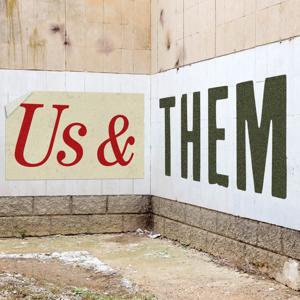


When we learn our history, we see things that reflect our past. Paintings of famous battles and statues of men who were heroes to some. But how we interpret our legacy changes. Time can warp our notion of a once righteous cause. There are examples around the world of ways we have edited our past. In the U.S., recent decisions to move Confederate monuments and take down Confederate flags. But the effort to cleanse the past is global. And in places with a much longer history, the disagreements can be
For this episode, Trey travels to Skopje, North Macedonia to speak with locals about controversial statues honoring Alexander the Great. He also visits a cemetery in Corinth, Mississippi to visit the graves of soldiers decorated with the Confederate battle flag. Trey also examines the origins and evolution of the song Dixie.
North America’s early experiences with Us & Them come from our history with indigineous people. In the 19th century, a nascent U.S. government used treaties with Native tribes and nations to take land and resources. Those treaties relocated Native people to reservations. More than a century later, from 1950 - 1970, U.S. programs were still moving people around. Approximately 100,000 Native Americans were part of what one U.S. official called a “one way ticket from rural to urban poverty.”
For this episode, Trey speaks with reporter Max Nesterak about his American Public Media documentary, “Uprooted: The 1950s Plan To Erase Indian Country.”
Music can entertain and inspire, and it can be a path into another person’s world. On this episode, two different musicians with roots in Appalachia make music that spans the globe. Some of it carries a political message. One man takes his music to places where people struggle with war and disasters, as an offer of healing. The other uses his string band heritage to write songs that sound familiar but carry a message of change.
Democracy may need a reboot, or a kickstart. Pick your favorite term, but the fact is, our system of government requires our participation. When we lose trust, it suffers. “We the Purple” is a campaign designed to encourage engagement. Its partners will help tell the American story in a way that rewards active individuals who want to restore democracy’s foundations. What’s at stake if we don’t get it right? Very little, except political freedom, social and economic justice and our entire way of life. Trey speaks with “On The Media” host Bob Garfield about The Purple Project for Democracy.
Do you disagree with any of your close friends or family members about abortion? When’s the last time you actually talked about it? For many of us, the abortion debate defines Us & Them. Sometimes, it’s better to avoid the conflicts. State laws now include abortion restrictions. Next year, the U.S. Supreme Court hears a case that could change the right to legal abortion. We’ll hear from the protest lines and learn how some people who disagree, choose to talk across the divide.
Paying taxes is one of those things we just can’t avoid… except for the local tax measures we get to vote on. One of the best examples is school spending. When local school officials ask for additional money for new academic programs or school buildings, taxpayers must approve it. There’s one man who has worked with citizen’s groups in dozens of places to fight against more money for public schools. He’s been successful in many places and his efforts highlight the Us & Them in all of these communities. For this episode, Trey speaks with APM Educate producer Alex Baumhardt about her time getting to know the “Bond Buster.”
For decades, coal was king in West Virginia. It paid good wages, paid the bills for many local services through taxes, and kept small towns alive. But more of our nation’s electricity is starting to come from other sources like wind and solar power. Coal is losing out. This Us & Them episode brings us three tales of coal and its future in Appalachia. Two of those tales come from men who grew up in the same neighborhood street in Charleston, WV and now hold very different perspectives. One owns mines, the other is an environmental lawyer. Our third tale comes from a journalist who has covered the coal industry for decades. He says West Virginia needs to look at another energy player - natural gas - to determine its future.
We’re in the midst of the 2019 hurricane season, and people in the Bahamas are still digging out from Hurricane Dorian. In 2018 hurricane Florence hit the coast of North Carolina, which left 51 people dead and caused $24 billion in damage in the state. Disaster relief programs provide assistance to many, but in the U.S. some people are not eligible for any of that help. Undocumented migrant workers who harvest crops and perform other temporary jobs can lose everything when disaster hits.
For the past three years, the Us & Them team has tracked the case of James Means since the 15-year-old boy was shot and killed by 62-year-old William Pulliam on the East End of Charleston, W.Va. The case got national attention partly because Pulliam is white and Means was black.This week, the story came to a sad
Science and faith can offer a different perspective of the world... of life... and of what we believe. When you mix in a third ingredient - politics - the dynamic can become toxic. Whether you consider evolution versus creationism or the causes of climate change, there are people who say their religious beliefs make it difficult for them to have faith in science. However, some scientists say there is nothing in theology that separates them from their faith and beliefs. This episode looks at people of faith and people of science to find some common ground. Trey speaks with Dr. Katharine Hayhoe, a respected climate scientist, as well as a devoted evangelical Christian – two descriptions that some Americans don’t think naturally go together.
From the publisher's feed
We tell stories from the fault lines that separate Americans. Peabody Award-winning public radio producer Trey Kay listens to people on both sides of the divide.

90,968 Listeners

43,801 Listeners

38,014 Listeners

43,324 Listeners

26,806 Listeners

9,189 Listeners

4,018 Listeners

8,431 Listeners

1,248 Listeners

553 Listeners

7,672 Listeners

3,970 Listeners

14,658 Listeners
20,481 Listeners
16,352 Listeners