
Sign up to save your podcasts
Or



Send us Fan Mail
As the global population grows to 10 billion by 2050 we will need to find new ways to feed everyone. As our water resources and productive agricultural land get stretched thinner and thinner we will need to find new and innovative ways to produce food! In today's episode we are discussing two innovative approaches to producing food which are very water conscious and that could be providing our food sooner than you might think!
Today we're discussing Aquaponics and Seaweed Cultivation! Did you know that you can produce fresh vegetables and plant based proteins anywhere in the world using less water than it takes to shower with aquaponics ?The world bank thinks that Seaweed could make up 10% of the food for the world by that point! Think about it you just need an ocean and sunlight and there you go!
You'll hear from the team from Pontus Proteins, an aquaponics company out of Vancouver, BC. Connor, Alson and Steve are taking aquaponics to the next level by integrating robotic harvesting, artificial intelligence and vertical farming. You'll also hear from Mike Williamson the CEO of Cascadia Seaweed! You'll hear all about the health benefits, ecosystems services and how seaweed can be integrated into the North American Diet!
Check out Cascadia Seaweeds website here for more information about Seaweed farming and their new innovative products! Do you live near Sydney, British Columbia? You should mark your calendars for Seaweed Days from May 17-23rd, where Cascadia Seaweed will be launching their new products!
Interested in learning more about Water Lentils and why you need them in your life? Click here for more information about PONTUS proteins!
Support the show
Send us Fan Mail
Is it just me or do we seem to be getting bigger more devastating wildfires every year? If it isn't fires across Canada, it's California, it's Australia, and it's even the Amazon rainforest. Is this more than normal and should we be worried?
Wildfires are a natural part of many forests systems and help maintain forest health, but when we put out fires too quickly we can end up creating bigger fires for ourselves in the future.
In this episode we will be discussing the effects that wildfires can have on our freshwater systems. We'll discuss the benefits, the negatives and how we should be reframing our conversation about wildfires on our landscapes. in this episode you will hear from Dr. Kevin Bladon from Oregon State University who studies how freshwater systems react after wildfires.
Are you interested in getting more involved in managing your local watershed? If you live in Alberta you can find out which one you are a part of at the Alberta Watershed Councils website! Our local watershed councils are a fantastic resource to learn more about our natural areas and how to get involved on a regional scale! Whether it's the Athabasca Watershed Council , the Bow River Basin Watershed Council or the North Saskatchewan Watershed Alliance they are all fantastic organizations to get involved with.
To learn more about Dr. Kevin Bladon, his lab and the important research they are doing you can check out his lab website right here the FEWS Lab.
Interested in the effects of fire on Fort McMurray's drinking water? Click Here!
Support the show
Send us Fan Mail
Did you know that the lands around Alberta's Rocky Mountains could become open pit coal mines? This has become quite the hot topic in the Province of Alberta as it was a decision that the government took without any consultation to the public or any stakeholder groups. This is precious land to not only Albertans but to many Canadians. It is also where Albertans and many people in Saskatchewan get their freshwater from and this is important because of the risk of pollution and contamination from new potential mines in our headwaters.
In this episode we learn about the potential, environmental, economic and social impacts that these mines could impose if they are approved. You will hear from Colton Vessey, an Environmental Geochemistry PhD student from the University of Alberta. Colton is an expert on how mines affect water quality and how future mines might impact everyone in Alberta.
Of course with any type of resource extraction we need to weigh the benefits and the drawbacks. Do you have an opinion on whether the coal mines should go forward or not?
The Alberta Governments has its initial consultation survey that closes next monday April 19th, 2021 and they want to hear from you! Click Here to Fill it Out!
Click Here to learn more about the Alberta Governments Coal consultation program going forward.
Want to learn More?
The Alberta Wilderness Association and Canadian Parks and Wilderness Society (North and South Alberta Chapters) have lots of great information about this issue!
Click here to read the opinion article Colton Vessey described about water licensing and the potential downstream effects from Benga Minings proposed Grassi Mountain Coal Mine at the headwaters of the Oldman River in Alberta, Canada.
If you want to reach out to Colton Vessey with any questions about coal mining and the effects on water you can email him at [email protected]
Click Here to learn more about the Aquatic Biosphere Project!
Support the show
Send us Fan Mail
Invasive species are a huge problem around the world. Asian Carp are most well known for flying through the air, striking anyone out for a pleasure cruise on the river, but they have completely changed the ecology and ecosystems they have taken over. They have taken over the Mississippi river and they are headed for the Great Lakes and Canadian Waters!
What are we doing to stop them?
In this episode you will hear from the experts about why Asian Carp were brought to the United States, how they escaped, why they are flourishing and what we are doing to limit their spread.
You will hear from Andrew Reeves, Author of the book "Overrun: Dispatches from the Asian Carp Crisis", Kevin Irons, Assistant Chief of the Fisheries Division from Illinois Department of Natural Resources, who runs the fishing program to keep asian carp away from the Great Lakes, and from Chuck Shea, US ARMY Corps of Engineers who man the underwater electric barricades keeping fish from the Mississippi river basin out of the Great Lakes.
Want to learn More about Asian Carp?
Want to buy products made with Asian Carp? Check out some products below!
To learn more about the Aquatic Biosphere Project Click Here.
The Aquatic Bisophere ProjectSupport the show
Send us Fan Mail
A study from McGill University, estimates the average Canadian consumes about 329L of water a day, the equivalent of more than 600 standard water bottles (500 ml). Think of your daily routine. In the morning you get up, you have a shower. Flush the toilet. Fill the water for your coffee or tea. Run the dishwasher. At lunchtime, you might boil some pasta. Later you might do some laundry. Before bedtime, you may might run a warm bath or put the kettle on for some hot tea. Sleep and repeat.
As the population keeps growing, water consumption increases, and it becomes more difficult to access the blue gold in a sustainable way. In the long run, this can create water stress, a phenomenon that occurs when the water demand is higher than its availability. How can we prevent this problem and what solutions are available to us? In cities like Cape Town, South Africa, residents have been encouraged to follow a series of water-saving initiatives, from flushing the toilet when necessary to shower no longer than two minutes.
But this doesn’t completely solve the issue from repeating itself. Are there any other solutions available? In the past, desalination has been considered a possible option to solve the water crisis. If you think about it, 70% of the Earth's surface is covered by water, and the oceans hold more than 95 % of all Earth water. Turning seawater into drinking water could help populations who face water stress and water scarcity to solve this problem. However, this isn’t as easy as it sounds.
In today’s episode, Heather Cooley, Director of Research at the Pacific Institute, explains how desalination works, the impacts this can cause to the marine environment, and how unsustainable this practice can be.
For more information about seawater desalination, water stress and the work that the Pacific Institute does Click Here.
For more information on the Aquatic Biosphere Project and how we are telling the story of water Click Here.
Support the show
From the publisher's feed
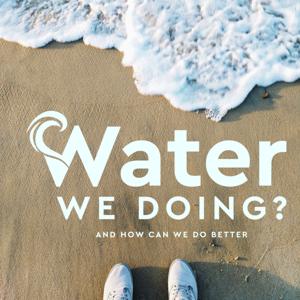
Discover how our most precious commodity impacts our lives in so many fascinating ways. That's right! We're talking about water, but not like you've ever heard it before. Join us as we explore…
234 Listeners

399 Listeners

359 Listeners
365 Listeners

207 Listeners
497 Listeners

516 Listeners

427 Listeners
35 Listeners
332 Listeners
1,523 Listeners
15 Listeners

109 Listeners
47 Listeners

435 Listeners