Podcast Show Notes
Chapter 55: Civil Frights
Episode Overview
In this episode, we dissect Chapter 55 of Watertown: Under Color of Law, titled “Civil Frights.” We explore the predatory mechanics of a municipal department that treats citizens’ constitutional rights like low-value items at a high-interest pawn shop. We analyze the department’s fractured logic on privacy and accountability, contrast the “failing grade” of current leadership with the integrity of officers who keep their body cams on, and utilize Charles Dickens’s biting satire to expose the “Circumlocution Office” culture currently suffocating civic transparency in Watertown.
Key Themes & Discussion Points
* The Pawn Shop Exchange Rate
* We open with a cynical but accurate audit of the department’s interaction with the public: you walk in with your civil rights, and they look them over with a jeweler’s loupe only to offer you “Civil Frights”—a trade where you lose your agency and still owe the institution for the trauma.
* We look at the “Blue Wall” not just as a physical barrier, but as a system of curated silence. It is a one-way mirror that allows the police to peer into the lives of citizens while fiercely guarding their own accountability from public view.
* The Fractured Logic of Privacy vs. Power
* We dissect the department’s contradictory stance on privacy. Officers move through citizens’ lives like ghosts, citing “public safety” as a master key to see into every pocket and personal history. Yet, the moment a citizen turns a camera lens toward them or documents state power on a public sidewalk, the air grows cold.
* They retreat into the shield of “qualified immunity” and claim that the light they use to expose others is a violation of their own right to work without scrutiny—a striking display of professional insecurity for those who claim to enforce the law.
* The Economy of Truth & The Double Standard
* A forensic look at the double standard of “candor.” In an interrogation room, police are legally permitted to weave tapestries of fabrications to extract a confession, treating lying as an “investigative technique.”
* However, the moment a citizen’s tongue trips over a date or a minor detail, the full weight of the law is summoned. This standard is a failing grade for any department that claims to value honesty.
* Legal Precedent: The Robust Lane of Public Debate
* We map out the legal reality that the Constitution provides a wide lane for citizens speaking truth to power. Citing cases like Cruise-Gulyas v. Minard, federal courts have affirmed that expressing disdain toward an officer is protected speech, not a criminal offense.
* When a Captain is so emotionally unsettled by a research email that he bypasses court procedures to file “frightened” criminal summons, he is not protecting the community—he is advertising his own unfitness for command.
* Literary Satire: The Circumlocution Office
* We use Charles Dickens’s Little Dorrit to diagnose the department’s organizational rot. The Watertown Police Department functions less like a public service and more like the infamous “Circumlocution Office.”
* Like the “Barnacle” family in Dickens’s satire, who latched onto their paychecks while ensuring nothing ever actually happened, the department creates a labyrinth of “no,” “wait over there,” and practiced shrugs to avoid answering direct questions. Their primary goal is to choke the truth with the very red tape they claim is meant to protect it.
Quotes Featured in This Episode
“The Watertown Police Department reminds me of a high-interest pawn shop. You walk in with your civil rights, and they look them over with a jeweler’s loupe before saying, ‘Well, the best I can do for these is Civil Frights—and you’re still going to owe us interest on the trauma.’... The greatest trick they tried was suing a whistleblower into silence—only to accidentally broadcast their own dysfunction to a global audience.”
Book Club & Discussion Questions
* The Transparency Paradox: Why do high-ranking police officials consistently pathologize “scrutiny” as a dangerous attack, while simultaneously utilizing their investigative power to bypass the privacy of private citizens?
* The Circumlocution Culture: How does a department’s institutional culture of losing paperwork, citing obscure rules, and shunting citizens from one office to another act as a structural barrier to the First Amendment right to redress grievances?
* The Professional “Failing Grade”: How does the documented double standard—where police are permitted to lie as an “investigative technique” while citizens are criminalized for minor clerical discrepancies—undermine the foundational integrity of the justice system?
Resource Links & References
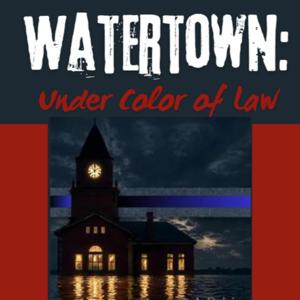
* Featured Book: Watertown: Under Color of Law by Amy M. Dubé (2026, Red Oak Media).
* Related Chapters: Chapter 50 (”14th Amendment”), Chapter 51 (”Misogyny”), and Chapter 54 (”Violations”).
This is a public episode. If you would like to discuss this with other subscribers or get access to bonus episodes, visit adminethicsindex.substack.com