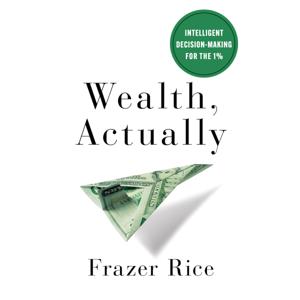
Wealth Actually

Wealth Actually

Download on the App Store

Wealth Actually episodes

  • EP-123 LIV GOLF vs PGA TOUR with JOE OGILVIE
    If you are a casual sports fan, the emergence of the Saudi-backed LIV Golf Tour and its enormous sums of money has been a major story. It has all the elements of a classic drama:
    Famous Athletes Outsized PersonalitiesBig, almost infinite, moneyInternational IntrigueInternal workings and politics of powerful organizations
    We are lucky to hear from Joe Ogilvie, a PGA Tour Player for 15 years, about the impact of LIV Golf on the PGA Tour and the golf world in general.
    Based in Austin, TX, JOE OGILVIE is a former touring professional golfer with five professional wins including the 2007 U.S. Bank Championship. He was an All-American and All-ACC college golfer at Duke University where he majored in economics. Joe founded Ogilvie Capital in 2007, an investment advisory firm and later joined Wallace Capital Management as a long-only value manager in September 2014.
    Joe is uniquely qualified to opine on the state of golf as we guess at its future. He also gives us some background on his development as a world class player and his transition to asset management in his 40's when he retired from touring. This podcast was a blast for me!
    BACKGROUND
    How did you find your way into golf?Describe the process of going from amateur to pro to PGA Tour Pro?What is the economic reality of getting to the PGAT and being a tour pro?With numerous high finishes and a win, what changes after that?With your deep background in economics and interest in business, what were you doing in parallel to your golf career?The role of Pro-Ams and having access to the best and brightest in all fieldsLearning from the best and using your alone time to maximum effect: "Don't Eat Dinner with Bad Putters."Transitioning from playing to investments full time and getting to Wallace CapitalHow did you make the decision and what were the steps?
    LIV GOLF and the PGA TOUR
    What is the state of the golf union as you see it?How does the "grow the game" sentiment work with the money flying around? Does the LIV pose a threat to the PGA with the young college talent?Is there room for common ground?Will the Official World Golf Rankings Points catch up?Where do you think this goes in five years?Has the sport really grappled with what a post-Tiger money environment looks like? Is there a "next Tiger?"If chairing the board of the PGA what big initiatives would you be thinking about? 
    GOLF NERD-DOM
    Take us through a couple of the important shots in your career- the chip-in on 16 at the US Bank OpenFavorite courses?  Maybe some under the radar ones?What are your thoughts on the explosion of length in the game?
    JOE OGILVIE TWITTER: @OgilvieJ
    *This podcast is for educational and entertainment purposes. Frazer Rice is an employee of Next Capital Management, LLC. This podcast is not investment, legal, or tax advice, nor does it reflect the opinions of Next Capital Management. Any opinions represented in the show are Frazer’s individually and not an endorsement of the guest.
    https://www.amazon.com/Wealth-Actually-Intelligent-Decision-Making-1-ebook/dp/B07FPQJJQT/
    42 min
  • EP-122 PRIVATE JETS w/ AVIATION EXPERT, DAVID CLARK
    Private Jets are on the minds of all successful people.
    The time savings, security, convenience and prestige appeal to the everyone.
    However private aviation is so much more. It can be complicated and it’s definitely expensive.
    To help us survey the issues around flying private, I spoke with DAVID CLARK.
    David has developed expertise from over 30 years in the private aviation industry through several key roles working with international corporations and Family Offices.
    He is the Principal of the Integris Aviation Consultancy
    Fluent in Portuguese and English, he divides his time between North and South America working with Family Offices and flight departments
    OUTLINE
    What are some of the main reasons family offices choose to start using private aviation?
    The Value of Time - and the appeal of Private Jets
    What are the distinct options that exist for accessing private aviation? Break that down for us.
    On Demand Charter
    Jet Cards – package of hours
    Fractional Ownership- depreciable asset
    Whole Ownership- control; own or lease
    What kind of methodology exists from a financial standpoint when it comes to private aviation? Walk me through that.
    5K/Hr + taxes and fees
    Jet card- 25, 50 or 100hr increments
    Fractional Share- retail cost of plane divided by share
    Whole Ownership- buy the whole thing
    You talk about a best-practices approach a lot - what do you mean by that?
    Over 60 yrs- lots of lessons, safety, operational, risk, financial- knowing how the industry workflows and "supply chains" work is key.
    What is the state of the private aviation market today? Is this a good time to get in?
    Covid lockdown
    Opening up- boom – People discover how addictive it is.
    The billionaires crack, kids go back to public school before going back to private-
    Pilots?
    What is the best advice you can give a family office wanting to use private aviation but don't know where to start?
    Build a Team:
    Avaition Consultant
    Aviation Attorney
    Tax
    Technical
    ESG
    Security
    **Disclosure: This podcast is for educational and entertainment purposes. It is neither investment, legal, nor tax advice and does not represent the opinions of the employers of the host or guest. Frazer Rice is an employee of Next Capital Management, LLC. This podcast is a property of Wealth Actually LLC and does not reflect the opinions of Next Capital Management. Any opinions represented in the show are Frazer’s individually and not an endorsement of the guest."
    https://www.amazon.com/Wealth-Actually-Intelligent-Decision-Making-1-ebook/dp/B07FPQJJQT/
    31 min
  • EP-121 NFL LINEMAN, MARQUES OGDEN on ENTREPRENEURIAL RESILIENCE
    MARQUES OGDEN is a former NFL Lineman who has parlayed his football experience, lessons learned in the rise and fall of his construction company into a growing public speaking and media career. His podcast recently featured Brett Favre: PODCAST
    We talk about his background, his playing days and his career path.
    But we really focus on the perils of success, the importance of teamwork, delegation, and the power of persistence
    Background
    Identifying when you were great at footballPlaying with/ Identifying with your brother JonathanFrom Howard to the NFL
    NFL experience- Jacksonville Jaguars
    Toughest matchups
    The biggest misconception people have about the NFL: "That it’s only physical- the mental importance can’t be overstated."
    Transitioning out of NFL- how do you know when it’s time to hang it up?
    Describing the difficulties- 6 months of partying
    Running a business and challenges you faced-
    Early success- the perils of ego
    Trusting . . . but not verifying. How did you come out the other side?
    "8 Figures to 8.25/hr"
    The role the NFL played in getting back on his feet.What are the lessons you are teaching people?
    Resilience, Teamwork, Persistence, Delegation
    Story About The Greatness of Ray Lewis
    Marques Ogden in Action
    STAYING IN TOUCH: How do our listeners find you?
    LINKTREE
    https://marquesogden.com/
    TWITTER
    "GET AUTHENTIC WITH MARQUES OGDEN" PODCAST
    https://www.amazon.com/Success-Cycle-Achieving-Goals-Business-ebook/dp/B081DC17D1/
    https://www.amazon.com/Wealth-Actually-Intelligent-Decision-Making-1-ebook/dp/B07FPQJJQT/
    29 min
  • EP-120 CHILDHOOD WEALTH DISCUSSIONS with JEFF SAVLOV
    It is a common saying that wealth in families is built and lost in three generations.However, this “shirtsleeves to shirtsleeves” phenomenon is on the minds of most wealthy families.There is constant demand for advice from families of wealth on how to raise productive and kind children.However, there is also a sentiment that the education and preparation of wealthy kids solely stays within the realm of money discussions OR that the interactions should only happen when older.That may not be the case- JEFF SAVLOV is here to talk about the benefits of having these discussions - many times earlier than people think is possible. Jeff is the Founder of Blum & Savlov, LLP He consults with business families, legacy wealth families and the advisors who serve them. He brings more than 30 years of unique experience in sales and marketing, business ownership including business succession within his own family, and family dynamics/psychological training.We will get into what he sees as the benefits of deep early involvement with kids and the establishment of a productive culture to help kids become productive, thoughtful and community oriented.
    Outline
    • Jeff's Background • So, raising kids in the context of family wealth is an area of particular interest? 5:25• Is your work about talking to kids about money at really young ages? • How has communication about family wealth changed over time? • I’ve often heard you talk about proactive and reactive in this context. Can you say more about these ideas? • How young can you start? 10:50• What are some practical tips for parents in this context? 14:00• Can you describe an ideal proactive situation you were involved in? 23:00• Do these ideas apply to poor and working-class folks? • Is it ever too late?27:45
    How Do We Stay in Touch with Jeff?
    JEFF SAVLOV
    LINKEDIN
    https://www.youtube.com/watch?v=k5iZDrYil3U
    https://www.amazon.com/Wealth-Actually-Intelligent-Decision-Making-1-ebook/dp/B07FPQJJQT/
    28 min
  • EP-119 (BONUS) GOLF LEGEND, JAY SIGEL on MENTORSHIP, DETERMINATION and GIVING BACK
    Golf legend, JAY SIGEL joins us on this episode of "Wealth Actually."
    In United States Amateur Golf, there are three names: Bobby Jones, Tiger Woods and Jay Sigel. Jay is one of the most accomplished amateur golfers in American history.
    After growing in Pennsylvania, Jay played his college golf at Wake Forest. Afterwards, he embarked on a successful career in insurance and focused on the amateur side of the game-And focus on it he did . . .
    Jay won:
    The US Amateur twice (Including his win at the Country Club in Brookline in 1982)The US Mid AmateurThe British Amateurand he played in 9 Walker Cups (captaining two of them).
    Jay later turned professional at age 50 and played on the Senior tour where he won 10 times.
    https://www.youtube.com/watch?v=5weEssiMjgM
    While it’s an amazing story of golf accomplishment, many of the lessons from Jay’s life come from his insurance business, his lessons in mentorship from Arnold Palmer and Jack Nicklaus, his charity work and the importance of family.
    OUTLINE (Transcript is below . . . .)
    Jay’s early golf and rise to prominence,
    -Junior Golf-The role of Wake Forest-His arm injury, the decision to forgo professional golf and the economics of the Tour "back then"
    The start and story of Jay’s successful insurance business in Pennsylvania
    -The factors that went into his long-term success in business (and golf’s role in business)-The role of family-The decision to compete on the Senior Tour (and the role of Jack Nicklaus)-Winning as a pro
    Jay’s charitable endeavors and what is happening now?
    -THE JAY SIGEL INVITATIONALGolf questions
    -What made Jay a terrific player?-Was anything missing?
    -What is the difference between the top .01% and the top .0001%?-Mindset of Stroke vs Match Play
    -The match with Rick Fehr at Brookline and the aftermath-The great players and lessons learned in Jay’s career
    The State of the Game
    -What he thinks of the state of the game after a whirlwind of news in the world of golf:-Impact of length and power on the game -How did Brookline hold up with the modern game?
    How Do We Stay In Touch?
    WWW.JAYSIGEL.COM
    THE 2022 JAY SIGEL INVITATIONAL
    Jay's Golf Resume
    https://www.jaysigel.com/new-page
    https://www.amateurgolf.com/golf-tournament-news/27871/Catching-up-with-Jay-Sigel
    https://www.youtube.com/watch?v=yhLj8EMCok0
    TRANSCRIPT
    Intro:
    Welcome back to the Wealth, Actually podcast. The show that features artists, entrepreneurs, experts, and commentators that will give you the right knowledge, planning, and guidance so you can preserve your assets and enjoy your wealth. Learn more and subscribe today at WealthActually.com. And now, here's your host, Frazer Rice.
    Frazer Rice:
    Welcome back to the Wealth Actually podcast, I'm Frazer Rice. Today we have an extra special edition of the show. We get to speak with Jay Sigel, who's one of the most accomplished amateur golfers in American history.
    Frazer Rice:
    After growing up in Pennsylvania, Jay played his college golf at Wake Forest. Soon afterwards, he embarked on a successful career in insurance and focused on the amateur side of the sport. And focus on it, he did.
    Frazer Rice:
    He won the US Amateur twice, the U.S. Mid-Amateur, the British Amateur and he played in nine Walker Cups, captaining the side twice. He later turned professional at age 50 and played on the Senior tour where he won 10 times.
    Frazer Rice:
    While it's an amazing story of golf accomplishment, many of the lessons from Jay's life come from his insurance business, mentorship, charity, and the importance of family. Welcome aboard, Jay.
    Jay Sigel:
    Thank you. Good to be here and good to be able to speak with you.
    Frazer Rice:
    Well, this is a real treat for me. I had Rob Labritz on before talking about his foray into the Senior Open and senior golf in general on the PGA Senior tour. But, what few people understand is that the golf career can take many directions. And, I think you're the personification of that. Your career, and I talked a little bit about it in the opening, pretty iconic in terms of the direction that you took it. Maybe take us through a little bit about your early experiences, sort of where you came from and how you picked up the game.
    Jay Sigel:
    I grew up in the Narberth area, which is a suburb of Philadelphia and was active in all sports, but particularly in baseball. And, one day I was caddying for my dad, no intention of playing golf and three bags on my right shoulder at age 10 and a half, 10. And he said, "Would you like to try this game?" I said, "Absolutely. Better than caddying for you three guys." Well, we went from there.
    Frazer Rice:
    So, when you started out hitting your first balls, what was that like? Was the talent obvious or were you topping it and it was going 50 feet. How did that work?
    Jay Sigel:
    Frazer, I was terrible. Honest to goodness. And, what got my competitive juices up is we visited some friends in Cape Cod every summer and he was way better than I was. So, my goal for the following summer age 11, was to return and be able to beat him not only at horseshoes, baseball, but golf. Sure enough, that was a huge, huge help that competition.
    Frazer Rice:
    You sort set some goals for yourself. You started to get better in the different phases of the game. Where did that go structure wise? How did junior golf work in terms of getting more traditional competitive situations?
    Jay Sigel:
    Well, we had a great golf association in Philadelphia and I played in the junior event. In fact, I can remember one junior event. My mom took me, it was 12 and under, and the pro said, "Well, sorry ma'am but your son is too old for this. This is 12 and under." I was a tall, pretty big kid. And she said, "No, no, he's 12. He's under 12." So, I remember winning. That was my first victory at age 11, and shot 46 for nine holes. So that was a great memory.
    Frazer Rice:
    So you get some taste of junior golf, when did your handicaps start getting down to the area, call it scratch or somewhere around there where you started to look at it and you were starting to believe a little bit more in golf as a path?
    Jay Sigel:
    I don't recall having a handicap early on. I mean, this was 65 years ago. One thing I do remember, though, at the club I was at, the mature members were so helpful and so concerned that I do right. That's my first introduction to mentoring, and I had no idea what mentoring meant. And it became very important in my life as you'll see.
    Frazer Rice:
    As you were getting mentored at the club level, you had people who were looking out for you, giving you advice and so on. When did Wake Forest start to become an option? How did that process work?
    Jay Sigel:
    Arnold Palmer was a friend of the family. His father-in-law and my dad were fraternity brothers, so they were pretty close. They would see each other. And, my dad said, "Arnold, who should Jay take lessons from?" My first official lesson at age 16, Arnold said my dad. So we went out to Latrobe and spent the day there. I can remember clearly eight o'clock in the morning, Arnold had already been hitting balls and here I am 16 years old, getting ready to warm up to have a lesson from his dad and I shanked the first three or four, almost took Arnold's head off. So that was an experience. So, we got to know one another fairly well.
    Frazer Rice:
    So, Jay, maybe get into the mentoring side a little bit more because a big part of business development and the development of people generally, it's important to have someone who's looking out for you, and also not just looking out for you, but helping to provide both technical and real life guidance as to how to handle oneself. Maybe go into that a little bit.
    Jay Sigel:
    Yeah. You say that so well, Frazer. I didn't have any idea what mentoring was in my early years. I do remember, though, playing, I was 15 or 16 playing the club championship at Bala Golf Club in Philadelphia, where I learned to play and was mentored so well early on. We had a rules question come up and it was ruled against me, but in fact I was correct, but what was I going to do about being correct and losing in the rules? So I won the match. We finished. I was playing a celebrity Philadelphia athlete and he said, "I guess you won." Well, I was boiling, boiling, hot over that. Went into the locker room, one of my dear friends said, "Play him again." I said, "Play him again?" This was the most important win of my life at that point. And I couldn't possibly do that. Of course I did play him again and killed him, so fun and an interesting story.
    Frazer Rice:
    Yeah. And, and it's important, too, because the culture around the rules of golf and the self-reporting mechanism sometimes is alien to people. We're used to referees in other sports, and even if you watch professional golf nowadays, and you've got rules officials and people call them over and so on, but the self-reporting aspect is a big deal. Maybe talk about that a little bit, where culture of being the steward of your own game and being the reporter of your own ethics.
    Jay Sigel:
    Yes, it's interesting. I mean, I've had occurrences, not many I can [inaudible 00:06:55]. I think when I was about 16 or 17, I was playing the Philadelphia open, which was a big deal at Marion. And I came to about the 14th, 15th hole, and I noticed in my golf bag, I had what appeared to be an extra club. Well, I took my towel, put it over top of the bag. The caddy hadn't said anything. I didn't know it. I hadn't checked my clubs, nor had he, so out we go another hole and it's driving me crazy. I think I made a double or triple buggy, so I uncovered the clubs and there was an extra club. So I had to make a decision in that one whole timeframe. Was I going to keep it hidden or was I going to declare it? Well,...

    42 min
  • EP-118 (BONUS) COVID and THE FUTURE OF PLAGUE RESPONSE with PROF. POLLY PRICE
    Two years after its onset, the world's response to the COVID-19 Pandemic will be generational event studied for years. It is a reminder that tail risk events happen more frequently than we think. Pandemics have been a feature (not a bug?) throughout the American experience. POLLY PRICE's new book sheds light on the US government's response to epidemics throughout history- with larger conclusions about COVID-19 and reforms needed for the next plague.
    Polly J. Price is the Asa Griggs Candler Professor of Law and is also Professor of Global Health in the Rollins School of Public Health at Emory University. A public health law scholar as well as a legal historian and citizenship and immigration law expert, she has published, lectured, and taught widely about immigration and citizenship, public health law and regulatory policy, federalism, property rights, and the judiciary. (She also had the "joy" of having me in her Legal Methods class when I was at Emory Law!)
    Her new book: PLAGUES IN THE NATION
    https://www.amazon.com/Plagues-Nation-Epidemics-Shaped-America-ebook/dp/B09CD2WDFC/
    A) Tell us about your background
    B) What prompted you to write the book?
    C) A quick rundown of America's Pandemic History
    1 America’s First Plagues2 Yellow Fever and the Shotgun Quarantine3 Black Death on the West Coast4 The 1918 Great Influenza5  Confronting Tuberculosis6 The Fight Against Polio7 The AIDS Epidemic8 Ebola in Dallas9 A Coronavirus Pandemic
    D) How do you evaluate America's efforts with COVID?
    E) How did the speed of information affect efforts?  The Global nature of the spread?
    F) Federalism-
    What did we learn about the interaction between the Federal Government and State Government Responses?
    F) What should we do differently?  What are the lessons learned?
    G) How do we stay in touch?
    PROF. POLLY PRICE's BIO
    POLLY's TWITTER
    PLAGUESINTHENATION.COM
    https://www.amazon.com/Wealth-Actually-Intelligent-Decision-Making-1-ebook/dp/B07FPQJJQT/
    22 min
  • EP-117 RETHINKING CLIENT LONGEVITY in WEALTH MANAGEMENT with CHRIS HEYE, PhD
    Today, I have a challenging discussion with Dr. CHRIS HEYE, PhD, founder of WHEALTHCARE SOLUTIONS. We talk about the issues of older age on decision-making and how that affects an individual’s retirement. We go through data on aging and explore diminished mental capacity in detail.  Advisers will learn what to look out for in clients who may be suffering from cognitive decline or even Alzheimers disease, and what those advisers can do about it. Finally, we hear about the formation of Whealthcare Solutions and the data behind the firm.
    Data on aging. (It's alarming)The expense and wealth redistribution taking place- with no signs of slowing down.The story of Whealthcare Solutions.Misperceptions of “diminished capacity.”The surprising peak age for financial decision-making.How does it affect advisers, and what can advisers do about it?Warning signs.
    The Wealth Management Industry is in a new and brave world as the tools and thinking around asset management and financial planning may be straining to catch up with the new demographics of country.
    https://www.amazon.com/Wealth-Actually-Intelligent-Decision-Making-1-ebook/dp/B07FPQJJQT/
    21 min
  • EP-116 WEALTH CYBERSECURITY with TOMMY RAGSDALE
    For advisers dealing with wealth management clients, cybersecurity is a necessary conversation. The wealthy are clamoring for digital protection. Advice on the defense against social media attacks, the selling of information on the Dark Web, online security breaches and asset theft are a part of the advice that most wealth management clients have come to expect from their advisors. How do you get your arms around this high stakes discussion?
    Today I spoke with TOM RAGSDALE to find out more.
    Tommy is an early team member at 360PRIVACY, a Nashville-based cybersecurity firm specializing in digital protection for high profile individuals, family offices and executives. He joined in February of 2021 after working in healthcare technology for four years. Prior to that, Tommy flew fighter jets in the United States Marine Corps. Tommy served as a Weapons and Tactics expert, a flight instructor, and led maintenance teams in combat.
    He is on the literal front lines of the digital security war that clients are fighting everyday- whether they know it or not!
    We talk about:
    THREAT ASSESSMENT
    Define Threat SurfaceIdentify VulnerabilitiesOverlay Threat Landscape
    DIGITAL HARDENING
    Privacy ProtectionsDevice HardeningDarkweb Solutions
    THREAT RESPONSE
    Breach AssistanceCyber EnhancementTailored Consulting
    TYPES OF CLIENT
    Family OfficesCorporate ExecutivesPublic Figures (and the balance between being "off the grid" and "out there")HNW and UHNW clients
    Find 360 Privacy here:
    360Privacy.io
    TOM RAGSDALE LINKEDIN
    https://www.amazon.com/Wealth-Actually-Intelligent-Decision-Making-1-ebook/dp/B07FPQJJQT/
    28 min
  • EP-115 DISRUPTION IN WEALTH MANAGEMENT with MATTHIAS KUHLMEY
    The Wealth Management Industry is in the midst of massive demographic change. Business models are evolving, old entrants are retiring or merging, technology is leveling the playing field. As a result, clients are demanding more value and the industry is coping with a rapidly shifting landscape.
    As "Wealth Management" clamors for direction, new expertise to manage this change is emerging. With us today is MATTHIAS KUHLMEY, Chief Development Officer at Hightower Advisors and the developer of the "Disruption in Wealth Management" Module for Columbia University's Wealth Management program.
    Matthias Kuhlmey began his professional journey as a trained musician, landing somewhat fortuitously in the field of global finance where he has been active as an advisor, capital market expert, and corporate executive for the past 20+ years.
    Whereas the origins of his two worlds cannot be more different. Matthias has been passionately exploring parallels, especially in observing how technology has been disrupting both industries. Lowering the barrier of entry, preparing the path for a creative (r)evolution.
    Matthias is a thought-leading critic of socioeconomic affairs, C-Suite executive of one of the leading firms in the independent space for financial advice, and lecturer at Columbia School of Professional Studies in New York City.
    Background
    Overview
    1. “Disruptive Trends in WM”
    2. Big opportunity to define disruption in the context of WM (Music Industry as an example)
    3. Ttrust and lack of trust in the system; emerging stores of value
    4. The firm of the future; what to consider, trends to build on, etc.
    Independent Movement Around the Registered Investment Advisor Space
                -“Wire House” to Independence
                -Regulatory and definition Clarity
                -Transparency
                -Client -centric
    Digitization
                -Movement away from vertical integration
                -Firms now have access to best in breed technology through 3rd party sources
                -Vendor selection and maintenance
                -Tech as differentiator is now tech as equalizer
    Product to Service Shift in Industry
                -Move away from commoditized offerings
                -Relationship oriented advice
                -Shifting consumption models- the move to digital
                -the importance of Shared mission
    The Impact of Political Risk 
                -Mitigating Store of Value Risk
                -The Erosion of Trust of “free markets”
                -The emergence if digital assets
    Growth – Organic
                -No one solution- but it must be process driven
                -Value proposition must be overwhelmingly obvious
                -Relationships must be monetizable
                -Accountability driven
    Growth – Inorganic
                -Deal Activity has exploded
                -Risks- integration
                -Emphasis on culture and operations vs transaction
                -Organizations must be prepared via network and hierarchy models
    Future of Wealth
                -Access to clients based on value proposition – necessitates specialization
                -Talent pool incomplete- not diverse enough, not digital enough, not empathetic enough
                -Women- a huge driver of change both as clients and industry leaders
                -Meaning of money broader- aspirational sustainable, impact
                -Corporate leadership needs new skills to lead the new type of worker and service client
                -Economic incentive of workplace culture important but psychological safety is key
    How Do We Stay In Touch?
    https://www.linkedin.com/in/matthiaskuhlmey/
    https://sps.columbia.edu/faculty/matthias-paul-kuhlmey
    Recent publications:
    o Succession: A Relevance Crisiso The Money (R)evolutiono The Values Dimension
    Resources Columbia SPS:Master of Professional Studies In Wealth Management
    https://www.amazon.com/Wealth-Actually-Intelligent-Decision-Making-1-ebook/dp/B07FPQJJQT/
    28 min
  • EP-114 LOS ANGELES REAL ESTATE with SHELTON WILDER
    SHELTON WILDER will be the first to tell you that the Los Angeles Residential Real Estate Market is no joke.  Building a successful practice in the space is hyper-competitive. The glitz and glamour portrayed on Bravo don't tell the story of struggle and heartbreak that exists in this world.
    We’re going to cover the complexities of LA market and Shelton's marketing acumen- including the increased speed and professionalism required for modern high end real estate.,
    However, the real story is Shelton’s persistence and ability to overcome adversity. We’ll talk about her coming back from her difficult experience on Shark Tank. That experience and struggles with other businesses inform her success today.  Finally, we are going to detail her ability to use persistence, family and the power of sobriety to enhance decision-making.
    The Los Angeles Residential Real Estate Market
    https://www.sothebysrealty.com/eng/los-angeles-real-estate/magazines/market
    How you do you break it down?
    What has been COVID's effect?
    What is hot? What is not?
    Background
    Shelton's Journey from financial problems to success
    Sobriety's role in your success
    Finding your niche
    Media-
    Shark Tank “Failure to Success”
    https://www.youtube.com/watch?v=AuQZvVSBpOg
    Development of the Real Estate business
    Use of media to promote your services . . .
    IG is vital and much faster than typical glossies
    HOW DO WE STAY IN TOUCH?
    SHELTON WILDER'S WEBSITE
    SHELTON WILDER"S INSTAGRAM
    SHELTON WILDER'S YOUTUBE
    https://twitter.com/SheltonWilder
    https://www.amazon.com/Wealth-Actually-Intelligent-Decision-Making-1-ebook/dp/B07FPQJJQT/
    38 min

About Wealth Actually

From the publisher's feed

Covering the issues that affect business, entrepreneurship, wealth, trusteeship and culture.

More shows like Wealth Actually

Masters in Business by Bloomberg

Masters in Business

2,181 Listeners

The Meb Faber Show - Better Investing by The Idea Farm

The Meb Faber Show - Better Investing

950 Listeners

White Coat Investor Podcast by Dr. Jim Dahle of the White Coat Investor

White Coat Investor Podcast

2,442 Listeners

Animal Spirits Podcast by The Compound

Animal Spirits Podcast

2,032 Listeners

Bogleheads On Investing Podcast by bogleheads

Bogleheads On Investing Podcast

617 Listeners

The Long View by Morningstar, Christine Benz - Director of Personal Finance and Retirement Planning, Ben Johnson - Head of Client Solutions, Amy Arnott - Portfolio Strategist

The Long View

934 Listeners

Kitces and Carl - Real Talk for Real Financial Advisors by Michael Kitces, MSFS, MTAX, CFP and Carl Richards, CFP

Kitces and Carl - Real Talk for Real Financial Advisors

243 Listeners

WashingtonWise by Charles Schwab

WashingtonWise

463 Listeners

The Prof G Pod with Scott Galloway by Vox Media Podcast Network

The Prof G Pod with Scott Galloway

5,388 Listeners

All-In with Chamath, Jason, Sacks & Friedberg by All-In Podcast, LLC

All-In with Chamath, Jason, Sacks & Friedberg

10,190 Listeners

Ask The Compound by The Compound

Ask The Compound

337 Listeners

Honestly with Bari Weiss by The Free Press

Honestly with Bari Weiss

8,430 Listeners

Retirement Planning Education, with Andy Panko by Andy Panko

Retirement Planning Education, with Andy Panko

1,070 Listeners

The Great Retirement Debate with Ed Slott & Jeffrey Levine by The Great Retirement Debate with Ed Slott & Jeffrey Levine

The Great Retirement Debate with Ed Slott & Jeffrey Levine

145 Listeners

Prof G Markets by Vox Media Podcast Network

Prof G Markets

1,449 Listeners