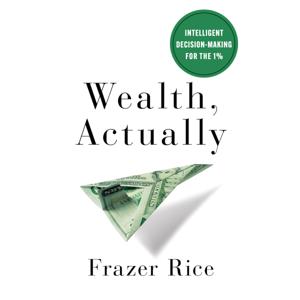
Wealth Actually

Wealth Actually

Download on the App Store

Wealth Actually episodes

  • EP-133 NEW YORK’S ESTATE TAX CLIFF with GEORGE BISCHOF, ESTATE PLANNING ATTORNEY
    State Estate Taxes -
    State Estate taxes can be a nasty surprise- especially with the disconnect between State and Federal Exclusions. Currently, the Federal Exemption stands at $12.92mm per person. 17 states have and estate or inheritance tax and it's often uncoupled from the Federal exemptions.
    In New York, the state estate tax exclusion stands at $6.58mm per person- and that exclusion isn't portable with a spouse. With state estate tax rates reaching 16%, this could lead to a potentially big number.
    However, planning around this tax can be complicated. Estate Planning Attorney, GEORGE BISCHOF is here to define the problem and the clients it affects, provide some context for planning and give us some ideas on how to deal with it.
    George is an Estate Planning Attorney here in New York City at the WILLS AND TRUSTS FIRM (https://thewillsfirm.com/). He focuses on clients between $4 and $20mm in net worth.
    Estate Tax
    Federal ($12,920,000 per person) vs NYS ($6,580,000 per person)
    More New Yorkers can be caught in this than they think
    Real Estate can be a big issue
    Linkage to Gift Tax (NYS has no gift tax)
    Rates (40% Federal vs 16% State)
    NYS Cliff - Established in 2014
    105% Estate Tax Exclusion is where the cliff kicks in.
    Graduated Tax Calculation
    Goes back to dollar zero and can be a $250K+ mistake
    Calculated on NYS property
    NYS has floated a longer phase-out range, no progress yet
    Being a City vs State Resident is irrelevant (as opposed to an income tax situation)
    Portability – Federal: Yes, NYS: NO!!! (but, Credit Shelter Trusts can be a solution)
    Ways to Reduce / Minimize This Tax
    Using Charity and a drafting Santa Clause (a conditional formula bequest that leaves money to your preferred charity (or one chosen by your executor or trustee), but only if doing so will result in a higher after-tax estate for your beneficiaries).
    Changing your residence AND domicile (and cutting NY linkages!) - See an in depth discussion on this topic with attorney MARK KLEIN - (SNOWBIRD PLANNING EPISODE)
    Using Gifting to get "under the cliff amount" (but beware of 3 year look back).
    Moving wealth to non-NY jurisdiction
    Maximizing “portability” with Disclaimer or Credit Shelter Trust structures
    Disclaimer language in wills and/or trusts
    Make sure you have an independent co-trustee  
    BONUS: I wrote about this topic back in 2019 and it gives some context around the planning. (The numbers have not been updated): https://frazerrice.com/blog/the-return-of-the-nys-estate-tax-cliff/
    https://www.amazon.com/Wealth-Actually-Intelligent-Decision-Making-1-ebook/dp/B07FPQJJQT/
     "Frazer Rice is an employee of Next Capital Management, LLC. This podcast is not investment, legal, or tax advice, nor does it reflect the opinions of Next Capital Management. Any opinions represented in the show are Frazer’s individually and not an endorsement of the guest. This podcast is for educational and entertainment purposes. It is neither investment, legal, nor tax advice and does not represent the opinions of any employers of the host or guest."
    22 min
  • EP-132 “ULTRA HIGH NET WORTH” CRISIS MANAGEMENT with JANE MINTZ MA, LPC
    Crisis Management in the Wealth Space
    Lawyers, Accountants, Wealth Advisers and other advisers – are used to dealing with difficult situations all at the heart of their specialty.  But often, the advice the clients need goes past the wealth arena . . . .
    How do you help them when you hear situations like this?
    My son shows no drive and won’t get up from bed-
    My daughter is cutting herself-
    My brother just got his second DUI this year and is running the business into the ground-
    The trustee of my trust has missed filing taxes and is making mistakes-
    What do you do when you are the first point of contact, but out of your expertise? 
    What happens when the family is in crisis and devastating wealth impacts are in view?
    What happens when it’s not in your business model or expertise to deal with this part of the family’s issues? How do you do the right thing by your client and yourself?
    JANE MINTZ is the person to help us deal with this gaping hole in the wealth management industry.
    Jane is an internationally respected pioneer who has spent 20 years working with individuals and families around crises related to addictive illness, mental health, and life concerns. Best known for her work as a concierge strategist guiding clinically complex individuals and their families through extraordinary challenges, she is also a noted thought leader, industry consultant, educator, and speaker who has garnered international recognition. Jane has extensive experience working with family businesses and private family wealth offices so that the dysfunctions of today do not destroy the legacies of tomorrow.  
    Jane is a Licensed Professional Counselor with multiple dimension training credentials in high acuity clinical clients. She is a Laurel School graduate (Cleveland, OH) with degrees from Washington University (St. Louis, MO) and John Carroll University (Cleveland, OH). 
    https://open.spotify.com/episode/6s4CX5W9qxMtXwRRbBOtUi?si=zvatryXoRUadZirFtJJO4w
    Outline
    Jane, in a couple of sentences, what do you do as Professional Counselor-
    How is your expertise applied to the wealth space? (Family Businesses and Wealth Offices/Trustees)
    Crisis
    What constitutes a crisis?
    What is the difference between a crisis and a mistake (or “growing pains”)?
    How does a financial advisor, coworker, wealth manager know when to intervene?
    What are we looking for signs and symptoms that someone needs help:  
    Misspending 
    Not showing up for appointments 
    Missed deadlines 
    Disruption in workplace 
    Missed work 
    Inability to participate in large planning matters 
    The Intersection of Being a "Fiduciary" and Getting a Client the Help They Need?
    What is a fiduciary relationship?  vs. Human Ethics?
    When do human ethics supersede fiduciary ethics?  How can a clinical strategist be a key collaborator in bridging the gap between the two?   
    What does a professional counselor do?  
    What happens when a client is introduced to to a Counselor?   
    What are reasonable expectations?  For the family? For the Adviser?
    What does progress look like? 
    How do you set up the structures for long term success?
    Where does the Adviser fit in that process?
    How do we stay in touch and how do listeners find you?
    JANEMINTZ.COM
    Books Mentioned . . . .
    https://www.amazon.com/Four-Agreements-Practical-Personal-Freedom/dp/1878424319
     "Frazer Rice is an employee of Next Capital Management, LLC.
    This podcast is not investment, legal, or tax advice, nor does it reflect the opinions of Next Capital Management.
    Any opinions represented in the show are Frazer’s individually and not an endorsement of the guest."
    https://www.amazon.com/Wealth-Actually-Intelligent-Decision-Making-1-ebook/dp/B07FPQJJQT/
    30 min
  • EP-131 WEALTH & LAW PODCASTING with ACTEC LAWYER, BRENT NELSON
    Why Do You Podcast? And How Does It Help in the Wealth/Law Space?
    Why do I do it?
    What’s involved?  How does it interact with your career?
    Should I do it? (YES- At least try it)
    How did you get started and how much does it cost?
    Do you make money on it?
    Is your ROI on the show different?
    Do you use it for research or marketing (or both)?
    Do you enjoy it?
    Two Advisor Podcast Experiences
    I thought I would have BRENT NELSON on the show, so we could trade our two podcasting experiences. 
    Brent is the host of the successful and entertaining Wealth and Law podcast and heavily involved in the wealth management space.  This is his second visit to the Wealth Actually Podcast.
    He is an ACTEC Fellow and a partner of the Tucson-based RIMON LAW FIRM and focuses on international and domestic estate planning.
    For those curious about the world of podcasting and where it can fit into your business or practice, this should be a useful listen from two people who have done it. I liked the idea of two people, who have demanding day jobs, describing their podcasting experiences and how they make it fit within a demanding schedule-
    Why we did it?
    Why do we continue to do it?
    What do you listen to and what did you take for inspiration?
    What's your process?
    What started off poorly and has gotten better?
    How much time / resources / workflow does it take?
    What functions do you keep / what do you delegate?
    How do you measure success? How do you "monetize?" Business model? Advertising?
    What do you wish you had? Struggles with audience building-
    Weird stuff like music / disclaimers?
    The Wealth and Law Podcast:
    https://open.spotify.com/show/3bQK3jsLsacNqryQKQuSRG
    I am also adding this excellent primer on "HOW TO PODCAST" from my friend, Jason Cilo of Meeting House Productions- it goes into some depth on the "Who, What, Where, When, Why and How" of the process from a person who does an extremely professional job on his show. It is well researched and serves as an ode to his passions in the TV and Film world. Well worth the listen: FULL CAST AND CREW: HOW TO PODCAST
    https://open.spotify.com/show/1UTZzSo2oPXBxn94UrIjO1
    Some of the Podcasts Mentioned:
    Errol Louis ("You Decide" NYS Political Podcast), Various Horror Podcasts, John Keim (Washington Commanders Beat Writer for ESPN), Full Cast and Crew, Infinite Loops, Penny Philips, Griffin Bridgers, Morgan Housel, Ritholtz Wealth's stable of podcasts, Invest Like the Best with Patrick O'Shaughnessy
    https://www.amazon.com/Wealth-Actually-Intelligent-Decision-Making-1-ebook/dp/B07FPQJJQT/
    "This podcast is for educational and entertainment purposes.
    It is neither investment, legal, nor tax advice and does not represent the opinions of the employers of the host or guest."
    48 min
  • EP-130 MID-CAREER PIVOTS with FRAZER RICE
    In this episode, I recount my experience in taking the plunge and jumping from a stable, large bank job to swim in some different waters. "Funding the Pivot" was written a few years ago as I was doing the post-mortem on my post-book experience. I think the lessons I learned can help a lot of people. This format a bit of an experiment for me in non-interview podcasting- let me know what you think of it. The transcript of the essay is below- thanks for listening!
    Follow me on TWITTER LINKEDIN YOUTUBE and INSTAGRAM, Don't forget to SUBSCRIBE/like/rate the show and feel free to send along to your friends.
    https://www.amazon.com/Wealth-Actually-Intelligent-Decision-Making-1-ebook/dp/B07FPQJJQT/
    Funding The Pivot
    We live in a world where we are bombarded with advice to “follow your passion” and stories of people who wonder about the road not taken.  In fact, more people in their prime earning years are taking steps to fulfill their “dreams” before they reach the brass ring of retirement- a time normally associated with doing all of the things you didn’t have time to do.
    What happens when you aren’t close to retirement and want to make a career switch or start up a new business? What is realistic? How should you think about the risks so that you avoid a crippling financial decision?
    As clients and friends have come to me with this issue, I have taken my personal experience and some financial planning concepts to put structure around what can be a high risk, but high reward decision.
    The Assessment and the Plan
    Many of us daydream about a better tomorrow . . . better finances, more control of time, health and family happiness, a clearer path to professional or extracurricular achievement and establishing a legacy. These things don’t come without costs and the risk of failure. Therefore, you need a plan.
    The first step is to assess the situation at hand.
    Are you running from something or running to something?
    Do you have an idea that will change an industry (or the world)? Do you want to start a business (and the hell that being an entrepreneur can bring) or do you just want to enjoy the trappings of a well-oiled business machine (already put in place)?  For those making career decisions because of an unpleasant work environment, I would think twice about running headlong into entrepreneurism.  It is a long and lonely road.  You have to “really want it” and be prepared for sacrifice both personal and financial.  Can the same itches be scratched while being traditionally employed? If your current situation is dissatisfying, could the correct change be a move to a firm that is more in keeping with your goals and principles?
    I had a little of both in my life and used parts of the creative process, the entrepreneurial experience and a corporate situation to move my situation ahead.
    My situation at my previous employer was suffocating.  I enjoyed working with clients, solving problems, identifying opportunities and being relevant to successful people. However, while enjoying success, I was not participating in the equity or direction of the business and I was not developing.  My career trajectory was flattening and the principles by which I worked were shifted by new management priorities. It was time to go no matter what.
    I also had a nagging feeling that I had more to bring to my clients, my firm, the industry . . . and myself.  I became involved in podcasting and speaking- two things that I enjoyed.  On the strength of that and my extracurricular interest in writing screenplays and essays, I felt like I had a book in me.
    Change is good, right? Change brings growth. Generally speaking, that’s true, but change also occurs when you are laid off or when a company closes down. To that end, change is effective when you are the architect of the change. When you are driving new circumstances, you have more control over its effects. In my case, I spent a year writing the book, finding a publisher and getting ready to be an author. I had the collateral to be something more than a job description. This leads to an important question.
    What Does Success Look Like?
    It is important for anyone making the pivot to understand what their definition of success is. For almost everyone, this will be an evolution.
    Ask yourself if you have the talent and the drive to make your new endeavor your life’s work.
    Am I a writer?
    In my case, the book was originally going to be TV pilot filled with smart, funny stories and I had over 200 pages of notes. I had written a variety of blog posts that were well-received and had a lot of other positive feedback. I thought I could make a go of it.
    Am I an entrepreneur?
    I looked around and saw that my path to success either as an author or in the world of TV was going to be a long shot at best. I spent long hours talking to my publisher and others about what success for my “outside endeavor” was going to look like. Early on (and fortunately), I was disabused of the idea that I was going to be the next Michael Lewis. The structure of the industry made the likelihood of success remote, especially at my stage of life. Making a huge life change on the narrow definition of being a (highly paid) writer/media personality was going to be an enormous risk.
    Could I turn a talent into something else?
    My thinking changed. The return on investment was going to be in the form of a major personal Everest climbed and of a new career trajectory, both wider and more upwardly sloping.  I changed the direction of the book from wickedly funny entertainment to intelligent decision-making for the one-percent, an area where I had significant professional experience and where I could make a meaningful difference to people (and their advisors) who need help.
    I encourage everyone looking to make the pivot to:
    Speak to others in the field and determine potential realistic results and
    Write down what their success will look like.
    This leads to the next question.
    Do you have the tools and resources to achieve your goal? (The Pivot Fund)
    Whether starting a business, finding a new job, or embarking on a new adventure, you have to find a way to land the plane back on the carrier safely. Financial and career stress can create a difficult decision-making environment and can have devastating effects one’s family and personal legacy. The first way to mitigate this risk is by taking an inventory of the tools and resources you have at your disposal.
    Step #1: Be confident that you have the talent to be successful- if you aren’t 7 feet tall, you probably aren’t going to be an NBA center, no matter how good your hook shot is.  Talk widely and broadly to people in the field to get an honest appraisal of your skills. Do things in your new field in bite-sized measures to make sure you enjoy the process. Find a mentor to help you learn the ropes and then a sponsor to give you the push your career will need (these may not be the same people). Join industry groups to get engrained in the culture.Beware: One of the most common pitfalls I see occurs when people assume that success in their current field will automatically translate into a different one.  Investment banking does not guarantee success in venture capital. Being successful in the public sector does not make someone a great businessperson. Being a TV star doesn’t necessarily make one a great author.
    Step #2: Explain what you want to do with your family and other interested people. You need to have family buy-in when you are financially responsible for them. Without their understanding, the distance between former financial stability and the current uncertainty of success could destroy your project.  Real life is expensive: mortgages, educations, healthcare etc . . . you should not undertake a pivot without deep consideration of these expenses. Communication is vital in keeping your support structure behind you and it will help your team make your pivot a bigger success.
    Step #3: Determine the important constituencies affected by your decision. This is directed at your employers, customers, community members etc . . . To those that matter to you, their understanding is important as you take on the stress of going through this new challenge. This process is also useful in establishing your allies as you embark on your new adventure.
    Step #4: Establish your anchor tenant. To go out on your own naked is scary and dangerous. In a new business, having the anchor tenant can be the difference between success and failure. Having an established customer(s) or constituency interested in your success will help get your endeavor off the launch pad and bring instant credibility to your efforts.
    Step #5: Plan your time for the first year . . . In detail. A huge issue for retirees is understanding what to do with all of the new unstructured time. For many it leads to aimlessness and depression. The same applies to people making a big pivot. You will have a huge surge of energy when your project lifts off. However, momentum is a fragile commodity. Once you settle in and become accustomed to an unstructured situation, uncertainty and procrastination can be dangerous enemies. What are you going to do the first month? The second month? The third month? The sixth month? Then a year out? The more structure you have in place, the more chance you can keep the momentum of your project going until it fuels its own success. Additionally, from my experience, however long you think it will take to get your project moving, double it.
    Step #6: Establish the Pivot fund. The start of any new project has to be done in conjunction with the financial resources at hand. One should detail the assets and liabilities of one’s financial position in detail. What have you got, what are your family’s costs and what is necessary to make your pivot happen? As discussed, a frank conversation with your family and other important p
    13 min
  • EP-129 THE FAMILY OFFICE Q&A with DENTONS’ EDWARD MARSHALL
    The FAMILY OFFICE – a term that is surrounded by mystique.
    It conjures notions of massive wealth, mahogany infused offices, private jets and money that has reached escape velocity. When one probes deeper, it connotes secrecy, exotic opportunities and risks, mixed with rigid control and discretion.
    But what is the reality behind the term “family office”?  At what level of wealth do families bring it all in house?  What functions do they actually perform?  How much do they cost?
    For families that are intrigued, what questions should they ask before going down that process and what should they focus on? 
    We’re going to speak with EDWARD MARSHALL, Head of the Global Family Office at Dentons, the international law firm.  Ed has deep experience in the space and is a terrific starting point for families looking to engage the process of developing their own structure.
    Ed and his white papers and research can be found at DENTONS' site here: ED MARSHALL and his twitter account is here: ED MARSHALL TWITTER. A link is here for his informative book (with Bill Woodson): FAMILY OFFICES: A COMPREHENSIVE GUIDE FOR ADVISORS, PRACTITIONERS, AND STUDENTS
    Here are some of the areas we hit on:
    When a client comes to you looking for a family office, what problems are they trying to solve?
    What is your process for helping them define what they need?
    Why not outsource everything?
    How do you make this a digestible process?
    Build, Buy, or Partner?
    Cost
    Talent
    Confidentiality
    Regulation
    Scope Creep
    The Rule of 3:
    It's could take 3 years to build
    It could costs $3 Million
    You will probably want to shut it down 3 times before it's up and running
    Below is a brief summary of the question and answer process from Dentons to help families get their bearings around the family office process:
    Focus areas
    Getting started
    General Investing
    Investing and owning real estate
    Venture capital and private equity
    The Lender Management strategy (US-based family offices)
    Taxes
    Litigation
    Operations and governance
    Employment
    Impact investing and philanthropy
    Trusts, estates and wealth preservation
    Public policy
    Risks and threats
    Specialty areas
    Getting started
    What experience do you have working with family offices and family businesses?
    Is your experience local, national or global?
    What are the legal services that you typically provide to family offices that look like ours?
    Does your experience with different family offices provide you with best practices that you can share with us?
    What are the key legal issues to consider before, during and after a liquidity event?
    Are all of your legal services billed hourly or can you deliver work on a flat-fee-per-project basis?
    How would you build a team to handle the legal and non-legal matters relating to my family office?
    Do you (or your firm) have access to a network of family office general counsels?
    Are the business entities currently affiliated with our family office optimally structured across all areas that we should consider, such as income tax, estate tax, securities regulation, privacy, etc.?
    What legal considerations and potential pitfalls exist with respect to embedded family offices (i.e., where employees of the family business perform the same function as a single-family office)?
    If members of the family are investing together and/or separately, what legal structuring should we consider?
    Would our family office benefit from a holding-company structure? Should one or more trusts own the family office legal entity? What is a family office management company? Should we consider using a holding company for our investments?
    What are the advantages and disadvantages of using a family limited liability company (FLLC) or a family limited partnership (FLP) in our family office or family business?
    How can we exercise optimal control of a family office or family business through the use of legal entities and strategies?
    How can we build governance strategies into our family office to ensure alignment of family interests, values, goals and succession plans?
    What is the regulatory environment in the jurisdiction where our family office will be located? If the family office provides services to family members who are located in multiple jurisdictions, does that raise any regulatory issues? What are the local jurisdiction requirements for advisors to the family office? What would be the best jurisdiction for all concerned?
    Have we titled all assets owned by the family effectively and efficiently?
    What are the legal issues to consider when (a) outsourcing or (b) bringing family office services in-house?
    What shareholder and operating agreements should we create to support the family office operations? How will such agreements define the relationship between the family office and related entities?
    In what jurisdiction should we form the family office, and why?
    General Investing
    If we are considering direct investment strategies, what specialized entities should we create and why? What are the legal considerations if we participate in club deals with other family offices?
    Can you provide legal and non-legal due diligence prior to an acquisition or disposition?
    How can we properly structure profits interest structures?
    What are the decision points around creating special purpose vehicles (SPVs) for individual investments? Should the SPVs be owned by a trust or a holding company, and why?
    How do we evaluate all of our investment activities to ensure we are following applicable securities laws?
    Based on our current and/or planned activities, does the family need to register or make other filings with relevant securities regulators (e.g., in the US, the Securities and Exchange Commission (SEC) or in Singapore, the Monetary Authority of Singapore (MAS))?
    What are the legal considerations to insourcing rather than outsourcing our investing activities?
    If our SFO wants to transition to an MFO or RIA (registered investment advisor) model, what are the legal and non-legal considerations to keep in mind?
    What legal considerations are there for family offices that invest in cryptocurrency or blockchain-related assets (e.g., NFTs)?
    How do we properly structure cross-border investments? What do we do if we have family members investing together and they have different citizenships and/or places of residence?
    How can we conduct a red-flag review of illiquid investments (e.g., private equity, hedge funds, direct investments, etc.)?
    How can we use investment policy statements (IPSs) to help guide and interact with the family's investment advisors (in-house or outsourced)?
    If we invest successfully, does the family office team get compensated? How are such arrangements designed to align the family office team with the family?
    What securities regulations should one be mindful of when considering a family office? 
    Investing and owning real estate
    What is your shared family capital vision?
    What structuring considerations are there with respect to personal real estate owned by individual family members?
    What structuring considerations are there with respect to real estate owned by the family business or the family office?
    What are the structuring considerations if the family office wants to invest in real estate, or to finance (or refinance) its existing real estate investments? What if only some members of a family want to invest or participate in a real estate financing?
    What special considerations exist for specialty real estate asset classes, such as multi-family housing, hotels and hospitality assets?
    Venture capital and private equity
    Should we have a standard form of side letter ready to provide to the manager of any fund into which we are investing?
    How do we ensure that our interests and those of other investors are aligned with those of the fund manager?
    Do we need any specific reports prepared for our investment e.g., on the ESG status of underlying investments made by the fund?
    How much legal due diligence should we undertake as an investor or co-investor in an early-stage investment?
    What are the risks associated with SAFEs (simple agreements for future equity) and similar convertible instruments?
    Which warranties should we give and which should we avoid when making direct investments?
    What minimum rights should we seek to negotiate as a minority investor, and why?
    How can we take advantage of double taxation treaties when structuring our investments?
    How does one mitigate one's risks when serving on the board of a portfolio company? How can we use insurance to address these risks?
    How do our rights differ when investing in a club deal as opposed to a fund?
    What co-investment and other rights should we negotiate when investing into a fund?
    What are the pros and cons of investing in secondaries?
    Where are the legal risks of paying finders fees for deals?
    What are registration rights and why do we need them?
    The Lender Management strategy (US-based family offices)
    What are the facts and circumstances of the 2017 case of Lender Management, LLC v. Commissioner of Internal Revenue, and are they relevant to my family office?
    What is the difference between Internal Revenue Code Sections 212 and 162, and is this relevant to my family office?
    What are the factual differences between the Lender case and Hellmann v. Commissioner of Internal Revenue, and are they relevant to my family office?
    If my family office is organized in a Lender Management-type fashion, do we need to or can we manage investments for non-related other families?
    Taxes
    Have we optimized our family office entities and investment strategies to minimize adverse tax consequences?
    How should we best interface with the family office’s accounting advisors

    27 min
  • EP-128 ESTATE PLANNING IN A RISING INTEREST RATE ENVIRONMENT with ACTEC LAWYER MATTHEW HOCHSTETLER
    We are now into 2023 and it's turning into is a unique wealth planning environment
    Families are dealing with volatility and depressed asset values. We have extremely generous Federal Estate Tax Exemption levels for the next couple of years (we think!)-
    Most intriguingly, we are witnessing rising interest rates which are bouncing hard off of generational interest rate low. Since interest rates are an important driver of many strategies, the effectiveness of many popular estate planning tools is up for review. Furthermore, some “out of season” techniques are getting a new look.
    To help survey the landscape is MATTHEW HOCHSTETLER. Matt is a Partner at David J Simmons and Associates which based in Canton, Ohio and Naples FL
    Matt is an ACTEC Fellow and well qualified to help us think about the current environment
    Welcome Aboard Matthew-
    Matt's Background and Practice
    The Rising Interest Environment-
    What rate are we using?  AFR and 7520 Rates
    How does it work?  Monthly reset?
    Where were we (From 2010 to 2021 historic lows that went under 1%) and where are we now (Near 6%)?
    Strategies for a low-interest-rate environment
    Lending to transfer wealth with little or no gift tax. The interest rate reflects the hurdle that appreciating assets must beat to be effective for some estate planning techniques to be effective.
    Intrafamily-loan 
    Installment Sale to an Intentionally Defective Grantor Trust (IDGT)
    Grantor Retained Annuity Trust (GRAT) 
    Charitable Lead Trust (CLT) 
    Strategies for a high-interest-rate environment
    You may be able to capitalize on strategies whose benefits hinge on using higher interest rates to reduce the actuarial value of a taxable gift. The higher the rate, the more beneficial these strategies will be.
    Qualified Personal Residence Trust (QPRT): 
    Charitable Remainder Trust (CRT): 
    This is the reverse of a CLT; the grantor receives an annual payment from the CRT for a term of years, and charity receives whatever remains at the end of the term.
    Any other thoughts around planning in 2023 and 2024 with the sunset provisions looming at the end of 2025?
    Start Your Thinking Early!
    Law Firm and Valuation Firm Capacity may get stretched thin by 2025 as people delay
    It is easier to top up previously implemented strategies than establish new ones on the fly.
    HOW DO WE STAY IN TOUCH?
    TWITTER: @MRHesq
    LINKEDIN
    https://www.amazon.com/Wealth-Actually-Intelligent-Decision-Making-1-ebook/dp/B07FPQJJQT/
    Frazer Rice is an employee of Next Capital Management, LLC.
    This podcast is not investment, legal, or tax advice, nor does it reflect the opinions of Next Capital Management.
    Any opinions represented in the show are Frazer’s individually and not an endorsement of the guest."
    This podcast is for educational and entertainment purposes.
    It is neither investment, legal, nor tax advice and does not represent the opinions of any employers of the host or guest.
    24 min
  • EP-127 THE WEALTH TAX LANDSCAPE with JARED WALCZAK
    Casual investors understand that states approach taxation of its citizens differently and can have different approaches to raising revenue.
    However, in the last month, there has been a shift in the directionality of state tax policy.
    Seven states (including NY and CA) released aggressive (and interrelated) proposals to increase taxes.
    Some of these proposals center around forms of the controversial “wealth tax” – a tax that would raise revenue from unrealized gains.
    JARED WALCZAK will explore the new proposals, the likelihood of passage and their broader impact. 
    Jared Walczak is Vice President of State Projects at the Tax Foundation. He is the lead researcher on the annual State Business Tax Climate Index and Location Matters, and has authored or coauthored tax reform guides on Alaska, Iowa, Kansas, Louisiana, Nevada, New  York, Pennsylvania, South Carolina, West Virginia, and Wisconsin. Jared’s work is regularly cited in The New York Times, The Wall Street Journal, The Washington Post, Los Angeles Times, Politico, AP, and many other prominent national and state outlets.
    He previously served as legislative director to a member of the Senate of Virginia and as policy director for a statewide campaign, and consulted on research and policy development for a number of candidates and elected officials.
    He has been recently quoted extensively on this topic in the Wall Street Journal, the New York Post, and MarketWatch.
    Trying to predict tax legislation can be folly.
    However, states are known to be the laboratory for broader national tax legislation.
    These state proposals can provide interesting data points on the mood of legislatures and the directionality of tax policy across the nation.
    It’s important to know about them. Enjoy the conversation with Jared Walczak.
    Jared's Background 
    The Tax Landscape
    Context around
    Income Taxes
    Capital Gains Taxes
    Estate Taxes
    Wealth Taxes
    State Taxes vs Federal Taxes
    "Raising Revenue" vs "Wealth Redistribution"
    What is new in 2023 that has 7 states looking to raise taxes?
    Which states are we looking at here?
    California
    Connecticut
    Hawaii
    Illinois
    Maryland
    New York
    Washington
    What about the passage of Massachusetts' Millionaire Tax?
    What is the likelihood of passage?
    What does this tell us about the "Diverging Directionality" of State Tax Policy?
    Wealth taxes?
    We're already used to the concept of taxing unrealized gains with property taxes-
    Not popular- Haven't these been tried worldwide and often discarded?
    Administratively difficult?  Invest in valuation firms!
    Forced liquidations? Lower Business Valuations? Reduced Returns for Shareholders?
    Fairness?  Do you get a carry forward if there is a loss?
    Is the Wealth Tax Constitutional?  Is it a Taking?
    Is this a Business Climate to be Encouraged?
    Tax increase Directionality
    What do the tea leaves look like?
    What political points can be scored in such a divided environment?
    Any big crystal ball predictions here?
    How do we keep track of Jared and the Tax Foundation?
    JARED WALCZAK
    JARED'S WEALTH TAX ARTICLE
    @JaredWalczak ON TWITTER
    https://www.amazon.com/Wealth-Actually-Intelligent-Decision-Making-1-ebook/dp/B07FPQJJQT/
    26 min
  • EP-126 HEALTH CARE and WEALTH MANAGEMENT with JOHN SAMUELS
    We are all familiar with the labyrinth of the healthcare system:  The paperwork, the confusion and the cost can be overwhelming. One of the blind spots in wealth management at all levels is the advice for the most significant liability most families will face: healthcare. 
    I spoke to JOHN SAMUELS, founder of Better Health Advisors, to get smarter on the topic of how to better advise people around this thorny issue.
    For more than 20 years, JOHN served as a senior healthcare leader in top New York City hospitals, including Northwell Health and Mount Sinai Beth Israel.
    In 2016, John founded Better Health Advisors, an independent healthcare advisory firm, to share the expertise he developed as a healthcare insider with members of the public.
    He brings a unique viewpoint on the intersection between healthcare and wealth planning.
    After listening, I hope you better understand the landscape around helping families deal with this imprecise, paperwork heavy, massively expensive and emotionally taxing issue. 
    OUTLINE
    Talk about your background in emergency medicine and how that led to the founding of your company
    Why do you consider a person's health their greatest asset?
    Why is health management as important as wealth management 
    Do wealthy people usually get better healthcare?
    What do you wish more people understood about the intersection of health and wealth?
    What are the biggest mistakes you see people make related to health care? 
    In the United States, a healthcare crisis often comes with a big bill. What steps do you recommend people take to protect their wealth before an emergency arises?
    How is health insurance related to financial planning?
    Having health insurance options once you've sold or left a company in a W2 environment
    Bridging the gap to Medicare
    Elder Care (and my rule of thumb of 1 Tuition / parent / year as a way to flesh out costs)
    Managing (or outsourcing) the paperwork
    Finding the right instiutions and the right people in the institutions to get the correct care
    What is the definition of "concierge medicine"
    How do you manage HIPAA and privacy concerns?
    How does one build a team of advisors to deal with the legal and financial impacts around these issues?
    The importance of having a centralized repository for one's medical information.
    HOW DO WE STAY IN TOUCH WITH JOHN?
    BETTER HEALTH ADVISORS
    JOHN SAMUELS LINKEDIN
    HEALTH ADVICE RESOURCES FOR ADVISORS
    ADVISOR ISSUE SPOTTING GUIDE
    HEALTH VS WEALTH FUNCTIONS
    **This podcast is for educational and entertainment purposes.
    It is neither investment, legal, nor tax advice and does not represent the opinions of any employers of the host or guest.
    Frazer Rice is an employee of Next Capital Management, LLC.
    This podcast is not investment, legal, or tax advice, nor does it reflect the opinions of Next Capital Management.
    Any opinions represented in the show are Frazer’s or the guest’s individually.
    https://www.amazon.com/Wealth-Actually-Intelligent-Decision-Making-1-ebook/dp/B07FPQJJQT/
    27 min
  • EP-125 GENERATION SKIPPING TAX (GST) with FIDUCIARY TAX EXPERT, MICHAEL GROSSMAN
    With the end of the year approaching, the focus of HNW and Family Office Space has turned to intergenerational planning.
    One of the ideas on the minds of many families is providing for future generations.
    It would be natural to make gifts to future generations to avoid the estate tax.
    However, Congress figured that out and implemented the Generation Skipping Transfer Tax back in 1976.  It’s not easy to understand, implement or track especially across generations.
    MICHAEL GROSSMAN is here to help us understand the GST,
    Michael is Tax Manager/Fiduciary Specialist from the firm of Adelman Katz & Mond LLP (www.akmcpa.com)
    He has Extensive experience working as a tax manager, fiduciary accountant and trust and estate administrator for the past 27 years and manages all aspects of ‘High Net Worth’ individuals and family tax issues.
    The Background on the US Tax Regime:
    What are ‘Lifetime Exemptions’
    Income Tax vs Capital Gains Tax vs the Estate/Gift Tax vs GST
    What is a ‘Taxable Gift’
    What is a (GST) – Generation Skipping Transfer Tax?
    Gift and GST – two separate lifetime exemptions
    · 2022 Estate/Gift Lifetime Exemption - $12,060,000 per person ($24,120,000/couple)· 2022 GST Lifetime exemption - $12,060,000 per person ($24,120,000/couple)
    GST – gifts to an individual vs. gifts to a trust· What is the difference between a ‘GST Trust’ and a ‘Non-GST Trust’· What happens when gifts are allocated to GST – or not
    Annual Exclusions – One size does not fit all· Crummey Power· Annual exclusion for ‘Gift Tax’· Annual exclusion for ‘GST Tax’
    Mistakes:
    Not including or discussing gift to a Trust in overall estate plan· Conversations with family/trust and estate attorney
    Direct vs. Indirect (GST) Gifts· What is the difference· Reporting difference on Gift Tax Return
    Allocation of GST - Elections· Automatic Allocation· Opt in vs. Opt out
    Annual Exclusions· Follow up and connect to item #6 above
    Best Practices:
    Be clear in understanding how the trust works· Does the gift made align with overall estate plan· Does it accomplish your goals
    Make sure you discuss current and past gifts with attorney drafting trust· Review prior gift tax returns· Make sure preparer of gift tax return knows what they are doing
    WAYS TO FIND MICHAEL GROSSMAN
    Adelman Katz & Mond
    **This podcast is not investment, legal, or tax advice, nor does it reflect the opinions of Next Capital Management.
    Any opinions represented in the show are Frazer’s individually and not an endorsement of the guest.
    This podcast is for educational and entertainment purposes.
    It is neither investment, legal, nor tax advice and does not represent the opinions of any employers of the host or guest.
    https://www.amazon.com/Wealth-Actually-Intelligent-Decision-Making-1-ebook/dp/B07FPQJJQT/
    31 min
  • EP-124 THE DATING APP LEGAL LANDSCAPE with LAW PROFESSOR, IRINA MANTA
    Dating apps combine many controversial concepts: technology, sex, societal change, economic intrigue . . . and the law. We are in the early stages of understanding how dating apps are affecting the way people interact. Our legal system is just now grappling with how to deal with bad actors in a world where accountability is scarce. To lay the ground work on these concepts is Irina Manta.
    IRINA D. MANTA is a Professor of Law and the Founding Director of the Center for Intellectual Property Law (CIPL) at the Maurice A. Deane School of Law at Hofstra University. Professor Manta's research spans legal issues involving intellectual property, torts, the Internet, privacy, national security, and immigration. A graduate of Yale Law School and Yale University, she co-hosts the dating podcast "Strangers on the Internet".
    Dating apps- what is the problem?
    A quick survey of the dating app scene: Hinge, Tinder, Bumble, Facebook?Bad incentives that apps send especially to men:  Technology and Incel culture . . . and scaleLegal problems - contract law, misrepresentation, privacy, torts etc . . . overlay of digital record-keeping on traditionally human interactionIntroducing accountability into the world of digital datingLegal and extralegal measures (including cultural changes) need to be put in place. Why hasn't the free market solved some of these issues?What are the collective action problems involved? How (or who) should regulate this?How does this drive a law professor to write a book and have a podcast around this?
    Outro- Strangers on the Internet Links:
    PODCAST AND WEBSITE: www.strangersoninternet.com
    Apple Podcasts: https://podcasts.apple.com/us/podcast/strangers-on-the-internet/id1632743749
    Spotify: https://open.spotify.com/show/24vap5ENIfNXnKrHXluZ3W
    IG: @swipestrangers
    Twitter: @swipestrangers
    Facebook: http://www.facebook.com/groups/strangersontheinternet/
    LinkedIn: https://www.linkedin.com/company/strangers-on-the-internet/
    Faculty Profile: https://law.hofstra.edu/irina-d-manta/
     "Frazer Rice is an employee of Next Capital Management, LLC. This podcast is not investment, legal, or tax advice, nor does it reflect the opinions of Next Capital Management. Any opinions represented in the show are Frazer’s individually and not an endorsement of the guest. This podcast is for educational and entertainment purposes and does not represent the opinions of any employers of the host or guest.
    https://www.amazon.com/Wealth-Actually-Intelligent-Decision-Making-1-ebook/dp/B07FPQJJQT/
    32 min

About Wealth Actually

From the publisher's feed

Covering the issues that affect business, entrepreneurship, wealth, trusteeship and culture.

More shows like Wealth Actually

Masters in Business by Bloomberg

Masters in Business

2,181 Listeners

The Meb Faber Show - Better Investing by The Idea Farm

The Meb Faber Show - Better Investing

950 Listeners

White Coat Investor Podcast by Dr. Jim Dahle of the White Coat Investor

White Coat Investor Podcast

2,442 Listeners

Animal Spirits Podcast by The Compound

Animal Spirits Podcast

2,032 Listeners

Bogleheads On Investing Podcast by bogleheads

Bogleheads On Investing Podcast

617 Listeners

The Long View by Morningstar, Christine Benz - Director of Personal Finance and Retirement Planning, Ben Johnson - Head of Client Solutions, Amy Arnott - Portfolio Strategist

The Long View

934 Listeners

Kitces and Carl - Real Talk for Real Financial Advisors by Michael Kitces, MSFS, MTAX, CFP and Carl Richards, CFP

Kitces and Carl - Real Talk for Real Financial Advisors

243 Listeners

WashingtonWise by Charles Schwab

WashingtonWise

463 Listeners

The Prof G Pod with Scott Galloway by Vox Media Podcast Network

The Prof G Pod with Scott Galloway

5,388 Listeners

All-In with Chamath, Jason, Sacks & Friedberg by All-In Podcast, LLC

All-In with Chamath, Jason, Sacks & Friedberg

10,190 Listeners

Ask The Compound by The Compound

Ask The Compound

337 Listeners

Honestly with Bari Weiss by The Free Press

Honestly with Bari Weiss

8,430 Listeners

Retirement Planning Education, with Andy Panko by Andy Panko

Retirement Planning Education, with Andy Panko

1,070 Listeners

The Great Retirement Debate with Ed Slott & Jeffrey Levine by The Great Retirement Debate with Ed Slott & Jeffrey Levine

The Great Retirement Debate with Ed Slott & Jeffrey Levine

145 Listeners

Prof G Markets by Vox Media Podcast Network

Prof G Markets

1,449 Listeners