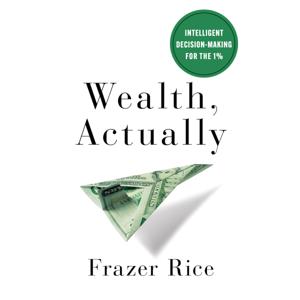
Wealth Actually

Wealth Actually

Download on the App Store

Wealth Actually episodes

  • SPORTS PODCASTS
    Sports media is decentralizing. However, "Sports Podcasts" are exploding in audience growth. Stephen A. Smith, Pat McAffe and Barstool Sports are household names. Legacy names, like ESPN, are figuring out how to hold on to their audiences and find new ways to expand them. Out of this high profile world, there are many lessons to learn in managing one's own career and how to harness the possibilities of media for your own businesses.
    BRAM WEINSTEIN (the "Voice of the Washington Commanders") is the founder of Ampire Media and can be heard weekdays from 3-6 PM EST on "The Bram Weinstein Show" on ESPN 630 DC. As part of his 24 year (and counting) on air career, he spent 7 years at ESPN mainly as an anchor of "Sportscenter" and has appeared on a  variety of programs including "Like it or Not" on Fox 5 in Washington DC, "The Bram Weinstein Show" on The Team 980, as well as analyst roles on NBC Sports Washington. 
    When not performing, Bram produces for and consults with various content providers in traditional and new media for his firm AMPIRE MEDIA.
    We also get to nerd out a little on the Washington Commanders and their improbable fast start this year!
    https://open.spotify.com/episode/2rW0FF84wRQZ8O8qZEyptt?si=bc2c29518f96414e
    Bram Weinstein "Voice of the Commanders" on Sports Podcasts
    Bram Weinstein's Background -
    How did you get into broadcasting?
    Take us through the route with the career to get back to DC.
    What does a life in sports media look like?
    The arc of a broadcaster's career and the need to develop equity.
    https://youtu.be/OxKRSXB2lFI?si=OwyNPG2ZyrC0O3D_
    Bram Weinstein on Wealth Actually
    Sports Podcasts (and Beyond)
    AMPIRE MEDIA- Going from talent, to production, to ownership.
    Aggregating other voices.Where did the idea for the media company come from?
    Specific experience or advice that informed the project?
    Where do you see the path to profit coming from?
    Bridging Traditional Media and the Sports Podcast Business-
    How do you manage the time?What are your ultimate ambitions for Ampire?What have been the challenges so far?Lawyer in me asks how you stay in the good graces of everyone, contract and IP-wise?
    Has the attitude of the Sports Media Companies changed about "talents' other activities??
    Lessons from Sports Podcasts for other businesses in their marketing strategies.
    Joe Gibbs and the Washington Redskins
    The Washington Commanders (and their fast start!)
    Finally, I'm duty bound to ask some #Commanders questions.
    Having been a fan back in the glory days, what is your favorite memory or favorite player?
    There is so much new with the Commanders in the last two years: Owner, GM, Coach, QB, a lot of the roster!
    What does this season looks like with this "crazy good" start . . . and Jayden Daniels?
    Outro- Sports Podcasts
    How do listeners find and support you.https://www.ampiremedia.com/
    AMPIRE on Youtube:
    https://youtu.be/8jmCnWViN0Y?si=mKy4NPASYiRKfLZ5
    MEDIA DISRUPTION and VENTURE CAPITAL
    https://www.amazon.com/Wealth-Actually-Intelligent-Decision-Making-1-ebook/dp/B07FPQJJQT/
    33 min
  • RIA MARKETING
    The pace, scale and sophistication of RIA marketing has accelerated into hyperspace in the last 10 years.
    There are new business models in wealth management and, thus, new voices and sources of trust.
    The speed of content creation and publishing is increasing- especially with newer artificial intelligence tools.
    Social media has made the scope and reach of marketing efforts enormous -- and required firms to be data scientists as much as financial advisers.
    Finally, where once the firm drove the branding in the RIA space, there appears to be a move back to the star system - where recognizable names create the light that attracts clients.
    Enter RICHARD HEFT, President of EXT MARKETING - His firm focuses on marketing for RIA's, asset managers, and other financial institutions.
    The development and execution of marketing strategies are accelerating well past the leadership of the typical RIA. They have to prove to the market that their inorganic growth efforts are real and sustainable in a crowded (and often bland and undifferentiated) space. Richard tells us what he is seeing in the RIA Marketing space.
    Background- What does EXT do?
    Richard Heft
    EXT Marketing
    What was the opportunity you saw?
    What is "Marketing" vs Marketing for Financial Institutions? vs. RIA Marketing?
    Differences
    Regulation
    Other cultural issues
    Where does RIA Marketing stop and PR start as part of larger strategy?
    How do you combat the "sea of sameness" and "Lowest common denominator" factors in RIA Marketing?
    Boats, Piers, Forests
    Couples at the Beach
    New demographics, new ideas
    Measurement -
    What does marketing success look like from the agency perspective?
    Is there a difference in the clients' perspective?
    How do you bridge that gap and make sure there is agreement on metrics?
    Digital -
    After putting strategy, into action, what is the importance of data integrity and maintenance?
    Having established a visibility strategy, how does one convert eyeballs to dollars?
    How do we get around the "consulting class" fluff?
    Success stories
    The new sophistication of the referrer and the consumer / client.
    https://open.spotify.com/episode/79qDVNuUC0ixgHJIIhVAyD?si=33170e765cc44bdd
    The art of segmentation?
    B2B vs B2COI
    B2B vs B2C?
    How much can (or what should) be outsourced to an agency vs hiring someone internally?
    The necessity of 3rd party credibility and how to get it (and get credit for it)
    "RIA Marketing" Trends going forward?
    Artificial Intelligence and other tools
    Social Media (How an UHNW adviser uses podcasts)
    Will there be a move away from referrals to "legitimate" digital lead generation?
    Where does traditional media fit in?
    https://www.youtube.com/watch?v=XuhdR2xJ0bw
    "RIA Marketing" with Richard Heft
    Outro:
    https://www.amazon.com/Wealth-Actually-Intelligent-Decision-Making-1-ebook/dp/B07FPQJJQT/
    "RIA Marketing" on Wealth Actually
    30 min
  • ALL THE PRESIDENTS’ MONEY
    How have our Presidents' money stories affected their lives and trajectories before, during, and after their terms? Have the Presidents' finances affected policy? What stories do they teach the rest of us?
    https://www.amazon.com/All-Presidents-Money-Governed-America-ebook/dp/B0D3T7TGMZ/
    Megan Gorman's Presidents' Relationship with Money
    As we head into election season, MEGAN GORMAN has released a terrific book on US Presidents and their personal finances. She is a tax attorney and wealth manager – takes readers on a rollicking ride, full of history and personal finance lessons, to understand the intimate money stories of our most famous presidents in her highly anticipated new book, ALL THE PRESIDENTS’ MONEY: How the Men who Governed America Governed Their Money
    Megan Gorman's "All The Presidents' Money"
    Megan has spent her career advising some of the wealthy. She parlayed her interest in history and politics with her career expertise to analyze our Presidents relationship with money. The stories of our Presidents' personal finances not only give insight into their leadership style, but they teach lessons for the rest of us as well.
    What inspired you to write about the US presidents' relationship with money?
    Since I was six, I’ve always been obsessed with learning about the presidents. There’s an archetype that I was drawn to: a man from an ordinary background that through hard work and luck makes his way to the top. We have many presidential examples in our history: Lincoln, Eisenhower, Grant, Johnson, Truman, Ford, Reagan, and on. Could this same story happen now?  Maybe, but it’s not as easy as it was before.
    How did you approach researching the book, since financial details are often private?
    I usually started by reading a book on the president and looking for little items – education, jobs, homes – and then ferreting out primary source documents. But the most useful items are the letters.  Letters were where a lot of financial discussions occurred, from Jefferson and his financial challenges to Harry Truman lamenting to his future wife about whether he will ever find financial success. The presidential libraries and museums’ archives were also unbelievable. 
    https://www.youtube.com/watch?v=rvMoUuruCzU
    Did you notice any common themes or patterns in the presidents' financial behaviors and decision-making?
    A lot of bad financial decision making occurs when emotion controls the situation. For example, President George Washington asked James Monroe to go to France. Monroe agreed even though he had a substantial plantation at home that needed significant management. Monroe got to France and realized that to succeed, he needs gravitas. In 1790s France, that means having the right home to entertain in. So he went out and bought a house for the US with his own money – doesn’t ask permission and doesn’t think about the obligations back home. His salary doesn’t cover half of what he is spending. When Monroe’s appointment is over, he sells the house at a loss. Money is emotion – and managing it is very hard for all of us.
    You write in All The Presidents' Money that "wealth happens at the intersection of opportunity and discipline." What do you mean?
    We talk a lot about financial literacy and having strong financial skills. But the truth is you could be the greatest budgeter in the world, but if you have no money coming in, it’s a moot point.  Budgeting, risk tolerance, connecting with your future self – all of those things are the framework of finance – but you need your shot at wealth building, to put it in Hamilton parlance. You need to have the ability to make a living.  If you have that, and you use financial literacy, you can build financial resilience. Sounds easy, but in the current stage we are in the US, it’s gotten a lot harder.
    Several presidents had a strong aversion to debt. Do you think this is a valuable mindset for financial success?
    I completely agree with them. Debt isn’t something you want to have. It needs to be seen as a tool to get you to the next level with a focus on paying it off. Jerry Ford is always an interesting person when it comes to this. In her Oral Histories at the presidential library, his daughter Susan discusses how she would try to convince her dad that having a mortgage wasn’t that bad a thing – after all you got a tax deduction for it. Ford wouldn’t hear of it. He just abhorred debt. Working with wealthy individuals, most of them enjoy the day their mortgages are paid off.  It’s a feeling of safety and security.
    Thomas Jefferson struggled mightily with debt. What lessons can we learn from his financial missteps?
    One of the things I’ve learned through working with very successful people is that often the skills or personality traits that allow them to be successful can at times be a negative. Jefferson is like that. He’s a magical thinker. On one hand, he can draft huge philosophical ideas and make them understandable. Yet when we look at his financial ledgers, he’s avoidant and unable to be practical.  Being good with money requires being grounded and having the ability to say no.  He’s just unwilling to do it – even when it is too late and is about to lose everything.
    What can we learn from Jefferson? The need to connect with your future self. What does your financial like look like 10-20-30 years from now? Are you living debt free? Are you able to travel and live comfortably in retirement? How much money do you want to have saved?  When you have these visualizations, then you can start to put the discipline around your finances in terms of savings and budgeting. 
    What role does marriage play in the financial lives of presidents?
    A big one! Who you marry has a huge impact on your financial success in life. A lot of our most successful presidents married up financially, starting with Washington. Building strong finances is a team sport. If partners aren’t aligned, they might be working against each other. Warren Harding wasn’t a great president, but he was a great businessman. He and his wife Florence owned a newspaper. Florence ran the paper’s finances. Harding was better at editorial and advertising. Their skills were complementary, and as they built up the paper, they built up their wealth. If he had married a less financially savvy wife, he may not have been as successful.
    What is the key to effective communication about money in relationships, and which presidents did it best?
    In All The Presidents' Money, the key to effective communication about money in relationships is to make it a constant topic of conversation in a constructive manner. Whenever you read a letter between the Adams, they address each other “My Dearest Friend” – a rather romantic and loving way to start a letter. The tone allows the conversation to be friendly and constructive – rather than critical and dismissive – even when it’s about money.
    Grant's trust in the wrong business partners cost him dearly. What advice would you give about how to vet financial relationships?
    What made Grant great was a challenge when it came to managing money. He’s a little too trusting and takes people at their word. He’s like Bill Clinton in that sense. If anything, Grant should tap into the skills of another General President. Eisenhower was very good at looking at a situation and assessing risk. He learned from playing poker. Risk assessment allows you to consider different outcomes. The key is to ask a lot of questions. What happens if things go wrong? Is there a contingency plan?  How to you protect your investment? 
    More on stewarding a FAMILY BUSINESS
    The Obamas had significant student loan debt well into their 40s. Is college education still worth the cost?
    Maybe, but Americans need to be more strategic about education costs. When you look at Barack Obama, he wracked up a lot of the debt attending Harvard Law. He had a full ride to Northwestern.  But Obama wanted to be president and he knew Harvard was a good way to go. Same thing with Bill Clinton – he had high aspirations, so taking loans to go to Yale Law was strategic.
    But the cost of education has gotten so high that what’s really important is getting a degree at the lowest cost possible. Unless you have the finances to pay all cash for college, it is important to think about career path and if strategies like two years of community college followed by a transfer to college will result in less debt.
    What was the most surprising thing you learned about the presidents' financial lives while writing All The Presidents' Money?
    They all worried about money – a lot!  There are letters from different presidents over the course of their life where they question if they are doing the right thing with money. Harry Truman wrote his future wife in 1917 after losing a lot of money in the oil business, “I seem to have a grand and admirable ability for calling tails when heads come up. My luck should surely change. Sometime I should win.”
    Then you have LBJ writing a friend about worrying about money – yet in the next breath he’s talking about buying an expensive suit. Clothing budget actually factors heavily. Martin Van Buren grew up poor but he adopted a fancy dress as a way to climb socio-economically. Coolidge was also always dressed to the nines which sticks out because he was so frugal.
    In many ways, their money struggles humanize them.  I found that many of the presidents I didn’t like politically, I enjoyed personally.  That was one of the best parts, being nonpolitical.
    Speaking of their finances, who is your favorite presidential role model in All The Presidents' Money?
    George Washington was unbelievable with money. He’s very ambitious and not afraid to do the hard work to earn it. But he’s also a great budgeter. He had to be. Upon his father’s death, everything went to his brother Lawrence. There wasn’t money for George to go to college....

    33 min
  • LOPER BRIGHT CASE
    With the Supreme Court's recent ruling in the Loper Bright Case, courts no longer have to defer to agency interpretations of ambiguous laws. This is a massive change in the way administrative law is practiced at the federal level. The Loper Bright Case touches almost every area regulated by the Untied States government.
    34 min
  • AI and HUMAN RESOURCES
    Artificial intelligence is a charged term- one that has been around, but has taken on new meaning in the last couple of years. As the first crossovers of AI and HUMAN RESOURCES emerge, many issues are coming out. People are both excited and afraid of its implications.
    Employees and their managers are afraid of cultural and measurement shifts (and career arcs in general).
    Executives are worried about missing out on ways to increase the top and bottom line.
    Boards are concerned about threats to corporate strategy and new and unseen risks that could put the company (and them) on the front page of the Wall Street Journal
    However, the news isn't all scary and the world is not becoming Skynet yet!
    SUSAN YOUNGBLOOD is an expert on the intersection of AI and Human Resources.
    Equipped with broad executive experience and board expertise, she is the ideal person to help us get our arms around the AI/HR intersection at the employee, manager, executive and board level. I spoke with her on the conundrum that decision-makers face as technology and people collide.
    SUSAN is a technology CHRO who has launched, acquired, and transformed companies at Fortune 50 and FTSE 100 companies such as IBM, BNY Mellon (BK), and London Stock Exchange Group (LSEG.L) as well as a tech startup,
    As a leader in the HR field, Susan enabled high growth and faster time to market by navigating teams through the human capital agenda at critical inflection points:
    New company launches,
    Rapid scaling,
    M&A,
    Global expansion,
    Digital transformation, and
    Large-scale cost reduction.
    Having dealt with company strategic issues, Susan has also managed global crises and assisted companies in mitigating extensive risks.
    https://open.spotify.com/episode/092y3urUEfDav5JTaraAbI?si=2a6c0eb7905747c2
    Wealth Actually on Spotify
    Susan's Background
    AI and Human Resources
    How are companies are leveraging AI today?
    When implementing AI, what are some of the risks companies take?
    What are some big mistakes companies have made with AI ?
    Proper governance: what should it look like within businesses?
    How are boards responding to the AI and Human Resources implications?
    Are the scary things about AI for workers?
    What are the implications for various types of workers:
    The General Workforce
    Managers
    Middle Managers
    Executives
    With all of this worry, are there opportunities for the workforce?
    How do you prepare your workforce to embrace AI?
    https://youtu.be/HmdN8jL7iOY?si=ALUnFs0lbo0cV38x
    How do we find Susan?
    SUSAN YOUNGBLOOD LINKEDIN
    Additional Background on Susan
    Susan serves on the Board of Directors for Cornell University’s ILR school, is onthe Advisory Council for SUNY College of Optometry, and she is an angel investor. Sheholds a bachelor’s degree in psychology from Vassar College and a Master ofIndustrial and Labor Relations (MILR) degree from Cornell University, where shewas also the assistant coach of the women’s tennis team.
    https://www.amazon.com/Wealth-Actually-Intelligent-Decision-Making-1-ebook/dp/B07FPQJJQT/ref=tmm_kin_swatch_0?_encoding=UTF8&qid=&sr=
    28 min
  • FAMILY OFFICE RECRUITING
    "Family Office" recruiting is one of the most difficult subsets of wealth management.
    Loaded with mystery and allure, many wealthy families want to "have" a family office. It's a different story when the family has to determine the ROI of the project, lay out the costs and, ultimately, staff one. This is actual work.
    Family offices are expensive and require deep strategic thought and long term purpose and budgeting by the family.
    As we will learn here, family offices call for the identification, acquisition, and support of talent that is not readily available. This new talent can also be risky.
    A new structure with new people subjects large amounts of personal wealth to the domain of outsiders and public risk. Failure is often embarrassing (and expensive).
    https://open.spotify.com/episode/5IBc5iTzMNHHSoQqp8Ufhe?si=PUFi51DIR361WrnlEoJyRQ
    I went to a source with a unique viewpoint.
    BRIAN C. ADAMS is a Principal at Mack International, a leading executivesearch, and human capital consulting firm that serves the familyoffice/wealth management markets.
    Along with his background in family office, Brian has co-founded two real estate private equity firms, Excelsior Capital and Priam Properties, and has assembled a portfolio of over $600 million in real estate assets.
    Brian's Background and Unique Path into Family Office Recruiting
    The Nuts and Bolts
    SUCCESSION PLANNING AND NEXT GENERATION DEVELOPMENT
    TALENT IDENTIFICATION AND ACQUISITION/ STRATEGIES FOR RETAINING KEY TALENT
    COMPETITIVE COMPENSATION
    PACKAGES AND HOLISTIC COMPENSATION APPROACHES
    GLOBAL TRENDS THAT IMPACT THE FUTURE OF FAMILY ENTERPRISES
    How "fully formed" is the vision for the office by the time they begin actually recruiting?
    Is this coming from the lawyer?
    The tax professional?
    The banker?
    Or from family office consultants?
    What is the ROI on a family office?
    Should it be a profit center?
    A "break-even" cost of doing business?
    A loss-leading accomodation?
    Is the family driving the search or a consultant?
    Do they often hire a CEO and they run the lower level searches? 
    How do you get a family to think about a family office's linkage with (or separation from) a family business? 
    Should it be funded out of liquidity or operating cash?
    Complications with Family Office Recruiting
    What happens if the job mandate doesn't feel right? How much are you dealing with the family and how much is it the consultant? Are the structures already built?
    Eddie Marshall's 3 x 3 rule "problem" for Family Offices: 3 years / Over 3M and you still don't know what you have? LEARN MORE HERE
    What are the real costs?
    Do families understand the expense?
    Who is developing the budget?
    Threading a needle-
    Identifying the talent and skills
    Cultural Fit
    Compensation terms - Salary vs Upside
    The accounting spine VS "the guy to analyze deals" VS a large, full service situation
    What happens if the fit is bad after 6 months?
    Searches for new (de novo) family offices
    Turnover due to retirement vs, turnover due to cultural problems
    Searches for executives vs. technicians
    Do searches for positions ever include family members to engender competition
    Private or Public Company Board experience - is a lack of it a red flag?
    Technology building and security experience
    Any major best practices (or worst) for families exploring which functions to internalize and which to outsource?
    Family offices and the trends toward outsourcing and MFO's
    How does one deal with "scope creep"?
    What if the family gets sick of the expense? 
    Do you look for other families to use services and share in the expense?
    https://youtu.be/O3qFi0YhuFI?si=nu5iQJ_Hnuno0zjX
    How To Find Brian Adams
    BRIAN ADAMS LINKEDIN
    BRIAN ADAMS MACK INTERNATIONAL
    https://www.amazon.com/Wealth-Actually-Intelligent-Decision-Making-1-ebook/dp/B07FPQJJQT/
    35 min
  • PROPUBLICA
    PROPUBLICA has taken on the role abdicated by most mainstream news organizations. Its long form journalism, while controversial, takes on many special interests that escape public scrutiny.
    While I often don't agree with the slant that they take, ProPublica represents a new frontier for the fourth column.
    Traditional news outlets make less and less business sense. I wanted to find out more about how long form journalism is going to work going forward and how it will apply to financial regulation.
    So I spoke to JUSTIN ELLIOTT, an Investigative Reporter at ProPublica.
    Justin has won the Gerald Loeb Award for business journalism, the Selden Ring Award for a series on the American Red Cross and, with the “Trump, Inc.” podcast team, a duPont-Columbia Award.
    He co-wrote the story revealing tech mogul Peter Thiel’s multibillion-dollar Roth IRA which we talk about here.
    Justin's Path to Reporting
    The Role of PROPUBLICA in Long Form Journalism
    What are its origins?
    What is its mandate?
    How is it funded?
    What is the Role of Journalism in (Re) Establishing Accountability in Society?
    What is Congress' (and the other branches of government) role in fixing the issues that journalism uncovers?
    Peter Thiel's $5 Billion Roth
    What happened? (How did Thiel get assets into a Roth IRA with a $2K cap?)
    How did this work? (Funding a Roth IRA with low value Founders' shares)
    The "Law", the Intent of the "Law" and the Variability around the "Law"?
    Is this a valuation issue as much as a legal issue?
    Is it wrong?
    How should we correct a distortion like this?
    What's next for Justin and ProPublica and how do we find him?
    2024 Election Coverage
    Justin at ProPublica
    Justin at Twitter
    https://www.youtube.com/watch?v=f1YOe9GV0MY
    https://youtu.be/Ao33oyZJuC8
    https://www.amazon.com/Wealth-Actually-Intelligent-Decision-Making-1-ebook/dp/B07FPQJJQT
    Buy "Wealth Actually" Paperback, Kindle and Audio
    36 min
  • TECHNOLOGY AND ESTATE PLANNING
    The intersection of Technology and Estate Planning is now a dominant talking point in the wealth management space. The pressure for advisors to deliver more client value is intense.
    As the wealth management industry wrestles with establishing relevance, value, and control with the next generation, the emergence of Technology and Estate Planning to assist the advisor is a central theme in the RIA space and "Fintech."
    Combining centuries old "analog" concepts with new "digital" tools is the new silver bullet for reaching and keeping clients. Therein lies one of the biggest challenges in delivering this value. The formulation and communication of estate plans and wealth structures for clients and the next generation is tricky business.
    It requires experienced practitioners and tools that streamline a labor intensive (and often unprofitable) process. Once the picture of one's plan develops, it now requires ongoing maintenance and detailed administration as life marches on and risks and opportunities emerge.
    I spoke with DAVID BARNARD to understand the state of the art in creating, presenting and managing personalized trust & estate strategies for complex clients with Luminary’s digital collaboration platform.
    Technology and Estate Planning Issues
    The challenges in visualizing complicated concepts,
    Storytelling and the importance of communication in a world of numbers and graphs
    Helping the advisor have equal footing with other professionals
    The importance of collaboration (and not competition) with the legal and accounting world in providing coordinated advice
    Staying on the safe side of unauthorized legal or accounting advice and broader staffing issues
    The future of administrating wealth.
    DAVID BARNARD is the CEO and Founder of Luminary- the winner of two awards at the 2024 Family Wealth Awards . He previously led private wealth management for AllianceBernstein, overseeing more than $100 billion in client assets, and has served multiple philanthropic organizations as a director or trustee.
    Luminary's website is here: https://www.withluminary.com
    https://www.amazon.com/Wealth-Actually-Intelligent-Decision-Making-1-ebook/dp/B07FPQJJQT
    27 min
  • ARTIFICIAL INTELLIGENCE AND HEALTHCARE
    Artificial intelligence and healthcare have been intertwined for a long time.
    The public has finally noticed.
    With the emergence of OpenAI and other Large Language Model platforms, we are on the forefront of more huge changes in the business of health care.
    Healthcare and elder issues are the major concerns for most families planning for their futures. Artificial intelligence has permanently changed the method and pace of research, the role of privacy, the choice and delivery of treatment, and the way people interact with the healthcare community.
    To better understand these issues, I spoke with Chris Heye. who is working in the space.
    Background
    Dr CHRIS HEYE is the CEO and Founder of both Whealthcare Solutions, Inc. and Whealthcare Planning LLC. He is a proven entrepreneur with extensive experience starting and growing technology companies. After confronting dementia in his own family and witnessing elder financial abuse in friends, Chris decided that older adults needed more protection.
    Chris and I take a look at this intersection. The advances are exciting. Having surveying the landscape, we marvel at the leaps forward to come and worry about the issues that they create.
    https://www.youtube.com/watch?v=dsGlUlYQG84&t=7s
    Artificial Intelligence and Healthcare
    Against that backdrop, we take on these questions:
    How is the intersection of artificial intelligence and healthcare changing medical research?
    Is artificial intelligence shifting the methodology and processes of healthcare and is it for the better?
    After sharing our experiences with dementia and loved ones, Chris and I wonder about the future of dementia management. Will the intersection assist patients with their day-to-day lives?
    Is artificial intelligence widening the gap between retirement, late stage health and death?
    Knowing the pernicious effect of ageism, can the financial planning industry properly account for the length and expense of elder living?
    What can we expect in the near future and what should we look out for?
    https://www.amazon.com/Wealth-Actually-Intelligent-Decision-Making-1-ebook/dp/B07FPQJJQT
    Further Wealth Actually updates HERE
    26 min

About Wealth Actually

From the publisher's feed

Covering the issues that affect business, entrepreneurship, wealth, trusteeship and culture.

More shows like Wealth Actually

Masters in Business by Bloomberg

Masters in Business

2,181 Listeners

The Meb Faber Show - Better Investing by The Idea Farm

The Meb Faber Show - Better Investing

950 Listeners

White Coat Investor Podcast by Dr. Jim Dahle of the White Coat Investor

White Coat Investor Podcast

2,442 Listeners

Animal Spirits Podcast by The Compound

Animal Spirits Podcast

2,032 Listeners

Bogleheads On Investing Podcast by bogleheads

Bogleheads On Investing Podcast

617 Listeners

The Long View by Morningstar, Christine Benz - Director of Personal Finance and Retirement Planning, Ben Johnson - Head of Client Solutions, Amy Arnott - Portfolio Strategist

The Long View

934 Listeners

Kitces and Carl - Real Talk for Real Financial Advisors by Michael Kitces, MSFS, MTAX, CFP and Carl Richards, CFP

Kitces and Carl - Real Talk for Real Financial Advisors

243 Listeners

WashingtonWise by Charles Schwab

WashingtonWise

463 Listeners

The Prof G Pod with Scott Galloway by Vox Media Podcast Network

The Prof G Pod with Scott Galloway

5,388 Listeners

All-In with Chamath, Jason, Sacks & Friedberg by All-In Podcast, LLC

All-In with Chamath, Jason, Sacks & Friedberg

10,190 Listeners

Ask The Compound by The Compound

Ask The Compound

337 Listeners

Honestly with Bari Weiss by The Free Press

Honestly with Bari Weiss

8,430 Listeners

Retirement Planning Education, with Andy Panko by Andy Panko

Retirement Planning Education, with Andy Panko

1,070 Listeners

The Great Retirement Debate with Ed Slott & Jeffrey Levine by The Great Retirement Debate with Ed Slott & Jeffrey Levine

The Great Retirement Debate with Ed Slott & Jeffrey Levine

145 Listeners

Prof G Markets by Vox Media Podcast Network

Prof G Markets

1,449 Listeners