
Sign up to save your podcasts
Or

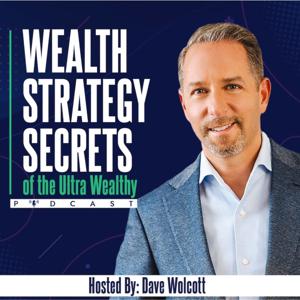


How much cash should you actually keep? Too little liquidity can leave you vulnerable, but too much idle cash can prevent your capital from working toward your bigger wealth goals.
In this solo episode, Dave Wolcott breaks down a three-layer framework for managing liquidity around emergency reserves, upcoming commitments, and investment opportunities. He also explains how he personally uses cash value life insurance to warehouse capital and create a "wealth flywheel" that connects passive income, liquidity, tax efficiency, and future investments.
What You'll LearnHow to determine the right amount of liquidity across emergency reserves, upcoming commitments, and investment opportunities
Why every dollar of liquidity should have a defined purpose instead of sitting idle
How Dave uses cash value life insurance and passive income to create a recurring "wealth flywheel"
Liquidity isn't simply about keeping a large amount of cash on the sidelines. Dave recommends giving liquidity a specific purpose across three areas: emergency reserves, known commitments over the next 12 months, and dry powder for future investment opportunities.
Once those needs are covered, excess liquidity may represent capital that could potentially be put to work elsewhere. The goal is to regularly evaluate whether you have too much or too little liquidity and adjust based on your family's needs, upcoming commitments, risk environment, and investment opportunities.
This episode covers wealth strategy, liquidity management, cash reserves, emergency funds, passive income, cash value life insurance, alternative investments, tax-efficient investing, opportunity capital, financial freedom, family office investing, capital allocation, the wealth flywheel, and generational wealth.
Watch the Complimentary Masterclass here: https://contrarianwealthbuilder.com/
Learn how to leverage energy investments for tax savings and passive income: http://pantheoninvest.com/energy
Learn more: https://pantheoninvest.com/episode221
Get Dave's Free Book: https://pantheoninvest.com/freebook
Unlock 6 Month Free Pantheon Wealth OS: https://www.pantheonwealthos.com/
Most people treat taxes as a bill to pay after the year is over. But for entrepreneurs and investors, proactive tax planning can be just as important as the investments themselves.
In this episode, Dave Wolcott sits down with Stephen Hall of Robert Hall & Associates to explore the difference between tax preparation and true tax planning. They discuss business exits, real estate depreciation, oil and gas, charitable strategies, Roth conversions, geographic tax considerations, and why your tax strategy should be designed before—not after—you make major financial decisions.
What You'll LearnWhy proactive tax planning is fundamentally different from traditional tax preparation
How entrepreneurs and investors can evaluate tax-efficient strategies around business exits, real estate, alternative investments, and appreciated assets
Why tax strategy should be considered before starting a business, making an investment, or creating a liquidity event
Stephen Hall is a second-generation owner of Robert Hall & Associates, a California-based tax firm with decades of experience serving entrepreneurs, investors, and high-net-worth individuals. Growing up in the tax business and working with clients in a high-tax environment gave Stephen firsthand experience navigating complex tax challenges for successful business owners and investors.
This episode covers tax strategy, tax planning, wealth strategy, tax-efficient investing, business owners, entrepreneurs, high-income earners, real estate investing, bonus depreciation, 1031 exchanges, Roth conversions, self-directed IRAs, oil and gas investing, alternative investments, business exit planning, financial freedom, and generational wealth.
Learn how to leverage energy investments for tax savings and passive income: http://pantheoninvest.com/energy
Learn more: https://pantheoninvest.com/episode238
Get Dave's Free Book: https://pantheoninvest.com/freebook
Watch the Complimentary Masterclass here: https://contrarianwealthbuilder.com/
Unlock 6 Month Free Pantheon Wealth OS: https://www.pantheonwealthos.com/
More tax deductions aren't always better. The real opportunity is understanding where your income falls within the tax code—and strategically positioning yourself to take advantage of the incentives available to you.
In this episode, we break down the "sweet spots" of tax planning for high-income entrepreneurs and investors. From tax brackets and the Qualified Business Income deduction to state and local tax deductions, retirement strategies, cost segregation, and oil and gas, you'll learn why one strategic deduction can potentially unlock additional tax benefits.
What You'll LearnWhy understanding your taxable income and marginal tax brackets is critical to proactive tax planning
How deductions can potentially interact with incentives like QBI, state and local tax deductions, and child tax credits
Why the goal of tax planning isn't simply maximizing write-offs, but finding the right tax-efficient position for your specific situation
One of the biggest lessons from this episode is that tax strategies shouldn't be evaluated in isolation. Your income level can influence your tax bracket as well as your eligibility for certain deductions, credits, and incentives. A deduction that lowers taxable income may therefore have additional effects elsewhere in your tax picture.
This episode covers tax strategy, tax planning, wealth strategy, tax-efficient investing, high-income earners, entrepreneurs, business owners, qualified business income, tax deductions, oil and gas investing, cost segregation, retirement accounts, alternative investments, and proactive wealth planning.
Learn how to leverage energy investments for tax savings and passive income: http://pantheoninvest.com/energy
Learn more: https://pantheoninvest.com/
Get Dave's Free Book: https://pantheoninvest.com/freebook
Reserve Your Seat: https://contrarianwealthbuilder.com/
Unlock 6 Month Free Pantheon Wealth OS: https://www.pantheonwealthos.com/
Writing a check to charity may actually be one of the least tax-efficient ways to give.
In this episode, Dave Wolcott sits down with Phoenix Hafen of UI Charitable to explore how strategic philanthropy can help entrepreneurs and investors support causes they care about while making their overall wealth strategy more tax-efficient. They break down donor-advised funds, appreciated asset donations, liquidity-event planning, and how philanthropy can become a powerful tool for building a multigenerational legacy.
What You'll LearnWhy donating appreciated assets can be more tax-efficient than giving cash
How donor-advised funds can separate the timing of your tax deduction from when charities ultimately receive the funds
Why philanthropic planning before selling a business, real estate, or another appreciated asset can be especially important
Phoenix Hafen is part of UI Charitable, a philanthropic back office focused on helping high-net-worth individuals and families structure their charitable giving. Their work centers on two objectives: helping families achieve meaningful philanthropic outcomes while structuring their giving as tax-efficiently as possible.
This episode covers tax strategy, wealth strategy, donor-advised funds, charitable giving, strategic philanthropy, capital gains tax planning, liquidity events, generational wealth, legacy planning, appreciated assets, business owners, entrepreneurs, accredited investors, and tax-efficient wealth building.
Learn how to leverage energy investments for tax savings and passive income: http://pantheoninvest.com/energy
Learn more: https://pantheoninvest.com/episode237
Get Dave's Free Book: https://pantheoninvest.com/freebook
Reserve Your Seat: https://contrarianwealthbuilder.com/
Unlock 6 Month Free Pantheon Wealth OS: https://www.pantheonwealthos.com/
Most investors think they're diversified because they own different stocks, funds, and bonds—but their wealth may still be heavily tied to the same market conditions.
In this solo episode, Dave Wolcott breaks down what true diversification looks like through a family office lens. He explains how alternative investments, liquidity, tax efficiency, time horizon, and your personal expertise can help shape a more intentional portfolio—and introduces a simple investment pyramid for thinking strategically about asset allocation.
What You'll LearnWhy owning different types of equities doesn't necessarily create true diversification
How family offices diversify across non-correlated asset classes and invest in areas they understand
How to use an investment pyramid to balance liquidity, risk, passive income, tax efficiency, and growth
True diversification looks beyond traditional markets toward different asset classes—including real estate, private equity, businesses, commodities, precious metals, fixed income, and other alternatives.
But diversification shouldn't mean investing in everything. Dave emphasizes the principle of investing in what you understand and aligning each allocation with the purpose of your capital—whether that's liquidity, financial freedom, tax efficiency, long-term growth, or legacy.
This episode covers portfolio diversification, alternative investments, wealth strategy, asset allocation, family office investing, passive income, tax-efficient investing, financial freedom, liquidity, real estate investing, private equity, risk management, accredited investors, and generational wealth.
Learn how to leverage energy investments for tax savings and passive income: http://pantheoninvest.com/energy
Learn more: https://pantheoninvest.com/
Get Dave's Free Book: https://pantheoninvest.com/freebook
Reserve Your Seat: https://contrarianwealthbuilder.com/
Unlock 6 Month Free Pantheon Wealth OS: https://www.pantheonwealthos.com/
Successful entrepreneurs build sophisticated systems to run their businesses—but many have no operating system for managing their family's wealth.
In this episode, Dave Wolcott sits down with M.C. Laubscher to explore the ideas behind his new book, The Family Office for Business Owners. They discuss how entrepreneurs can apply family office principles to coordinate advisors, protect wealth, establish investment guardrails, create generational governance, and build a family wealth system designed to last.
What You'll LearnHow to build a family wealth operating system instead of relying on disconnected financial advisors
The five pillars family offices use to protect, manage, and transfer wealth across generations
Why architecture, coordination, and governance can matter more than simply chasing higher investment returns
M.C. Laubscher is an entrepreneur, investor, founder of Producers Wealth, and author of Get Wealthy for Sure and The Family Office for Business Owners. After nearly two decades studying, consulting with, and learning from family offices, M.C. developed a framework designed to help business owners build a family wealth system with the same intentionality they bring to their businesses.
This episode covers family office investing, wealth strategy, generational wealth, financial freedom, alternative investments, family governance, investment policy statements, risk management, tax strategy, asset management, entrepreneurship, passive income, and wealth building strategies for business owners and accredited investors.
Learn how to leverage energy investments for tax savings and passive income: http://pantheoninvest.com/energy
Learn more: https://pantheoninvest.com/episode236
Get Dave's Free Book: https://pantheoninvest.com/freebook
Reserve Your Seat: https://contrarianwealthbuilder.com/
Unlock 6 Month Free Pantheon Wealth OS: https://www.pantheonwealthos.com/
A strong investment portfolio isn't just about choosing the right investments—it's about having a clear framework for how every dollar supports your goals.
In this solo episode, Pantheon breaks down how an Investment Policy Statement (IPS) can help investors align their portfolio with lifestyle, legacy, philanthropy, liquidity, risk tolerance, and long-term wealth objectives. You'll also learn how family office investors use liquidity tiers, portfolio rebalancing, and disciplined governance to make more intentional capital allocation decisions.
What You'll LearnHow to create an Investment Policy Statement around your family's goals, risk tolerance, and time horizon
How three liquidity tiers can balance immediate cash needs with long-term investment opportunities
Why monitoring, rebalancing, and portfolio guardrails are essential for managing wealth across market cycles
An Investment Policy Statement is designed to be a living roadmap for your wealth—not a document you create once and forget. It defines why you're investing, who makes decisions, how much risk you're comfortable taking, how capital should be allocated, and when the portfolio needs to be reviewed or rebalanced.
This episode covers wealth strategy, family office investing, portfolio allocation, alternative investments, liquidity management, investment policy statements, portfolio diversification, private equity, private credit, real estate investing, risk management, financial freedom, accredited investors, and generational wealth.
Learn how to leverage energy investments for tax savings and passive income: http://pantheoninvest.com/energy
Learn more: https://pantheoninvest.com/
Get Dave's Free Book: https://pantheoninvest.com/freebook
Reserve Your Seat: https://contrarianwealthbuilder.com/
Unlock 6 Month Free Pantheon Wealth OS: https://www.pantheonwealthos.com/
Successful investing isn't about predicting the future—it's about making better decisions when the future is uncertain.
In this episode, Dave Wolcott sits down with former World Series of Poker champion, bestselling author, and decision-making expert Annie Duke to explore how investors, entrepreneurs, and business leaders can improve their judgment, embrace uncertainty, and avoid the cognitive biases that often lead to costly financial mistakes.
What You'll LearnHow embracing uncertainty leads to better investment and business decisions
Why cognitive biases and emotions often cause investors to make poor financial choices
How creating decision frameworks and guardrails improves long-term wealth outcomes
Annie Duke is a former World Series of Poker champion, bestselling author of Thinking in Bets, Quit, and How to Decide, and one of the world's leading experts on decision-making under uncertainty. Drawing on her background in cognitive psychology and professional poker, she advises investors, executives, and organizations on improving judgment, managing risk, and making higher-quality decisions.
Annie explains why successful investors should focus on the quality of their decisions rather than short-term outcomes, recognizing that luck and uncertainty are always part of investing. She also shares practical tools—including mental time travel, stop-loss rules, and structured decision guardrails—to help investors avoid emotional reactions, continuously update their beliefs as new information emerges, and make more rational long-term investment decisions.
This episode covers wealth strategy, decision-making, investing under uncertainty, risk management, behavioral finance, cognitive biases, alternative investments, portfolio management, investment policy statements, financial freedom, accredited investors, and long-term wealth building.
Learn how to leverage energy investments for tax savings and passive income: http://pantheoninvest.com/energy
Learn more: https://pantheoninvest.com/episode35
Get Dave's Free Book: https://pantheoninvest.com/freebook
Reserve Your Seat: https://contrarianwealthbuilder.com/
Unlock 6 Month Free Pantheon Wealth OS: https://www.pantheonwealthos.com/
Many entrepreneurs and professionals look wealthy on paper—but still don't feel financially free.
In this solo episode, Dave Wolcott explains why traditional financial planning often leaves high-income earners feeling trapped despite growing net worth. He shares why building passive income, diversifying beyond your business, and creating an integrated wealth system can help you achieve financial freedom long before traditional retirement age.
What You'll LearnWhy passive income is a more meaningful measure of wealth than net worth alone
How overconcentration in your business or career can limit financial freedom
The importance of building an integrated wealth strategy that combines cash flow, tax efficiency, liquidity, and risk management
Dave challenges the traditional retirement model by arguing that true wealth isn't measured by how much you accumulate by age 65—it's measured by how much passive income you generate today. He explains how high-income entrepreneurs can reduce concentration risk, improve liquidity, diversify into alternative investments, and create multiple streams of passive income that provide freedom while they're still building their careers.
This episode covers passive income, wealth strategy, financial freedom, alternative investments, cash flow, portfolio diversification, tax strategy, liquidity management, entrepreneurship, accredited investors, family office investing, and long-term wealth building.
Learn how to leverage energy investments for tax savings and passive income: http://pantheoninvest.com/energy
Learn more: https://pantheoninvest.com/
Get Dave's Free Book: https://pantheoninvest.com/freebook
Reserve Your Seat: https://contrarianwealthbuilder.com/
Unlock 6 Month Free Pantheon Wealth OS: https://www.pantheonwealthos.com/
In this episode, Dave Wolcott sits down with CPA, entrepreneur, and tax strategist Mike Jesowshek to uncover why proactive tax planning is one of the highest-return investments any business owner can make. While most entrepreneurs focus on increasing investment returns, Mike explains why reducing taxes can often generate an even greater compounding effect over time. Together, they break down the critical difference between tax preparation and tax planning, why most CPAs aren't actually providing strategic tax advice, and how business owners can begin building a more tax-efficient wealth strategy.
What You'll LearnThe difference between tax preparation and proactive tax planning
The foundational tax strategies every entrepreneur should implement before pursuing advanced strategies
How sophisticated investors combine tax efficiency with long-term wealth creation
Mike Jesowshek is a CPA, entrepreneur, bestselling author, founder of TaxElm, and host of the Small Business Tax Savings Podcast. With more than 15 years of experience, Mike specializes in proactive tax planning, helping thousands of entrepreneurs legally reduce taxes while building stronger long-term wealth strategies.
Most entrepreneurs focus on growing revenue but overlook one of the fastest ways to accelerate wealth: keeping more of what they already earn.
A well-designed tax strategy doesn't simply reduce today's tax bill—it creates additional capital that can be reinvested into cash-flowing assets, alternative investments, and long-term compounding opportunities. By combining proactive planning with thoughtful investment decisions, business owners can increase liquidity, reduce unnecessary tax exposure, and create a more resilient wealth-building system.
This episode covers tax planning, tax strategy, business tax savings, wealth strategy, CPA advice, proactive tax planning, S corporations, entity structure, alternative investments, oil and gas investing, cost segregation, short-term rentals, passive income, family office investing, accredited investors, entrepreneurship, and generational wealth.
Learn how to leverage energy investments for tax savings and passive income: http://pantheoninvest.com/energy
Learn more: https://pantheoninvest.com/episode234
Get Dave's Free Book: https://pantheoninvest.com/freebook
Reserve Your Seat: https://contrarianwealthbuilder.com/
Unlock 6 Month Free Pantheon Wealth OS: https://www.pantheonwealthos.com/
From the publisher's feed

16,687 Listeners
702 Listeners

3,840 Listeners
535 Listeners

996 Listeners

598 Listeners
589 Listeners
961 Listeners
1,395 Listeners

408 Listeners
424 Listeners
509 Listeners

700 Listeners
292 Listeners
131 Listeners