
Sign up to save your podcasts
Or

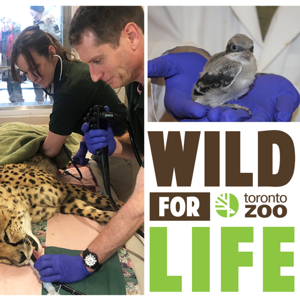

Kim Welfle joins me on the podcast today to discuss the care and conservation of the African penguins at the Toronto Zoo. Kim is a Keeper Grade 3 who has been working in the African Savanna area for the past 6 years; however, she has worked at the Zoo since she was a teenager. Kim tells me about the penguins' natural habitat along the coast of South Africa and how their habitat has shifted from the West to the East. The shift was caused because the penguin prey, sardines, shifted from West to East with shifting currents and heat of the Ocean due to Climate Change. The shift has caused a drastic decrease in the number of African penguins triggering a worldwide response that includes the zoos in North America as well as on the ground organizations such as SANCCOB (link) to help maintain the population.
Conservation at the Zoo starts with perfecting the husbandry of the penguins at the zoo. Kim and her colleagues take pride in providing the best care for the penguins as well as watching over their breeding program. The Toronto Zoo's African penguin conservation program contributes to the Aquarium and Zoo Association's (AZA) Safe Species Program The Safe Species program that focuses on the collective expertise of the AZA-accredited zoos and aquariums and leverages their passives audiences to save species.
Disclaimer: It was in the early 1900s (not 90's) that guano was being collected for use. By the '90s guano could not be found.
 View all episodes
 By The Toronto Zoo

4.7
1414 ratings
Kim Welfle joins me on the podcast today to discuss the care and conservation of the African penguins at the Toronto Zoo. Kim is a Keeper Grade 3 who has been working in the African Savanna area for the past 6 years; however, she has worked at the Zoo since she was a teenager. Kim tells me about the penguins' natural habitat along the coast of South Africa and how their habitat has shifted from the West to the East. The shift was caused because the penguin prey, sardines, shifted from West to East with shifting currents and heat of the Ocean due to Climate Change. The shift has caused a drastic decrease in the number of African penguins triggering a worldwide response that includes the zoos in North America as well as on the ground organizations such as SANCCOB (link) to help maintain the population.
Conservation at the Zoo starts with perfecting the husbandry of the penguins at the zoo. Kim and her colleagues take pride in providing the best care for the penguins as well as watching over their breeding program. The Toronto Zoo's African penguin conservation program contributes to the Aquarium and Zoo Association's (AZA) Safe Species Program The Safe Species program that focuses on the collective expertise of the AZA-accredited zoos and aquariums and leverages their passives audiences to save species.
Disclaimer: It was in the early 1900s (not 90's) that guano was being collected for use. By the '90s guano could not be found.

43,898 Listeners

32,100 Listeners

43,528 Listeners

13,761 Listeners

2,634 Listeners

384 Listeners

12,237 Listeners

5,168 Listeners
764 Listeners

111,948 Listeners

30,141 Listeners

14,137 Listeners

419 Listeners

14,404 Listeners
1,430 Listeners