
Sign up to save your podcasts
Or

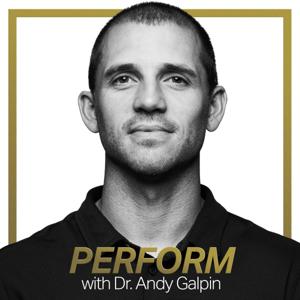

In this episode, I sit down with Dr. Mike Roberts, Professor in the School of Kinesiology at Auburn University, and one of the most respected muscle physiologists, to explain how muscle actually grows. Mike shares that mechanical tension—not hormones, metabolic byproducts, or muscle damage—is the primary driver of hypertrophy. We cover why testosterone and androgen receptors don't necessarily predict muscle growth, what separates high responders from low responders, and how these “low responders” should train to best get results. We also work through training volume, load versus reps, lengthened partials, aging and anabolic resistance, and the interference effect between strength and endurance training. If you want to understand the real science of building muscle, this conversation is for you.
Sponsors
Momentous: https://livemomentous.com/galpin
LMNT: https://drinklmnt.com/perform
Trumed: https://truemed.com/perform
Chapters
(00:00:00) Introduction
(00:03:15) How Muscle Grows
(00:17:39) What Drives Growth: Tension, Stress & Damage
(00:24:08) Responders vs. Non-Responders
(00:29:54) Hormones, Receptors & Genetics
(00:48:01) Cell Signaling, mTOR & Myostatin
(00:56:32) Can Some People Not Grow Muscle?
(01:01:34) Training Volume for Hypertrophy
(01:08:34) Loads, Reps & Stretch Under Load
(01:17:13) Range of Motion, Partials & Hyperplasia
(01:31:31) Injury, Unloading & Muscle Banking
(01:39:32) Muscle Memory: Detraining & Retraining
(01:47:42) Aging, Menopause & Anabolic Resistance
(02:01:21) Concurrent Training & the Interference Effect
(02:08:54) How to Combine Strength & Cardio
(02:24:03) Strength Training & Mitochondria
(02:25:21) Closing Thoughts
Disclaimer & Disclosures
Learn more about your ad choices. Visit megaphone.fm/adchoices
 View all episodes
 By Scicomm Media

4.9
11371,137 ratings
In this episode, I sit down with Dr. Mike Roberts, Professor in the School of Kinesiology at Auburn University, and one of the most respected muscle physiologists, to explain how muscle actually grows. Mike shares that mechanical tension—not hormones, metabolic byproducts, or muscle damage—is the primary driver of hypertrophy. We cover why testosterone and androgen receptors don't necessarily predict muscle growth, what separates high responders from low responders, and how these “low responders” should train to best get results. We also work through training volume, load versus reps, lengthened partials, aging and anabolic resistance, and the interference effect between strength and endurance training. If you want to understand the real science of building muscle, this conversation is for you.
Sponsors
Momentous: https://livemomentous.com/galpin
LMNT: https://drinklmnt.com/perform
Trumed: https://truemed.com/perform
Chapters
(00:00:00) Introduction
(00:03:15) How Muscle Grows
(00:17:39) What Drives Growth: Tension, Stress & Damage
(00:24:08) Responders vs. Non-Responders
(00:29:54) Hormones, Receptors & Genetics
(00:48:01) Cell Signaling, mTOR & Myostatin
(00:56:32) Can Some People Not Grow Muscle?
(01:01:34) Training Volume for Hypertrophy
(01:08:34) Loads, Reps & Stretch Under Load
(01:17:13) Range of Motion, Partials & Hyperplasia
(01:31:31) Injury, Unloading & Muscle Banking
(01:39:32) Muscle Memory: Detraining & Retraining
(01:47:42) Aging, Menopause & Anabolic Resistance
(02:01:21) Concurrent Training & the Interference Effect
(02:08:54) How to Combine Strength & Cardio
(02:24:03) Strength Training & Mitochondria
(02:25:21) Closing Thoughts
Disclaimer & Disclosures
Learn more about your ad choices. Visit megaphone.fm/adchoices

4,986 Listeners
2,594 Listeners

11,865 Listeners

5,440 Listeners

1,207 Listeners

496 Listeners

4,045 Listeners
2,628 Listeners

4,872 Listeners

9,231 Listeners

7,995 Listeners

29,207 Listeners

180 Listeners

1,196 Listeners
301 Listeners

241 Listeners