
Sign up to save your podcasts
Or

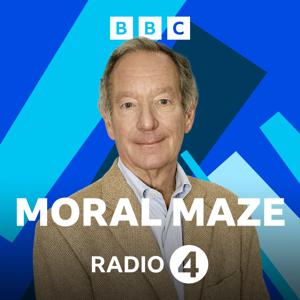

Universities across the country are cutting back on humanities courses – philosophy, history, modern languages – subjects long seen as central to a well-rounded education. The reason is familiar: falling student numbers, financial pressure, and a growing insistence that degrees must demonstrate clear economic value. If a course doesn’t lead to a well-paid job, why should anyone fund it?
That points to a deeper divide about what education is for. Is it an intrinsic good: valuable in itself, shaping critical thinking, moral judgment, and an understanding of the world? Or is it an extrinsic one: a means to an end, justified by the jobs it produces and the growth it delivers?
For centuries, from Socrates onwards, education has been tied to human flourishing – to forming citizens, not just workers. But today, the language has shifted. Students are consumers. Universities compete. Courses are judged by salary. And the tensions don’t stop there. If education is a public good, why does access remain so uneven, divided between state and private schools, with women significantly underrepresented in STEM (science, technology, engineering, mathematics) – opportunity shaped as much by background as by ability? And as our understanding of neurodiversity deepens, a further challenge emerges. What if the system itself – built around standardisation, testing, and conformity – has actively hindered the prospects of many it was meant to serve?
So what, ultimately, is education for? Is it possible to maximise economic potential and enable every individual to flourish? And if our system does the former at the expense of the latter, can it still claim to be a moral one?
Chair: Michael Buerk
 View all episodes
 By BBC Radio 4

4.6
5151 ratings
Universities across the country are cutting back on humanities courses – philosophy, history, modern languages – subjects long seen as central to a well-rounded education. The reason is familiar: falling student numbers, financial pressure, and a growing insistence that degrees must demonstrate clear economic value. If a course doesn’t lead to a well-paid job, why should anyone fund it?
That points to a deeper divide about what education is for. Is it an intrinsic good: valuable in itself, shaping critical thinking, moral judgment, and an understanding of the world? Or is it an extrinsic one: a means to an end, justified by the jobs it produces and the growth it delivers?
For centuries, from Socrates onwards, education has been tied to human flourishing – to forming citizens, not just workers. But today, the language has shifted. Students are consumers. Universities compete. Courses are judged by salary. And the tensions don’t stop there. If education is a public good, why does access remain so uneven, divided between state and private schools, with women significantly underrepresented in STEM (science, technology, engineering, mathematics) – opportunity shaped as much by background as by ability? And as our understanding of neurodiversity deepens, a further challenge emerges. What if the system itself – built around standardisation, testing, and conformity – has actively hindered the prospects of many it was meant to serve?
So what, ultimately, is education for? Is it possible to maximise economic potential and enable every individual to flourish? And if our system does the former at the expense of the latter, can it still claim to be a moral one?
Chair: Michael Buerk

7,639 Listeners

876 Listeners

1,046 Listeners
156 Listeners

5,520 Listeners

1,799 Listeners

1,763 Listeners

1,049 Listeners

2,110 Listeners

1,920 Listeners
30 Listeners
43 Listeners

393 Listeners
164 Listeners
43 Listeners
58 Listeners
114 Listeners
684 Listeners

3,177 Listeners

720 Listeners

1,002 Listeners
3,336 Listeners

1,183 Listeners
797 Listeners
45 Listeners