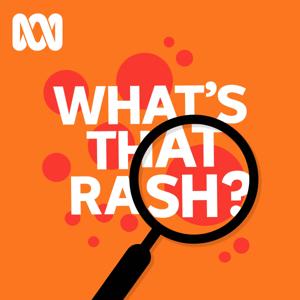
What's That Rash?

What's That Rash?

Download on the App Store
  • Ranking

    16th

    on Medicine

  • Favorites

    932

    Followers

  • Typical duration

    18 min

    per episode

  • If it hooks

    71%

    finish an episode

Based on Podcast App listening data

What's That Rash? episodes

  • Is a vibration plate worth the cost?

    We've all probably wished for a way to achieve our fitness goals without the strain and sweat that can come with exercise.

    So what if you could lose weight, gain muscle and improve circulation just by standing on a vibrating platform?

    Norman and Tegan buzz through the evidence for and against vibration plates and so called "passive exercise".

    References:

    • Dr Gustav Zander’s Victorian-Era Exercise Machines Made the Bowflex Look Like Child’s Play
    • The effects of whole body vibration therapy on reducing fat mass in the adult general population: A systematic review and meta-analyses 
    • Whole-body vibration administered during a 3-week in-hospital multidisciplinary body weight reduction program increases resting energy expenditure in obese adolescents, a randomized clinical trial 
    • Immediate effects of localized vibration on flexibility: A randomized crossover trial 
    • Effects of whole body vibration with exercise therapy versus exercise therapy alone on flexibility, vertical jump height, agility and pain in athletes with patellofemoral pain: a randomized clinical trial 
    • Whole Body Vibration as an Adjunct to Static Stretching
    • Whole-Body Vibration Stimulates Microvascular Blood Flow in Skeletal Muscle 
    • Whole body vibration training improves leg blood flow and adiposity in patients with type 2 diabetes mellitus 
    • Effects of Whole-Body Vibration Training on Lower Limb Blood Flow in Children with Myelomeningocele—A Randomized Trial 
    • Effect of localised vibration on muscle strength in healthy adults: a systematic review 
    • Whole-body vibration training improves muscle mass and strength in older adults through intra- and extra-muscular pathways 
    • The effect of whole body vibration training on quadriceps voluntary activation level of people with age-related muscle loss (sarcopenia): a randomized pilot study 
    • Hormonal responses to a single session of wholebody vibration exercise in older individuals
    • Hormonal and Metabolic Responses to Whole Body Vibration in Healthy Adults 
    • Low-frequency vibrotherapy considerably improves the effectiveness of manual lymphatic drainage (MLD) in patients with lipedema: A two-armed, randomized, controlled pragmatic trial 
    • Efficacy of whole body vibration exercise in older people: a systematic review 

    If you enjoyed this episode, check these out!

    • Can you zap yourself buff with electrical muscle stimulation?
    • Do the benefits of creatine go beyond the gym?
    • Do healthy people need lymphatic treatments?
    23 min
  • Should you add snail slime to your skincare routine?

    Snail slime, or snail mucin, has become a popular product in skin care.

    Some claim it has anti-ageing properties, but if the early research shakes out, snail mucus could have even more significant uses.

    Norman and Tegan discuss why snail gunk has become a hero of cosmetics, and what else it might be capable of.

    References:

    • Why Snail Mucin? Or, How This Ancient Practice Became a Skin Care Sensation
    • Chemical composition, mineral profile, anti-bacterial, and wound healing properties of snail slime of Helix aspersa Müller 
    • Extraction, structure, pharmacological activities and applications of polysaccharides and proteins isolated from snail mucus
    • Antimicrobial Activities of Different Fractions from Mucus of the Garden Snail Cornu aspersum
    • Antimicrobial efficacy of Egyptian Eremina desertorum and Helix aspersa snail mucus with a novel approach to their anti-inflammatory and wound healing potencies
    • Reviewing The Potential of Snail Extract to Accelerate and Improve Burn Wound Healing: A Literature Review 
    • HelixComplex snail mucus exhibits pro-survival, proliferative and pro-migration effects on mammalian fibroblasts
    • The efficacy of Helix aspersa Müller extract in the healing of partial thickness burns: A novel treatment for open burn management protocols
    • Helix aspersa maxima mucus exhibits antimelanogenic and antitumoral effects against melanoma cells
    • 849 Snail mucus increases the anti-cancer activity of anti-PD-L1 antibody in melanoma 
    • Snail Mucus Enhances Chemosensitivity of Triple-negative Breast Cancer Via Activation of the Fas Pathway
    • Snails and Skin: A Systematic Review on the Effects of Snail-based Products on Skin Health
    • From Nature to Nurture: The Science and Applications of Snail Slime in Health and Beauty
    • Artificial Snail Mucus Could Advance Cancer Treatments – Johns Hopkins University

    If you enjoyed this episode, check these out!

    • Does anti-ageing skincare actually work?
    • Should you be avoiding perfumes and fragrances?
    • What we do (and don't) know about tinnitus
    20 min
  • Could headphones be damaging our ears?

    Walking down the street, most people you pass will be wearing headphones or ear buds. Chances are you are too!

    But is this trend of noise-cancelling harming your ears or the way your brain processes sound?

    Norman and Tegan sound out the evidence on headphone use and hearing damage, and what you can do to protect your ears.

    References:

    • Know Your Noise - National Acoustic Laboratories
    • Pumping loud music is putting more than 1 billion young people at risk of hearing loss - University of Melbourne 
    • A Partial History of Headphones - Smithsonian 
    • Prevalence and global estimates of unsafe listening practices in adolescents and young adults: a systematic review and meta-analysis 
    • Hearing thresholds, tinnitus, and headphone listening habits in nine-year-old children 
    • Do Noise-Cancelling Headphones Help or Hurt Hearing? - University of Colorado
    • Tips for safe listening using headphones and earbuds – Hearing Australia  

    If you enjoyed this episode, check these out!

    • Is there such thing as TOO much sun protection?
    • Is there a cure for jet lag?
    • Don’t Die: Is Bryan Johnson going to live forever?
    22 min
  • Vitamin C: can it cure colds and cancer?

    Many people believe that taking vitamin C supplements helps their immune system fight off colds.

    But there are even bigger claims attached to this supplement – that it not only boosts immunity, but fights cancer.

    Norman and Tegan introduce us to the Nobel laureate who pushed these theories decades ago, and whether there’s any truth to them.

    References:

    • The Discovery of Vitamin C 
    • Treatment for scurvy not discovered by Lind
    • Linus Pauling’s Vitamin C Crusade
    • Ascorbic Acid in Cancer Treatment: Let the Phoenix Fly
    • A randomized trial of pharmacological ascorbate, gemcitabine, and nab-paclitaxel for metastatic pancreatic cancer
    • The Role of Vitamin C in Cancer Prevention and Therapy: A Literature Review 
    • High-dose vitamin C: A promising anti-tumor agent, insight from mechanisms, clinical research, and challenges 
    • Vitamin C reduces the severity of common colds: a meta-analysis 
    • Two Faces of Vitamin C—Antioxidative and Pro-Oxidative Agent 
    • Vitamin C - Australian Institute of Sport
    • Vitamin C – EatforHealth.gov.au 

    If you enjoyed this episode, check these out!

    • Multivitamins: Are they a scam?
    • Can consuming dairy really give you acne?
    • Is sitting the new smoking?
    19 min
  • Can peptides keep you young and buff?

    Unless you're in certain corners of the internet, you won't be aware of the peptide craze promising to grow your muscles and slow ageing.

    That's because your average GP won't be printing a prescription for these injectable drugs, like BPC-157 or melanotan.

    Norman and Tegan discuss why there's so much fan fare over unproven peptides with some potentially nasty side effects.

    References:

    • Effects of Topical Copper Tripeptide Complex on CO2 Laser–Resurfaced Skin 
    • Don’t risk using tanning products containing melanotan - TGA
    • Melanotan‐associated melanoma
    • Melanotan II: a possible cause of renal infarction: review of the literature and case report
    • Melanotan II: a possible cause of renal infarction: review of the literature and case report
    • Melanotan-induced priapism: a hard-earned tan – BMJ case study
    • BPC-157: Experimental peptide prohibited - US Anti-Doping Authority
    • Effect of BPC-157 on Symptoms in Patients with Interstitial Cystitis: A Pilot Study
    • Safety of Intravenous Infusion of BPC157 in Humans: A Pilot Study
    • Intra-Articular Injection of BPC 157 for Multiple Types of Knee Pain
    • General practitioner disqualified for inappropriately prescribing peptides

    If you enjoyed this episode, check these out!

    • Can collagen supplements keep your skin supple?
    • Should you be flexible enough to touch your toes?
    • Can you zap yourself buff with electrical muscle stimulation?
    23 min
  • Can flossing benefit more than your teeth?

    Your dentist might be nagging you to floss to avoid cavities, but does flossing have more to given than pearly whites?

    Interdental cleaning has been recommended for a while, but for many people it’s a habit hard to maintain.

    Norman and Tegan pick through the history of flossing, and whether it can improve your heart and brain health too.

    Terms and conditions of our World Science Festival Brisbane ticket giveaway! 

    References:

    • Ask the Expert: Do I Really Need to Floss? - NIH 
    • Home use of interdental cleaning devices, in addition to toothbrushing, for preventing and controlling periodontal diseases and dental caries
    • Flossing Is Associated with Improved Oral Health in Older Adults 
    • Does flossing before or after brushing influence the reduction in the plaque index? A systematic review and meta-analysis
    • Why would cardiovascular disease and poor oral health be connected? - Harvard Health 
    • Oral health and later coronary heart disease: Cohort study of one million people
    • Stronger connections made between oral health and Alzheimer's disease 
    • Large study links gum disease with dementia 
    • What Dentists Have to Say About Red-Light Therapy for Optimal Oral Health 

    If you enjoyed this episode, check these out!

    • How risky is sharing a toothbrush?
    • Should you be avoiding perfumes and fragrances?
    • Do healthy people need lymphatic treatments?
    20 min
  • Doing nothing: the benefits of boredom

    With endless entertainment at your fingertips on your phone, how often do you really sit and do absolutely nothing?

    It turns out that even when you’re staring into the middle distance, your brain is firing away with activity.

    Norman and Tegan explore why giving your brain a break might be important for learning and creativity.

    References:

    • The Journey of the Default Mode Network: Development, Function, and Impact on Mental Health 
    • Default-mode brain dysfunction in mental disorders: A systematic review  
    • Just think: The challenges of the disengaged mind - Science 
    • The Importance of the Default Mode Network in Creativity—A Structural MRI Study  
    • The Importance of the Default Mode Network in Creativity—A Structural MRI Study  
    • People are increasingly bored in our digital age

    If you enjoyed this episode, check these out!

    • What is the perfect nap duration?
    • Can tattoos increase your risk of cancer?
    • Why are people taping their mouths?
    22 min
  • Should we all be taking fish oil?

    How many times a week are you eating fish? What about oily fish, like salmon and tuna?

    Our dietary guidelines recommend the regular consumption of fish to potentially reduce the risk of cardiovascular disease, dementia and even macular degeneration.

    Norman and Tegan dig into the oily history of fish, and whether supplements can have the same effect.

    References:

    • The Man with a Fish on His Back: In the late 19th century cod-liver oil was proclaimed the cure for many ailments
    • "Fishing" for the origins of the "Eskimos and heart disease" story: facts or wishful thinking?
    • Omega-3 Fatty Acids - National Institutes of Health
    • The relationship between polyunsaturated fatty acids and inflammation: evidence from cohort and Mendelian randomization analyses
    • Omega‐3 fatty acids for the primary and secondary prevention of cardiovascular disease
    • Regular use of fish oil supplements and course of cardiovascular diseases: prospective cohort study
    • Associations Between Plasma Omega-3 and Fish Oil Use With Risk of Atrial Fibrillation in the UK Biobank
    • Associations of fish oil supplementation with incident dementia: Evidence from the UK Biobank cohort study
    • Omega-3 Fatty Acids for the Management of Osteoarthritis: A Narrative Review 
    • Omega 3 fatty acids for preventing or slowing the progression of age‐related macular degeneration
    • Omega-3 fatty acids for depression in adults
    • Fish-Oil Supplementation and Cardiovascular Events in Patients Receiving Hemodialysis

    If you enjoyed this episode, check these out!

    • Why is everyone suddenly talking about seed oils?
    • Does magnesium work against muscle cramps?
    • Why is the internet telling me to lower my cortisol?
    21 min
  • Should you wait to swim after eating?

    It’s so common to tell kids to wait an hour after eating to swim that many of us never question it.

    But what are the actual consequences of jumping straight back in the pool after you’ve had your lunch?

    Norman and Tegan tackle whether this advice is grounded in evidence, and discuss what you should actually avoid.

    References:

    • Scouting for boys - 1908
    • The International Lifesaving Federation medical position statement 2014 
    • Effect of food consumption on 200-yard freestyle swim performance
    • The National Drowning Report 2025 
    • Monday’s medical myth: wait 30 minutes after eating before you swim – the Conversation 

    If you enjoyed this episode, check these out!

    • Does magnesium work against muscle cramps? 
    • Why do you feel so tired after a big meal?
    • Is being an Olympian bad for your health?
    14 min
  • Is retirement bad for you?

    Last year Norman made the shocking statement that people shouldn’t retire because it’ll be bad for their brains.

    After an influx of requests, we’ve looked at the evidence not only when it comes to brain health, but heart health, metabolic health and mental wellbeing.

    Norman and Tegan unpack the complex story of what happens to your brain and body when you retire – depending on the job you had.

    References:

    • How Retirement Was Invented: The earliest schemes for financial support in old age were pegged to life expectancy 
    • Towards higher retirement incomes for Australians: a history of the Australian retirement income system since Federation 
    • Impact of retirement transition on health, well-being and health behaviours: critical insights from an overview of reviews 
    • Effect of retirement on cognitive function: the Whitehall II cohort study 
    • Retirement or no Retirement? The Decision’s Effects on Cognitive Functioning, Well-Being, and Quality of Life
    • Risk of Cognitive Declines With Retirement: Who Declines and Why?
    • The Impact of Retirement on Cardiovascular Disease and Its Risk Factors: A Systematic Review of Longitudinal Studies
    • Retirement and mental health: Analysis of the Australian national survey of mental health and well-being
    • The Effects of Retirement on Sense of Purpose in Life: Crisis or Opportunity?
    • The Role of Meaning in the Retirement Transition: Scoping Review
    • Life after work: how we can support retirees – R U OK? 

    If you enjoyed this episode, check these out!

    • Is NAD+ a miracle anti-ageing supplement?
    • At-home DNA tests — what can they tell you?
    • How much protein do you REALLY need?
    21 min

About What's That Rash?

From the publisher's feed

Get answers to the health questions everyone's asking. Our experts give you the information you need to feel good and make the best decisions for your brain and body.

Best of What's That Rash?

Ranked by our users in the last 21 days

More shows like What's That Rash?

Big Ideas by ABC Australia

Big Ideas

104 Listeners

The Science Show by ABC Australia

The Science Show

120 Listeners

Background Briefing by ABC Australia

Background Briefing

69 Listeners

Short & Curly by ABC Australia

Short & Curly

1,735 Listeners

Conversations by ABC Australia

Conversations

802 Listeners

All In The Mind by ABC Australia

All In The Mind

758 Listeners

Health Report by ABC Australia

Health Report

128 Listeners

Life Matters - Full program podcast by ABC Australia

Life Matters - Full program podcast

67 Listeners

Rear Vision — How History Shaped Today by ABC Australia

Rear Vision — How History Shaped Today

57 Listeners

Science Friction by ABC Australia

Science Friction

65 Listeners

Ladies, We Need To Talk by ABC Australia

Ladies, We Need To Talk

306 Listeners

If You're Listening by ABC Australia

If You're Listening

316 Listeners

Unravel by ABC Australia

Unravel

1,045 Listeners

ABC News Daily by ABC Australia

ABC News Daily

149 Listeners

The World Today by ABC Australia

The World Today

9 Listeners

News Time by ABC Australia, ABC

News Time

193 Listeners

No Feeling Is Final by ABC Australia

No Feeling Is Final

114 Listeners

Stuff The British Stole by ABC Australia and CBC

Stuff The British Stole

1,008 Listeners

Not Stupid by ABC Australia

Not Stupid

17 Listeners

What The Duck?! by ABC Australia

What The Duck?!

48 Listeners

Global Roaming with Geraldine Doogue and Hamish Macdonald by ABC Australia

Global Roaming with Geraldine Doogue and Hamish Macdonald

55 Listeners

No One Saw It Coming by ABC Australia

No One Saw It Coming

118 Listeners