
Sign up to save your podcasts
Or



****
We want to hear from you! Our podcast is shaped by the people who listen to it. Please tell us a bit about your experience by filling out our short listener survey: https://www.surveymonkey.com/r/SX6X8X3
****
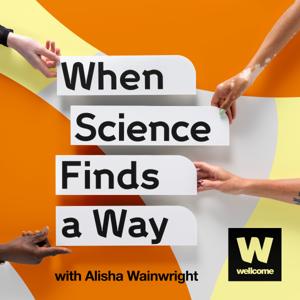
Julia Gillard, the 27th Prime Minister of Australia and Chair of Wellcome, brings together three experts from Season 1 to delve into the key themes that have emerged and to explore the challenges ahead for global health.
Julia is joined by:
During the Covid-19 pandemic, the benefits of sequencing infectious disease pathogens became more visible than ever before. The possibilities are huge: genomic sequencing is allowing scientists to unlock the secrets of disease prevention, helping dispel myths and stigma around disease outbreaks as well as allowing governments to act in real-time with targeted and often low-cost interventions.
Alisha speaks to Professor Christian Happi, Director of the African Centre of Excellence for Genomics of Infectious Diseases, about his pioneering use of the technology during the 2014 Ebola outbreak in Nigeria which identified the origin of the virus. They hear from the lead researcher who used sequencing to map a subsequent outbreak in Guinea, changing how healthcare workers understand the disease.
Poor mental health has always been associated with lower socio-economic status, but what if you turned the idea on its head and administered cash transfers as a mental health treatment in and of itself? The scientific research community has long grappled with the lack of major breakthroughs in the treatment of mental health disorders. So could cash transfers hold the key to coming up with a universally applicable and low-cost mental health intervention?
In this episode Alisha is in conversation with Professor Vikram Patel, a world leader in global mental health, who explains the challenges researchers have faced globally in the fight against poor mental health, and the potential of using cash transfers. They hear from an early beneficiary of Brazil's Bolsa Familia cash transfer programme and meet the professor developing a pioneering new study with young people in Nepal, South Africa and Colombia.
When Science Finds a Way is brought to you by Wellcome, an independent global foundation that supports science to solve the urgent health challenges facing everyone. For more information and podcast transcripts visit wellcome.org
With rising temperatures and shifting climates imperilling our crops, the food chain – from planting to consumer – is under threat. This could lead to higher food prices, poor nutrition, hunger and migration.
Alisha is in conversation with Professor Ruth Defries, a global expert in ecology and sustainable development, to discuss how the world has become reliant on a small number of crops such as corn and rice, leaving us in a vulnerable position if these staples do not grow well as the planet heats. So how can we encourage climate resilience through crop diversity?
They hear from a multi-country research project which is exploring whether indigenous crops could hold the key to creating more sustainable food systems, and meet a South African farmer who is helping keep these old growing traditions alive.
It may seem obvious that a lack of sleep can exacerbate poor mental health - whether a symptom, cause or both, the two go hand in hand. But until very recently, there was little scientific research to back this idea up – and as a result, sleep treatments have been overlooked as a potential remedy for poor mental health. Prof Daniel Freeman is a clinical psychologist who's trying to change that. He's leading studies into the effectiveness of sleep treatments for people experiencing psychosis and getting positive results.
In this episode, Alisha speaks to Prof Freeman about the importance of sleep, its potential in fighting the global mental health crisis, and some of the surprisingly simple techniques that can aid a better night's rest. They hear from Ryan, who saw a dramatic shift in his mental health after taking part in one of Prof Freeman's studies.
If you have been affected by the topics discussed in this episode, befrienders.org can help you find a support service local to you.
When Science Finds a Way is brought to you by Wellcome, an independent global foundation that supports science to solve the urgent health challenges facing everyone. For more information visit www.wellcome.org/news-and-reports/podcast.
When Danish geneticist, Professor Eske Willerslev led the team that sequenced the first ancient human genome in 2010, he opened up a world of research possibilities with global significance. But this potential comes with risk. Research into DNA from ancient remains can upend understandings of history and ancestry within living indigenous communities and violate cultural sensitivities.
On this episode, Alisha speaks with Eske alongside Shane Doyle, a member of the Crow Tribe in Montana, USA. Eske and Shane have turned a collaboration into a friendship that demonstrates the power of an exchange between ancient customs and emerging science.
Together they discuss the possibilities and the pitfalls of ancient DNA research, and how to build mutual trust and respect between indigenous communities and scientists.
Vaccines are formidable tools against infectious disease. But the success of a vaccine in one part of the world doesn't guarantee similar outcomes elsewhere. That's where human infection studies come in – where volunteers, closely monitored by researchers, receive a vaccine and are subsequently given a small dose of an infectious disease. This might sound worrying, but it is a quick and effective way to get data about whether a vaccine is working.
Alisha speaks with Dr Dingase Dula, who researched a pneumococcal vaccine in Malawi, to learn more about the impact of infection studies. They also meet Becky Mkandawire and Stonard Mwale, who volunteered to take part in the study. They discuss the role of trust in human infection studies, what it's like to be part of one, and the importance of African-led research in combating infectious disease.
Around the world, roughly one billion people live in informal settlements – residential areas that fall outside the jurisdiction of governments. These communities live without traditional centralised sanitation and water systems. As a result, the settlements are vulnerable to extreme weather events like floods, which cause wastewater to spread through homes and lead to serious health issues.
As climate change and nearby development increase the frequency and severity of floods in these settlements, organisations like RISE (Revitalising Informal Settlements and their Environments) are trying to help. In this episode, Alisha speaks to Professor Karin Leder, head of research at RISE, about projects in Indonesia and Fiji that are collaborating with local communities to combine scientific study with infrastructure-building. They hear from Losalini Malumu and Ibu Ina Rahlina, RISE staff members and residents of informal settlements, who through their experiences demonstrate the critical role of collaborating with those most affected by these challenges.
Psychosis is one of the most severe, and most stigmatised, mental health conditions. But what if technology could help us spot the signs early on? Could more accurate prediction help guide earlier intervention, to produce better outcomes for people at risk of psychosis? Alisha is in discussion with Professor Iris Sommer, a global leader in the psychosis field to examine exactly where the understanding of the condition is, whether we're approaching treatment in an equitable way, and how we can ensure earlier diagnosis and better treatment.
They hear from a therapist in Brazil, Dr Alexandre Loch, and his patient Tammy about how hard a diagnosis can be, and why it can often come too late to prevent the onset of severe symptoms. Alexandre also shares his innovative work using AI to spot whether someone might be at risk of developing psychosis, hinting at a potentially transformative breakthrough.
When Science Finds a Way is brought to you by Wellcome, an independent global foundation that supports science to solve the urgent health challenges facing everyone. For more information visit www.wellcome.org/news-and-reports/podcast.
What can you learn from studying 40,000 people in one city? A UK study called Born In Bradford is doing just that, and it's a concept that could be applied around the world.
It began in 2007, tracking pregnant women, their children and families. Over the decades, the study has changed Bradford, impacting policy on education, early years development and even the environment. But it has also provided robust evidence on health and wellbeing that is relevant in any city.
In this episode, we hear from some of the parents who've taken part in the study on how it's impacted their lives. And Alisha is in discussion with Doctor John Wright, who founded the study, to explore how an open-ended piece of research like this can deliver exciting results, change lives and bond communities – in Bradford, and around the world.
When Science Finds a Way is brought to you by Wellcome, an independent global foundation that supports science to solve the urgent health challenges facing everyone. For more information visit www.wellcome.org/news-and-reports/podcast.
From the publisher's feed

873 Listeners

65 Listeners
92 Listeners
220 Listeners

82 Listeners

1,206 Listeners
460 Listeners

112 Listeners
24 Listeners

61 Listeners

0 Listeners

100 Listeners

1 Listeners