
Sign up to save your podcasts
Or

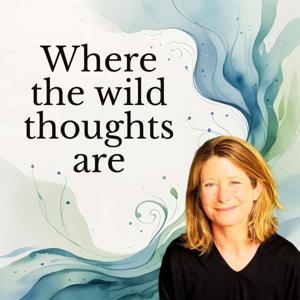


Exciting news: I have a new book coming out! It’s called In Search of Now: the science and mystery of the present moment, and I’d love to share some of the ideas in it with you, so here is a one-off special episode to ask: What is Now?
The present moment has always fascinated me because on the one hand it’s all around us: everything we do, everything we are. We feel that Now is where we meet the world, where stuff happens, where we feel, think, choose, act. But physicists can’t find it anywhere, and some insist it doesn’t exist at all. So if there’s no physical Now out in the universe, where does our sense of each unfolding moment come from? And is it really an illusion, or could it be a clue that reality is very different from what we thought?
Rather than me interviewing a guest this week, I’ve asked my good friend, Ian Sample, to come on as guest host and grill me for a change! You might know him as the host of the Guardian’s Science Weekly podcast, although he’s here in a personal capacity.
In Search of Now is out in the UK on 12 February, published by Canongate, and in the US in March, published by Liveright.
In Search of Now (UK edition)
https://canongate.co.uk/books/4351-in-search-of-now-the-science-and-mystery-of-the-present-moment/
In Search of Now (US edition)
https://wwnorton.com/books/9781324097488
Do follow the show so you don't miss season 2, when we’ll be talking to scientists – and perhaps some philosophers as well – who’ll be helping us to stretch our minds, rethink our assumptions and imagine very different worlds.
*** Follow us on Instagram @wildthoughts_pod
*** Edited highlights on YouTube
https://www.youtube.com/playlist?list=PLhB4lyBDyjTliuz_h5oHwN6H8HoxS7qWL
Hosted by Jo Marchant:
https://jomarchant.com
Produced by Julian Mayers at Yada Yada:
https://www.yada-yada.net/
Hosted on Acast. See acast.com/privacy for more information.
Since September we've met 16 scientists, in fields from neuroscience and quantum physics to archaeology and ecology, who are asking wild questions, exploring the world in different ways, wondering what if the world isn't how we thought. They've all been surprising, brilliant and creative in different ways: for me, each chat has been like a glimpse into a fascinating, hidden world.
To finish the season, this week's episode is a bit different. I've asked my lovely producer, Julian Mayers (who also happens to be a cosmologist), to join me for a look back over some of our favourite moments from the interviews, from falling whales and Neolithic virtual reality to improvising ponds and moments of utter bliss...
As we take a pause over Christmas, thanks to all our guests so far and to you for listening. This first season has been successful far beyond our expectations - we've been recommended by publications including New Scientist and Smithsonian, we were featured by Apple as a top new science show, and we've had listeners in more than 80 different countries, from Madagascar to Mongolia to Montenegro.
We'll be back in the new year with season 2, so if you've enjoyed the show do subscribe now so you don't miss that when it comes.
Bye for now! And see you next time on Where the Wild Thoughts Are.
*** Subscribe for new episodes every Mon
*** Follow us on Instagram @wildthoughts_pod
*** Edited highlights on YouTube
https://www.youtube.com/playlist?list=PLhB4lyBDyjTliuz_h5oHwN6H8HoxS7qWL
Hosted by Jo Marchant:
https://jomarchant.com
Produced by Julian Mayers at Yada Yada:
https://www.yada-yada.net/
Hosted on Acast. See acast.com/privacy for more information.
What happens if we let go of our expectations about nature – all the things we think it is, or isn’t, or should be – and just… listen?
Our guide into the unknown this week is award-winning sound artist and ecologist David de la Haye. I first met him at this year’s New Scientist Live in London: I was giving a talk about the science of awe and David came up to me afterwards to tell me about the awe he finds though his work with sound. Essentially he puts hydrophones into the water and records the submerged soundscapes of ponds. He calls it sonic pond dipping.
Rather than dissecting out individual noises or creatures – although that can provide valuable information – David’s work is primarily about listening to an ecosystem in an immersive and very personal way – almost like a meditation. He doesn’t stop at listening, though, he also answers back, creating music – often improvising in real time – with the ponds!
I asked him how he ended up listening underwater, and what he thinks we can learn from these tiny wild spaces that we so often overlook.
David’s home page
www.daviddelahaye.co.uk
Sonic pond dipping
https://sonic-pond.net/
With Ears Underwater
https://daviddelahaye.bandcamp.com/album/with-ears-underwater
Bionic and the Wires (a separate project where mushrooms and plants are wired up to play instruments)
https://bionicandthewires.com/
Clip 1: Pond at Wheatfen nature reserve, Norfolk, UK
Clip 2: Rockpool at Saint Abbs, Scotland
Clip 3: Underwater seals at Mingulay, Scotland
Clip 4: Pond at Wheatfen nature reserve, Norfolk, UK
Clip 5: Photosynthesising plants
Clip 6: With Ears Underwater: Plant based patterns
Clip 7: Pond session: Bliss
Clip 8: Awe response: First ever dawn chorus
*** Subscribe for new episodes every Mon
*** Follow us on Instagram @wildthoughts_pod
*** Edited highlights on YouTube
https://www.youtube.com/playlist?list=PLhB4lyBDyjTliuz_h5oHwN6H8HoxS7qWL
Hosted by Jo Marchant:
https://jomarchant.com
Produced by Julian Mayers at Yada Yada:
https://www.yada-yada.net/
Hosted on Acast. See acast.com/privacy for more information.
People have long told stories about the moon’s power, from werewolves shapeshifting by the moon, to the belief that drinking water soaked with moonlight could help women conceive. And monthly rhythms appear across nature, from corals and cacti to gorillas.
But while there's lots of research showing that the daily cycles of the sun are crucial for biology, scientists have largely ignored the role of the moon – or dismissed it as pseudoscience, particularly in humans. That’s partly because there hasn’t been a convincing mechanism for how the moon might influence life on Earth - which is what my guest this week, Kristin Tessmar-Raible of the University of Vienna, is working to uncover. She studies lunar timing in marine bristleworms: four-eyed, many-legged creatures that swarm according to the phase of the moon and have light receptors buried in their brains.
Forget biological clocks, this is a biological calendar. And the fascinating thing is, she’s uncovering surprising parallels with human biology, which means what’s happening in the worms could help to reveal our own deep connection with the moon, from fertility to sleep to mental health. Jo and Kristin discuss just how far-reaching the moon’s influence may be, the colleagues who once thought she was crazy, and what it takes to change minds in science.
Kristin's home page
https://neurodevbio.univie.ac.at/tessmar-raible-research/
2024 review by Kristin & Andrés Ritter on lunar timing in biology
https://www.embopress.org/doi/full/10.1038/s44319-024-00196-5
Excerpt from Jo's book The Human Cosmos about the moon's influence on biology
https://www.wired.com/story/oysters-that-knew-what-time-it-was/
2021 study on lunar rhythms in women's menstrual cycles
https://www.science.org/doi/full/10.1126/sciadv.abe1358
2025 study on effect of LEDs and smartphones on timing of women's menstrual cycles
https://www.science.org/doi/full/10.1126/sciadv.adw4096
2024 review of links between lunar cycles, sleep and mental health
https://www.pnas.org/doi/abs/10.1073/pnas.2214756121
2021 review of links between lunar cycles and human biology
https://onlinelibrary.wiley.com/doi/pdf/10.1002/bies.202100054
*** Subscribe for new episodes every Mon
*** Follow us on Instagram @wildthoughts_pod
*** Edited highlights on YouTube
https://www.youtube.com/playlist?list=PLhB4lyBDyjTliuz_h5oHwN6H8HoxS7qWL
Hosted by Jo Marchant:
https://jomarchant.com
Produced by Julian Mayers at Yada Yada:
https://www.yada-yada.net/
Hosted on Acast. See acast.com/privacy for more information.
How does using AI change who we are? Last week on Where the Wild Thoughts Are, we talked about freeing AIs to have their own creative ideas and express their own realities. This week we’re flipping that theme, with philosopher Caterina Moruzzi of Edinburgh College of Art, to explore how people and AIs work together, and what that relationship does to us as humans.
There’s evidence that when we use AI chatbots to effortlessly generate pretty much anything we want – an essay, poem, painting – that may erode our own ability to think and create. Even if the end result looks impressive, we engage and learn less. But what if we turn that relationship on its head? Instead of using AIs to generate stuff (so we don’t have to); what if we design them to provoke and stimulate our thinking; to expand the possibilities that we can explore; to inspire us to new artistic heights?
I asked Caterina how we can move beyond simply typing prompts into chatbots, and the conversation took us from pianos and provocateurs to mindfulness and magnetic poetry. What if AIs could make us more engaged, more creative, even more human?
Caterina's home page
https://www.eca.ed.ac.uk/profile/dr-caterina-moruzzi
Artificial Intelligence and Creativity (2025 paper by Caterina)
https://compass.onlinelibrary.wiley.com/doi/pdf/10.1111/phc3.70030
Can AI be truly creative? My recent feature for Nature (£)
https://www.nature.com/articles/d41586-025-03570-y
Brian Eno's Oblique Strategies
https://obliquestrategies.ca/
Mimetic Poet
https://arxiv.org/abs/2407.11984
Authenticity Unmasked
https://inspace.ed.ac.uk/authenticity-unmasked-unveiling-ai-driven-realities-through-art/
Slow AI project
https://aixdesign.co/posts/slow-ai
Hosted on Acast. See acast.com/privacy for more information.
Can an AI have wild thoughts? Are machines capable of true creativity, true art, of going beyond the training and the prompts we give them in order to explore new worlds?
My guest this week is Simon Colton of Queen Mary, University of London. He’s a professor of computational creativity who has been working towards this goal for decades, and he thinks the answer is yes… but only if we give AIs the freedom to choose what they create and to use their own experiences as inspiration.
It’s an interesting approach that invites us to think about AI from the inside. Whether or not you reckon an AI can be conscious, AIs do have interactions every day – so many of them – and what you could think of as experiences that they could perhaps express in a poem or a painting.
Simon and I discuss how to develop truly creative AIs – including projects of his such as the Painting Fool and the What If machine – as well as what the inner world of an AI might be like. What would it express, if it was able to do that through art?
My feature for this week’s Nature: Can AI be truly creative?
https://www.nature.com/articles/d41586-025-03570-y
Simon Colton’s home page
https://www.seresearch.qmul.ac.uk/cmai/people/scolton/
Simon’s paper: “The Machine Condition”
https://research.aalto.fi/en/publications/on-the-machine-condition-and-its-creative-expression/
Painting Fool
https://www.cs4fn.org/creativity/paintingfool.php
What If Machine
https://projects.research-and-innovation.ec.europa.eu/en/horizon-magazine/creative-computation-and-what-if-machine
Simon and Louis Bradshaw’s AI piano miniatures
https://computationalcreativity.net/iccc24/papers/ICCC24_paper_178.pdf
Mario Klingemann’s Botto
https://verse.works/botto
Harold Cohen’s Aaron
https://whitney.org/exhibitions/harold-cohen-aaron
Hosted on Acast. See acast.com/privacy for more information.
Thinkers don’t come much wilder than Albert Einstein. His out-of-the-box physics transformed how we think about the universe: with his famous equation E=mc2 he showed that energy and matter are one and the same; through his theory of relativity he joined space and time into one malleable fabric that can morph according to your point of view.
But we’re talking about a very different side to Einstein. My guest is Kieran Fox, a physician and neuroscientist at the University of California, San Francisco, all-round spiritual explorer, and author of a fascinating book called I am a Part of Infinity. Kieran argues that Einstein didn’t confine his revolutionary thoughts to the physical world. The physicist was also deeply spiritual: he followed what he called a “cosmic religion”, that he hoped would unify science and religion; mind and matter; us and the cosmos.
Biographers and historians have tended to skate over this aspect of Einstein’s life… maybe they felt it wasn’t a suitably rational topic for such a hero of physics. But Kieran has pieced together Einstein’s religious thinking and traced influences from Pythagoras and Spinoza to the Tao Te Ching. He argues that Einstein’s spirituality wasn’t a minor sideshow, and it didn’t just co-exist with his physics, it was central, his ultimate motivation for wanting to understand the nature of reality in the first place.
What was this sacred path - and is it still relevant today? I asked Kieran to tell me all about it.
Kieran's home page
http://kieranfox.net/about.html
Kieran's book: I am a part of infinity
https://www.hachette.co.uk/titles/kieran-fox/i-am-a-part-of-infinity/9781541603578/
Some of Einstein's writings on science and religion
https://www.silene.ong/wp-content/uploads/2019/11/AEinstein-Religion-and-Science_1930.pdf
Quantum Questions, ed. by Ken Wilber
https://archive.org/details/quantumquestions0000unse_n5j0
Some of Kieran's neuroscience papers - on meditation, cognition, creativity and whales
http://kieranfox.net/research.html
*** To support us, please rate & review the show!
*** Subscribe for new episodes every Mon
*** Follow us on Instagram @wildthoughts_pod
*** Edited highlights on YouTube
https://www.youtube.com/playlist?list=PLhB4lyBDyjTliuz_h5oHwN6H8HoxS7qWL
Hosted by Jo Marchant:
https://jomarchant.com
Produced by Julian Mayers at Yada Yada:
https://www.yada-yada.net/
Hosted on Acast. See acast.com/privacy for more information.
Standing waves and resonant frequencies appear everywhere in the world around us, from musical notes and swaying bridges to electron orbits and animal coats. This week's guest, neuroscientist Selen Atasoy, wondered if they could also be found in the brain.
Her work has led to a new way to understand different states of consciousness -- from anaesthesia through our normal waking state to meditation and psychedelics. She explains how changes in our awareness reflect a shifting balance between order and chaos, and why psychedelics may tune the brain closer to a critical point of maximum complexity.
I talk to Selen about what this all means for our understanding of the mind, including how modern life may be blunting our awareness, and whether consciousness might be possible elsewhere in the natural world, beyond the human brain.
This isn’t the end of Selen’s story, though, as she recently trained as a psychotherapist. We discuss what inspired her leap from objective science towards a more personal exploration of the mind, and how we can all find harmony within.
Selen's home page
https://www.selenatasoy.com/
Selen’s first paper on harmonics in the brain (2016)
https://www.nature.com/articles/ncomms10340
Selen’s paper on harmonics and LSD (2017)
https://www.sciencedirect.com/science/article/abs/pii/S0079612318301018
Selen’s paper on meditators (2023)
https://www.biorxiv.org/content/10.1101/2023.11.16.567347v1.abstract
Video of Chladni sand patterns
https://www.youtube.com/watch?v=tFAcYruShow
Harmonics and animal coat patterns
https://www.math.ttu.edu/~anpeace/files/Math5354Papers/murray_SciAm.pdf
MeTruely
https://www.metruely.com/
*** To support us, please rate & review the show!
*** Subscribe for new episodes every Mon
*** Follow us on Instagram @wildthoughts_pod
*** Edited highlights on YouTube
https://www.youtube.com/playlist?list=PLhB4lyBDyjTliuz_h5oHwN6H8HoxS7qWL
Hosted by Jo Marchant:
https://jomarchant.com
Produced by Julian Mayers at Yada Yada:
https://www.yada-yada.net/
Hosted on Acast. See acast.com/privacy for more information.
Steady your nerves and light up your torches, because this week we’re clambering into the deep, dark Neolithic underworld with archaeologist Jens Notroff.
Jens, of the German Archaeological Institute, has spent years excavating one of the world’s most fascinating and mysterious prehistoric sites – Göbekli Tepe in southeastern Turkey. This is a series of circular stone enclosures, featuring giant T-shaped figures and carvings of fearsome predators – and possibly also once decorated with human skulls. It’s sometimes described as “the world’s first temple”, and according to conventional thinking, it shouldn’t exist.
That’s because Göbekli Tepe is around 12,000 years old. It was built on the cusp of the most important transition in human history, the Neolithic revolution, just as hunter gatherers were about to start cultivating the species around them, and it’s located in just the region where farming was about to emerge. Before historians realised the significance of Göbekli Tepe, they assumed the invention of agriculture was the flashpoint that led to the other changes of the Neolithic, such as more settled communities, and the ability to build impressive monuments like Stonehenge. But the giant stones of Göbekli Tepe, dating to just before all of that, tell us something else – a dramatic, shocking shift in mindset – was already underway.
With Jens as our guide, let’s travel back 12,000 years. What wild rituals played out at this deathly site? How did humans take that first leap in thinking, that has defined our species perhaps more than any other, of separating ourselves from – and elevating ourselves above – the rest of nature. And how does it feel to put ourselves into the mind of a young hunter, entering these terrifying caverns for the first time…
Jens’ home page
https://jensnotroff.com/
Göbekli Tepe research project blog
https://www.dainst.blog/the-tepe-telegrams/
Taş Tepeler research project
https://tastepeler.org/en
Recommended publications
https://www.dainst.blog/the-tepe-telegrams/publications/
Skull cult at Göbekli Tepe
https://www.science.org/doi/full/10.1126/sciadv.1700564
Göbekli Tepe World Heritage Site
https://whc.unesco.org/en/list/1572/
There’s a detailed discussion of Göbekli Tepe and its role in humanity’s split from nature in chapter 2 of my book: The Human Cosmos.
https://jomarchant.com/human-cosmos
*** To support us, please rate & review the show!
*** Subscribe for new episodes every Mon
*** Follow us on Instagram @wildthoughts_pod
*** Edited highlights on YouTube
https://www.youtube.com/playlist?list=PLhB4lyBDyjTliuz_h5oHwN6H8HoxS7qWL
Hosted by Jo Marchant:
https://jomarchant.com
Produced by Julian Mayers at Yada Yada:
https://www.yada-yada.net/
Hosted on Acast. See acast.com/privacy for more information.
We’re talking about life, the universe and everything – literally!
My guest is cosmologist Marina Cortês of the University of Lisbon. Marina trained as a dancer before helping to shake up cosmology with some revolutionary ideas about the nature of time. As if that wasn’t enough – she’s now using the tools of theoretical physics to investigate the significance of life in the universe, in a new field that she and her colleagues call biocosmology.
Marina’s work goes against many of the normal assumptions of physics. Put simply, you could see the conventional approach as attempting to describe everything in the universe through a set of fundamental laws and equations. And if something that we experience in the universe – like the forwards flow of time, say, or our ability to make our own choices – doesn’t fit into those equations, the mainstream view would be to say, well, that thing is an illusion. No matter how important it might seem to us, it doesn’t really exist.
Marina is doing a different kind of cosmology, that puts life, and our experience of it, first. She’s asking, how can we use the mathematical tools of cosmology and theoretical physics to describe the universe we are actually living in?
I think that’s such an exciting question, and it’s leading to some fascinating findings that could transform how we see life: from a process that simply shuffles atoms into different arrangements towards a force that continually rewrites the playing field, bursting beyond the fundamental equations and laws of physics to create completely new possibilities at every stage.
I caught up with Marina for a tour of the “biocosmos”.
Marina’s home page
https://marinacortes.org/
Introduction to biocosmology
https://marinacortes.org/cosmology-cortes-time-biocosmology-astrophysics-marina/#biocosmology
Marina launching biocosmology from Everest base camp
https://www.youtube.com/watch?v=e2HiNlqu0Lc
Short talk by Marina on biocosmology
https://www.youtube.com/watch?v=9TH4UsyE3fo&t=3s
2023 paper on biocosmology by Marina, Stuart Kauffman, Andrew Liddle & Lee Smolin
https://arxiv.org/abs/2204.09378
The universe as a process of unique events: 2014 paper by Marina Cortês & Lee Smolin
https://journals.aps.org/prd/abstract/10.1103/PhysRevD.90.084007
2021 paper on time and consciousness by Marina Cortês & Lee Smolin
https://www.ingentaconnect.com/content/imp/jcs/2021/00000028/f0020009/art00004
*** To support us, please rate & review the show!
*** Subscribe for new episodes every Mon
*** Follow us on Instagram @wildthoughts_pod
*** Edited highlights on YouTube
https://www.youtube.com/playlist?list=PLhB4lyBDyjTliuz_h5oHwN6H8HoxS7qWL
Where The Wild Thoughts Are is produced by Julian Mayers at Yada Yada
https://www.yada-yada.net/
Hosted on Acast. See acast.com/privacy for more information.
From the publisher's feed
We’re talking about science. But not just any science...
Each episode, journalist Jo Marchant meets researchers who are doing things…
We’ll be pushing boundaries from cosmology and quantum physics to neuroscience, archaeology, ecology… Jo’s guests are asking deep questions, chasing outrageous dreams, and exploring the world in completely new ways.
As well as learning about their pioneering ideas, we’ll hear their personal stories: what inspires their leaps of imagination; how they keep going despite the obstacles; the importance of thinking differently; and why we need creativity to survive. But most of all, Where The Wild Thoughts Are is about the wonder of peeking past supposed limits. Come into the wild with us, for a glimpse of what’s beyond…
Hosted on Acast. See acast.com/privacy for more information.
877 Listeners

5,478 Listeners
606 Listeners
228 Listeners

835 Listeners
60 Listeners

1,796 Listeners
113 Listeners

1,127 Listeners

320 Listeners

29 Listeners

183 Listeners
192 Listeners
2 Listeners