
Sign up to save your podcasts
Or

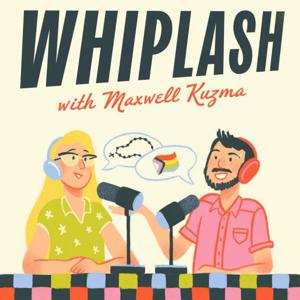


In this episode of Whiplash, Max and Emma speak with Dr. Jason Steidl Jack, theologian, historian, and author of LGBTQ Catholic Ministry: Past and Present. Jason traces the long and often overlooked history of queer Catholic ministry in the United States — from early communities like DignityUSA to today’s ongoing efforts to build spaces of belonging within and beyond the Church. He reflects on his own journey from evangelical roots to Catholicism, and the movement from loneliness to communion through the witness of queer saints, past and present.
Together, they explore what it means to build bridges that don’t demand assimilation, how queer Catholics have reshaped the Church through resilience and love, and why recovering diverse stories — including those of trans Catholics, queer women, and people of color — is essential to imagining a more just and joyful Church.
What happens when queerness meets fundamentalist religion? This week on Whiplash, we sit down with Willow, an intersex trans person, thinker, and survivor of Christian and Catholic fundamentalism, to explore how queerness can become a way of making meaning inside systems that were never built to hold us.
Together, we reflect on how queerness transforms us — how it redefines faith, community, and the very idea of holiness. As we begin LGBTQ History Month, we’re grounding ourselves in that transformative power: the creativity, solidarity, and courage that queer people have always carried, even in the most constraining spaces.
Beneath the surface of Catholic history in America lies a story too often ignored: the deep entanglement of white Catholic identity with racism. In this episode, Maureen O’Connell, author and scholar of Catholic social ethics, helps us uncover that history through her groundbreaking book Undoing the Knots, which traces five generations of her own family in Philadelphia to reveal how Catholic belonging was built alongside systems of exclusion and anti-Blackness.
Together, we explore how assimilation became both a survival strategy and a weapon of control, how these dynamics still echo in today’s Catholic nationalism and high-control movements, and what it takes to face this history without turning away. This is a conversation about reckoning—not for the sake of shame, but for the sake of solidarity, clarity, and the possibility of a more honest Catholic future.
For more: https://maxwellkuzma.substack.com/
What if the “insider knowledge” driving today’s far-right movements isn’t Christian at all? Dr. Joan Braune joins us to expose how figures like Steve Bannon twist ancient Roman myths about history into pseudo-intellectual narratives of power. These ideas get passed off as “tradition,” but as Joan shows, they’re not Catholic, not Christian—and they’re fueling the dangerous rise of fascism and Christian nationalism in America today.
Together, we unpack how fascism operates not as a fringe phenomenon but as a social movement deeply tied to existing power structures. Joan explains why it can’t be defeated through policing or elections alone, but only through strong, organized resistance. Along the way, we connect her analysis to our own work on High Control Catholicism and the ways authoritarian religion manipulates communities under the guise of faith.
Pope Leo’s first four months have been marked by gestures that many LGBTQ Catholics never thought they’d see in their lifetimes. From a historic pilgrimage of LGBTQ faithful into Rome—welcomed after decades of exclusion—to his private meeting with Fr. James Martin, the new pope has signaled continuity with Francis’s posture of welcome. For communities once silenced or cast out, these moments carry deep symbolic weight.
Yet symbols don’t resolve the tension between hope, history, and hesitation. What do these early moves really mean for the future of LGBTQ Catholics in the Church? Is Pope Leo laying the groundwork for lasting change, or offering temporary gestures within unchanged structures? In this episode, Max and Emma explore the history behind these events, the meaning they carry for queer Catholics today, and the questions that remain about the road ahead.
In this episode of Whiplash with Maxwell Kuzma, we dive into purity culture and the hold it continues to have in American Christianity. While many remember it through 1990s evangelical movements like abstinence pledges and purity rings, purity culture’s influence stretches far beyond that moment. It shapes how churches and communities regulate sexuality, enforce rigid gender roles, and equate worthiness with “purity”—and its legacy continues to inform modern politics, education, and law.
To accompany this conversation, Emma and I co-wrote an essay that traces purity culture’s larger history, from its roots in early America to its present-day impact on queer and trans lives. We look at how these high-control systems use sexuality as a tool of power and exclusion, and what it means to imagine something better. You can read the full essay on Substack. https://open.substack.com/pub/maxwellkuzma/p/inside-the-high-control-world-of?r=2ja4k7&utm_campaign=post&utm_medium=web&showWelcomeOnShare=false
This week on Whiplash, Jenn Morson joins us to talk about Franciscan University—a place both Max and Jenn attended. While many remember friendly friars and a vibrant campus life, the university also fostered a culture of control, secrecy, and conformity that allowed harm to persist. Jenn has been a leading voice reporting on sexual abuse allegations at Franciscan, including work for the National Catholic Reporter, documenting how some students were manipulated or exploited within systems that appeared nurturing.
Content Statement: Before listening, take a moment to prepare yourself. This episode includes discussions of sexual abuse, misconduct, harassment, and institutional failure. In our conversation, we explore how high-control structures shaped student life, the pressures to conform, and the lasting effects on survivors and alumni. These difficult stories are essential for understanding how authority and devotion can be misused, and why accountability matters.
In this episode, we reflect on what it means to engage ethically with stories of High Control Catholicism and religious trauma. As we’ve moved through this series, we’ve seen how easily personal testimony can be flattened into content for clicks, and how platforms often privilege certain voices over others. We share how we approach storytelling differently—by centering lived experience, collaborating with experts, and ensuring that survivors remain in control of their own narratives.
Ethical storytelling matters because the way we share stories shapes the future of advocacy. By being intentional about who we platform, creating accessible content, and naming the limits of our own expertise, we hope to build a model of storytelling rooted in dignity, reciprocity, and care. This episode is not a rulebook, but an invitation for others to reflect on how we can all engage our communities more responsibly.
In this episode, we sit down with journalist and author Gareth Gore to explore the hidden world of Opus Dei. From his beginnings as a financial reporter to uncovering a story that stretched far beyond banking, Gareth shares how Opus Dei’s secrecy, influence, and high-control practices have shaped both Catholic life and global politics. Together, we discuss the cult of personality around founder Josemaría Escrivá, the ways Opus Dei exerts control over its members, and how its reach extends into movements of Catholic nationalism and authoritarian politics in Spain and the United States.As queer Catholics reflecting on our ongoing series about High Control Catholicism, we found this conversation to be an important step in naming the structures of power and manipulation that too often go unchallenged. Instead of traditional show notes, we’ll be publishing a deep dive essay on Substack this Friday, August 22, continuing the conversation and expanding on themes from this episode.https://maxwellkuzma.substack.com/
This week’s episode is one of the harder ones we’ve recorded. We’re talking about conversion therapy — something that isn’t just a political talking point, but a lived reality for so many in our community. If this topic is too much for you right now, please take care of yourself and skip this one. Your wellbeing matters more than anything. But for those who can listen, thank you for holding space for a conversation that’s painful and deeply important.
We’re speaking with Dr. Lucas Wilson, a scholar and survivor, about the theology that fuels conversion therapy, the systems that keep it alive, and what life can look like after surviving it. This isn’t just history — right now, Republican lawmakers in Colorado and other states are working to make these harmful practices legal again. We believe staying informed is one way we protect each other. Thank you for being willing to face hard truths with us.
From the publisher's feed

90,560 Listeners

2,346 Listeners

14,655 Listeners

111,767 Listeners
1,002 Listeners

172 Listeners
125 Listeners
403 Listeners

12,490 Listeners

16,318 Listeners

46 Listeners
1,141 Listeners