
Sign up to save your podcasts
Or

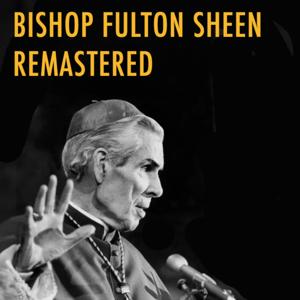

Archbishop Fulton J. Sheen explores the profound mystery behind the fourth word of Christ from the Cross: "My God, my God, why hast thou forsaken me?" He addresses the unsettling question of how the Heavenly Father could seemingly abandon His own Son, who had identified Himself with sinners. Sheen frames this abandonment not as a rejection, but as a deliberate act of divine justice and love, where the Father sees the Son as one with the transgressors to bring about the work of redemption.
Sheen uses the poignant illustration of a father taking his young son to a dentist. As the dentist inflicts pain upon the child to treat an infected tooth, the father does not intervene to stop the procedure, because he knows the suffering is necessary to reveal and relieve the toxic condition. Similarly, Sheen argues, the Heavenly Father allowed the Son to suffer for humanity, taking on the pains and pangs of all forms of atheism and sin. He also categorizes atheists into three types—the "gastric atheist" living for carnal pleasures, the "heart atheist" who does not wish for a God, and the "antichrist" who harbors active hatred—and reveals how Christ in His agony atoned for each one.
This episode remains essential for modern listeners because it challenges us to understand suffering not as a sign of God's absence, but as a necessary component of our reconciliation with Him. Sheen reminds us that just as a fish is made to be in water, humans are meant to be with God; when we are separated from Him, we are like that fish out of water, gasping for life. This reflection invites us to turn back to the Father, no matter how far we have wandered, and to find hope in the truth that even in our darkest moments of feeling forsaken, God's grace is present to draw us home.
 View all episodes
 By Bishop Fulton J. Sheen Audio Team

4.9
3636 ratings
Archbishop Fulton J. Sheen explores the profound mystery behind the fourth word of Christ from the Cross: "My God, my God, why hast thou forsaken me?" He addresses the unsettling question of how the Heavenly Father could seemingly abandon His own Son, who had identified Himself with sinners. Sheen frames this abandonment not as a rejection, but as a deliberate act of divine justice and love, where the Father sees the Son as one with the transgressors to bring about the work of redemption.
Sheen uses the poignant illustration of a father taking his young son to a dentist. As the dentist inflicts pain upon the child to treat an infected tooth, the father does not intervene to stop the procedure, because he knows the suffering is necessary to reveal and relieve the toxic condition. Similarly, Sheen argues, the Heavenly Father allowed the Son to suffer for humanity, taking on the pains and pangs of all forms of atheism and sin. He also categorizes atheists into three types—the "gastric atheist" living for carnal pleasures, the "heart atheist" who does not wish for a God, and the "antichrist" who harbors active hatred—and reveals how Christ in His agony atoned for each one.
This episode remains essential for modern listeners because it challenges us to understand suffering not as a sign of God's absence, but as a necessary component of our reconciliation with Him. Sheen reminds us that just as a fish is made to be in water, humans are meant to be with God; when we are separated from Him, we are like that fish out of water, gasping for life. This reflection invites us to turn back to the Father, no matter how far we have wandered, and to find hope in the truth that even in our darkest moments of feeling forsaken, God's grace is present to draw us home.
4,969 Listeners

5,709 Listeners

4,032 Listeners
811 Listeners
6,793 Listeners
2,619 Listeners

934 Listeners

1,287 Listeners

446 Listeners

817 Listeners
517 Listeners
1,215 Listeners
781 Listeners
11,395 Listeners

154 Listeners