
Sign up to save your podcasts
Or

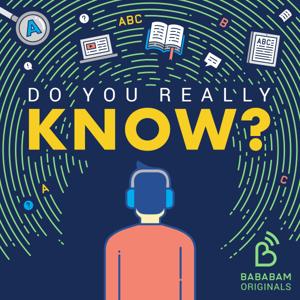

Have you ever looked at a piece of toast, a cloud or a nearby house and had the impression there’s a face in it, looking right back at you? If you’re like most people, it happens to you on a regular basis, and once you’ve seen the face, you just can’t un-see it! It’s down to a human tendency known as pareidolia.
The psychological phenomenon comes from the Greek words para, meaning “beside” or “beyond” and “idolia”, meaning form or image. It’s basically our brains playing tricks on us, but for a very good reason. And it’s nothing new either; Renaissance artist Leonardo da Vinci wrote about it in his notebooks. Pareidolia is an example of apophenia, which is the tendency to make sense of, or connect things that are actually unconnected. Our brains are always looking for patterns in information from the outside world, to use as a basis for the decisions we make.
Do you have any examples? Why does the brain do that then? Are some people more affected than others? In under 3 minutes, we answer your questions!
To listen to the latest episodes, click here:
What is bae-realing, the new dating trend?
Why are Christmas adverts so moving?
Could Mastodon replace Twitter?
A Bababam Originals podcast, written and produced by Joseph Chance.
First Broadcast: 3/12/2022
Learn more about your ad choices. Visit megaphone.fm/adchoices
 View all episodes
 By Bababam

4.9
1010 ratings
Have you ever looked at a piece of toast, a cloud or a nearby house and had the impression there’s a face in it, looking right back at you? If you’re like most people, it happens to you on a regular basis, and once you’ve seen the face, you just can’t un-see it! It’s down to a human tendency known as pareidolia.
The psychological phenomenon comes from the Greek words para, meaning “beside” or “beyond” and “idolia”, meaning form or image. It’s basically our brains playing tricks on us, but for a very good reason. And it’s nothing new either; Renaissance artist Leonardo da Vinci wrote about it in his notebooks. Pareidolia is an example of apophenia, which is the tendency to make sense of, or connect things that are actually unconnected. Our brains are always looking for patterns in information from the outside world, to use as a basis for the decisions we make.
Do you have any examples? Why does the brain do that then? Are some people more affected than others? In under 3 minutes, we answer your questions!
To listen to the latest episodes, click here:
What is bae-realing, the new dating trend?
Why are Christmas adverts so moving?
Could Mastodon replace Twitter?
A Bababam Originals podcast, written and produced by Joseph Chance.
First Broadcast: 3/12/2022
Learn more about your ad choices. Visit megaphone.fm/adchoices

10,979 Listeners

1,258 Listeners

442 Listeners

124 Listeners

1,434 Listeners
12,767 Listeners

2,585 Listeners

3,804 Listeners

1,006 Listeners

444 Listeners

4,805 Listeners

89 Listeners

541 Listeners

2,061 Listeners

29 Listeners

0 Listeners

0 Listeners