
Sign up to save your podcasts
Or

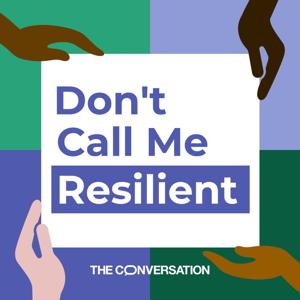

The state of our environment just keeps getting scarier and scarier, yet it feels like we have yet to find a way forward. Two Indigenous scholars who run labs to address the climate crisis say bringing an Indigenous understanding to environmental justice could help us get unstuck. A big part of that is seeing pollution through a new lens – one that acknowledges it is as much about racism and colonialism as it is toxic chemicals. Vinita talks to Michelle Murphy, Professor and Canada Research Chair in science and technology studies and leader at the University of Toronto’s Environmental Data Justice Lab. Also joining is Max Liboiron, author of Pollution is Colonialism, and associate professor in geography at Memorial University of Newfoundland.
Show notes:
https://theconversation.com/why-pollution-is-as-much-about-colonialism-as-chemicals-dont-call-me-resilient-ep-11-170696
Transcript:
https://theconversation.com/why-pollution-is-as-much-about-colonialism-as-chemicals-dont-call-me-resilient-transcript-ep-11-170697
Join The Conversation about this podcast:
Use hashtag #DontCallMeResilient and tag us:
Twitter: https://twitter.com/ConversationCA
Instagram: https://www.instagram.com/theconversationdotcom
Facebook: https://www.facebook.com/TheConversationCanada
LinkedIn: https://www.linkedin.com/company/theconversationcanada/
Sign up for our newsletter: https://theconversation.com/ca/newsletters/
Contact us: [email protected]
Promo at beginning of episode:
Telling Our Twisted Histories, CBC Podcasts:
https://www.cbc.ca/listen/cbc-podcasts/906-telling-our-twisted-histories
 View all episodes
 By The Conversation, Vinita Srivastava, Dannielle Piper, Krish Dineshkumar, Jennifer Moroz, Rehmatullah Sheikh, Kikachi Memeh, Ateqah Khaki, Scott White
5
1212 ratings
The state of our environment just keeps getting scarier and scarier, yet it feels like we have yet to find a way forward. Two Indigenous scholars who run labs to address the climate crisis say bringing an Indigenous understanding to environmental justice could help us get unstuck. A big part of that is seeing pollution through a new lens – one that acknowledges it is as much about racism and colonialism as it is toxic chemicals. Vinita talks to Michelle Murphy, Professor and Canada Research Chair in science and technology studies and leader at the University of Toronto’s Environmental Data Justice Lab. Also joining is Max Liboiron, author of Pollution is Colonialism, and associate professor in geography at Memorial University of Newfoundland.
Show notes:
https://theconversation.com/why-pollution-is-as-much-about-colonialism-as-chemicals-dont-call-me-resilient-ep-11-170696
Transcript:
https://theconversation.com/why-pollution-is-as-much-about-colonialism-as-chemicals-dont-call-me-resilient-transcript-ep-11-170697
Join The Conversation about this podcast:
Use hashtag #DontCallMeResilient and tag us:
Twitter: https://twitter.com/ConversationCA
Instagram: https://www.instagram.com/theconversationdotcom
Facebook: https://www.facebook.com/TheConversationCanada
LinkedIn: https://www.linkedin.com/company/theconversationcanada/
Sign up for our newsletter: https://theconversation.com/ca/newsletters/
Contact us: [email protected]
Promo at beginning of episode:
Telling Our Twisted Histories, CBC Podcasts:
https://www.cbc.ca/listen/cbc-podcasts/906-telling-our-twisted-histories

42 Listeners
14 Listeners

2 Listeners
8 Listeners

1 Listeners

0 Listeners

5 Listeners

0 Listeners

0 Listeners

0 Listeners

68 Listeners

0 Listeners

0 Listeners

0 Listeners

0 Listeners

51 Listeners

5 Listeners

3 Listeners
0 Listeners