
Sign up to save your podcasts
Or



Based on Podcast App listening data
Send us Fan Mail
Step into the brutal reality of the 1874 High Plains with the debut episode of The German Sisters: A Story of Survival, a gripping new audiobook series from Books on Tape, expertly brought to life through ElevenLabs narration. Drawing directly from preserved 1928 Kansas State Historical Society records, military dispatches, and primary memoirs, author Michael King strips away a century of cheap dime-novel exaggeration to uncover the raw, heart-wrenching truth behind the German family tragedy. When a peaceful journey toward Colorado turned fatal along the Smoky Hill stage road, four young sisters—Catherine, Sophia, Julia, and Addie—were thrust into a harrowing fight for endurance across the frozen Texas plains. This powerful premiere strips back sensationalized myths to expose both the unfathomable horror of the ambush and the unexpected acts of human empathy that emerged during five brutal months of captivity amidst the Red River War.
Covering the book’s Introduction and Preface, this initial chapter sets the stage for a unique, dual-layered audio experience that seamlessly bridges objective historical documentation with vivid, immersive storytelling. Listeners will experience the frontier through a masterfully blended structure, feeling the crunch of parched earth under wagon wheels while tracing the strategic military campaign led by General Nelson A. Miles to bring the girls home. Born from four years of meticulous research and dedicated refinement, this definitive account captures the unbreakable will of two young girls left alone on the wilderness prairie. Available for a limited run of just one month as a serialized audio release, there is no better time to anchor this incredible piece of American history in your permanent library; listen to the opening chapter today, and purchase your complete copy online at books.by via the link https://books.by/michael-d-king.
Support the show
If you'd like to buy one or more of our fully illustrated dime novel publications, you can click the link I've included.
Send us Fan Mail
Step into the captivating world of the American frontier, where history, grit, and surprising truths converge to reshape everything you thought you knew about the Old West. In this engaging address, our speaker Dr. Frank Sharp peels back the layers of myth to reveal a astonishing reality: post-Civil War Texas was pulled from deep economic depression not just by hard-working cowboys, but by the legendary Texas Longhorn itself—a drive that infused what would be billions of dollars in modern currency into a devastated economy. Drawing on decades of firsthand research and vivid field experience, the narrative takes listeners from the original 1493 Spanish cattle imported by Columbus straight to the dusty trails of Fort Griffin and the iconic Western Cattle Trail.
Yet, this isn't merely a nostalgic walk down memory lane; it is an urgent rally for historical preservation. Listeners will be hooked as the speaker exposes a startling modern tragedy: while hyper-selective breeding has filled associations with crossbred "freaks" valued solely for oversized horn spans, the true, genetically pure, small-bodied Texas Longhorn is actually on the brink of critical extinction. With a perfect blend of Third-Grade math, sharp wit, interactive banter, and authentic passion, Dr. Frank Sharp offers an unforgettable look at the animal that quite literally carried American civilization forward. Tune in to discover why saving the true Texas Longhorn means safeguarding the very heart of Western heritage.
Support the show
If you'd like to buy one or more of our fully illustrated dime novel publications, you can click the link I've included.
Send us Fan Mail
Imagine standing atop Pawnee Rock in May of 1872, looking out over the vast, windswept plains of Kansas. As far as the eye can see, the earth itself seems to move—a living, breathing ocean of dark fur and thunder.
Welcome to The Wild West Podcast. Today, we invite you to travel alongside Colonel Richard Irving Dodge: soldier, keen naturalist, and eyewitness to the final, awe-inspiring days of the American frontier.
In this episode, written and produced by Mike King and narrated by Brad Smalley, Colonel Dodge takes us into the heart of the Great Plains. You'll hear his firsthand account of standing above a staggering buffalo herd—an unbelievable spectacle spanning twenty-five miles wide and fifty miles deep—and feel the pulse-pounding terror of being caught in a sudden stampede of five thousand charging bison.
This remarkable chapter of history unfolds just two months before Colonel Dodge would take command of Fort Dodge on the north banks of the Arkansas River, a mere five miles from where the legendary Dodge City was about to be born. At the time, Dodge was stationed at Fort Larned—a crucial outpost serving as a disbursement point for Indian annuities and a vital shield for the workers laying track for the Atchison, Topeka, and Santa Fe Railroad.
Step back in time with us to May 1872, and experience the frontier through the eyes of the man who lived it. Tune in now to The Wild West Podcast.
Support the show
If you'd like to buy one or more of our fully illustrated dime novel publications, you can click the link I've included.
Send us Fan Mail
Journey into the raw, untamed frontier of June 1872 with former buffalo hunter turned saloon owner George W. Brown. In this gripping episode, Brown details the chaotic birth of Buffalo City—a bustling boomtown sparked when a strict military ban on alcohol at Fort Dodge sent thirsty soldiers, hunters, and freight drivers searching for a new watering hole just beyond government lines. From makeshift tent bars and 25-cent whiskey shots to the rapid, wild rise of a frontier outpost, listen as history comes alive through firsthand accounts of ambition, lawlessness, and the men who built the Old West one wooden plank at a time.
Expect high-stakes drama, authentic period storytelling, and an unfiltered look at true frontier grit. You'll hear how a military ban on whiskey sparked an entire town, how wagonloads of gamblers and dance hall girls transformed a desolate prairie, and how an explosive, bullet-riddled saloon shootout unfolded over a midnight feud. Whether you're a history buff or just love a compelling, cinematic story filled with larger-than-life characters, this episode offers an unforgettable front-row seat to the wildest days of the American West—hit play and tune in today!
Support the show
If you'd like to buy one or more of our fully illustrated dime novel publications, you can click the link I've included.
Send us Fan Mail
Step back in time to the summer of 1872 and experience the raw, untamed spirit of the American frontier. Narrated through the vivid recollections of George W. Brown, this episode transports listeners directly onto the sun-drenched plains of Kansas, following the massive buffalo herds alongside legendary frontiersmen. Richly atmospheric soundscapes—from the crackle of evening campfires to the distant howl of coyotes—bring to life the gritty reality, unexpected humor, and rugged camaraderie of hunters like "Prairie Dog" Morrow and Thomas Nixon as they navigate a rapidly changing wild West.
Whether you are a historical enthusiast or simply love a compelling, well-told story, this immersive audio journey offers an unvarnished window into the lives of the men who shaped frontier lore. Listeners will be captivated by the colorful anecdotes, sharp wits, and larger-than-life tales of early entrepreneurial ventures and epic hunts along the Arkansas River. Tune in to hear history brought to life through authentic voice acting and traditional acoustic instrumentation that will leave you feeling as though you're sitting right beside the campfire.
Support the show
If you'd like to buy one or more of our fully illustrated dime novel publications, you can click the link I've included.
Send us Fan Mail
Saddle up and tune in to this thrilling episode of the Wild West Podcast, hosted by Brad Smalley! The show shines a spotlight on an upcoming doubleheader event in Dodge City, Kansas, featuring Dr. Frank Sharp—an educator, author, cattleman, and lead educator for the State of Texas Herd of Longhorns at Fort Griffin. In a captivating interview, Dr. Sharp dismantles common misconceptions about Texas Longhorns, revealing the shocking truth that genuine historical longhorns are actually critically endangered—far closer to extinction than most realize due to modern breeding trends prioritizing extreme horn length over pure historical traits. It’s an eye-opening conversation that bridges the rich, shared history between Texas and Dodge City, leaving listeners eager to learn more about the true identity of these iconic animals.
Beyond the rich livestock history, this episode delivers an irresistible invitation to a hands-on, high-energy community experience! Dr. Sharp previews his upcoming July 31, 2026 events at the Ford County Historical Society Museum, including an interactive morning session titled "Music on the American Frontier". Forget dry museum lectures—this session brings history to life by inviting adults and kids alike to grab spoons, maracas, or rhythm bones and jam along to authentic 19th-century cowboy trail songs. Between the fascinating frontier history, vivid historical artwork previews, and the promise of a foot-stomping good time, this podcast episode is a must-listen that will have you eager to dust off your boots and join in on the celebration!
Support the show
If you'd like to buy one or more of our fully illustrated dime novel publications, you can click the link I've included.
Send us Fan Mail
In episode 6 of Buffalo Days, the narrative opens with a sudden and intense prairie storm that triggers a massive buffalo stampede. As lightning strikes and kills a bull in the herd, the animals scatter in panic, threatening to crush the hunters and their heavily loaded supply wagons. The men are forced to make a desperate run through the blinding rain and mud, barely escaping the thundering herd when the storm runoff carves out a massive rut in the earth, redirecting the buffalo away from their path and slowing the animals down in a nearby river.
The following day, after the storm passes, the hunters venture out onto the prairie to survey the aftermath, following the winding, crooked trails left by the buffalo. Along the way, they witness the grim reality of the hide-hunting trade, coming across hundreds of decaying carcasses and spoiled hides left behind to rot by other hunters. After continuing their hunt for two more weeks to fulfill their quota of 557 hides, they haul their haul back to Fort Hays to collect their pay. The episode closes on a reflective note as the group splits up, leaving the narrator alone in a saloon to ponder his descent into becoming a hardened, cold-blooded "buffalo runner."
Support the show
If you'd like to buy one or more of our fully illustrated dime novel publications, you can click the link I've included.
Send us Fan Mail
Before sunrise, Josiah Wright Mooar sets out with Jim White to learn the technique of buffalo hunting from a stand. Moving six miles out, they locate a massive herd, utilizing the cover of sandhills and a riverbank to approach the animals while the skinners wait with a freight wagon nearby. As the buffalo draw close, Jim criticizes the animals' lack of intelligence and explains their tendency to stampede blindly. He then demonstrates how to set up a tripod shooting stand for his single-shot, lever-action Sharps .50 rifle. Jim methodically accounts for distance, wind, and bullet arc before opening fire. Using his specialized tripod, Jim systematically drops one buffalo after another; the narrator watches the animals lose their wild dignity as forty of them are killed without alerting the rest of the herd.
Once the hunt concludes, Jim signals the team to begin the arduous work of processing the kill. The skinners move the wagons forward and immediately begin skinning the carcasses using specialized knives and a horse-hitch to peel the hides away. While Jim White remains on high ground to keep watch for potential Indian threats, the rest of the crew spends nearly the entire day skinning and cutting the animals. By late afternoon, they finish harvesting the hides for curing and secure the hindquarters of meat—valued at three cents a pound—to ensure a profitable haul for the camp.
Support the show
If you'd like to buy one or more of our fully illustrated dime novel publications, you can click the link I've included.
Send us Fan Mail
Part Four of Buffalo Days details the intense encounters between the U.S. Army and 400 Native Americans and a regiment of "Buffalo Soldiers"—and the resilient Indigenous warriors of the Great Plains.
The section also features a memorable account from Jim White, who shared a campfire story about the harsh realities of life on the plains. White’s tale illustrated the unpredictable nature of the landscape and the constant threat to survival, grounding the historical military engagements in the personal, often harrowing experiences of those living through the era. This anecdote provides a humanizing perspective, contrasting the formal military history of the Buffalo Soldiers with the rugged, everyday existence of scouts and settlers in the American West.
Support the show
If you'd like to buy one or more of our fully illustrated dime novel publications, you can click the link I've included.
Send us Fan Mail
Part Three of Buffalo Days details Josiah Wright Mooar's transition into the life of a buffalo hunter on the American Great Plains during the 1870s. Mooar recounts the arduous process of outfitting an expedition, highlighting the logistical challenges of securing reliable teams, specialized rifles like the Sharps, and enough supplies to sustain a hunting party for months in the wilderness. He emphasizes that the work was brutal, characterized by extreme weather, isolation, and the constant physical toll of skinning and processing hundreds of bison hides.
Beyond the mechanical aspects of the trade, the author reflects on the grim reality of the near-extermination of the buffalo herds. He provides a first-hand account of the efficiency and ruthlessness of the professional hunters, whose systematic slaughter fundamentally altered the landscape and devastated the way of life for Indigenous peoples. The narrative serves as both a memoir of a rugged profession and a somber historical testament to the rapid ecological and cultural shifts that defined the era.
Support the show
If you'd like to buy one or more of our fully illustrated dime novel publications, you can click the link I've included.
From the publisher's feed
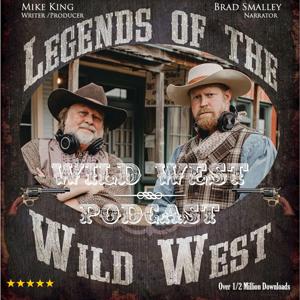
Welcome to the Wild West Podcast, winner of the 2026 Best of Western Podcast award, where fact and legend merge. We present the true accounts of individuals who settled in towns built out of hunger…
Ranked by our users in the last 21 days

44,984 Listeners
4,711 Listeners

1,785 Listeners

1,677 Listeners

2,772 Listeners

1,498 Listeners

3,986 Listeners

6,174 Listeners

19,147 Listeners

3,637 Listeners

19,093 Listeners

2,936 Listeners

777 Listeners

927 Listeners

1,592 Listeners