
Sign up to save your podcasts
Or

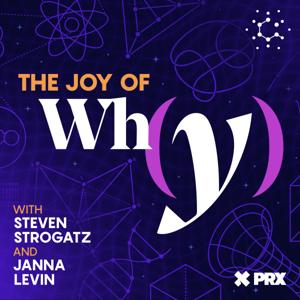

Common sense rules our world. This fundamental, sometimes trivial knowledge is inherent to how humans interpret language. Yet, some of these simple human truths are so obvious that they're rarely put into words. And without the data of common sense to train on, large language models such as ChatGPT have bizarre, often humorous blind spots.
Yejin Choi, professor and the chair of computer science at the University of Washington, calls common sense the “dark matter” of intelligence. In this week’s episode of “The Joy of Why,” Choi talks with co-host Steven Strogatz about decoding the interstitial glue of language and comprehension. Together, they explore the question: Should we program more humanity into the next generation of artificial intelligence?
 View all episodes
 By Steven Strogatz, Janna Levin and Quanta Magazine

4.9
495495 ratings
Common sense rules our world. This fundamental, sometimes trivial knowledge is inherent to how humans interpret language. Yet, some of these simple human truths are so obvious that they're rarely put into words. And without the data of common sense to train on, large language models such as ChatGPT have bizarre, often humorous blind spots.
Yejin Choi, professor and the chair of computer science at the University of Washington, calls common sense the “dark matter” of intelligence. In this week’s episode of “The Joy of Why,” Choi talks with co-host Steven Strogatz about decoding the interstitial glue of language and comprehension. Together, they explore the question: Should we program more humanity into the next generation of artificial intelligence?

752 Listeners

947 Listeners

323 Listeners

836 Listeners

564 Listeners
543 Listeners

231 Listeners

819 Listeners

1,060 Listeners
4,167 Listeners

2,366 Listeners

504 Listeners
252 Listeners

324 Listeners

17 Listeners
383 Listeners