
Sign up to save your podcasts
Or

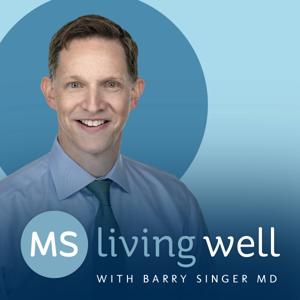

Treatment approaches to multiple sclerosis continue to change. Over the past quarter of a century, MS went from an untreatable disease to a disease responsive to a broad array of oral, intravenous and self-injected medications. Greater long-term disease control is now possible for more people living with MS. However, undertreatment can result in significant physical disability including imbalance, weakness, visual loss, incontinence and pain and significant cognitive impairment including short-term memory loss, multitasking impairment and word-finding problems. This podcast outlines different treatment strategies to maximize quality of life long-term to realize your individual goals with the least disability. Information is presented on which people with MS might be at increased risk of disability and need early use of a highly effective medication. Treatment safety is weighed against the treatment benefits and risk of long-term disability.
Barry Singer MD, Director of The MS Center for Innovations in Care, interviews two amazing MS specialists who are also phenomenal patient advocates:
Heidi Crayton MD, Director of The MS Center of Greater Washington in the Virginia suburbs of Washington, DC. Dr. Crayton completed her neurology residency and multiple sclerosis fellowship at Georgetown University Hospital. She is a national leader in MS treatment and clinical trial investigator.
Aaron Boster, MD, is an MS expert at Ohio Health in Columbus, Ohio. Dr. Boster completed his neurology residency at the University of Michigan in Ann Arbor and a fellowship focused on clinical neuroimmunology and multiple sclerosis at Wayne State University in Detroit. Dr. Boster continues to be active in clinical research, authoring academic publications and lecturing globally.
To learn more about multiple sclerosis, go to: www.mslivingwell.org
 View all episodes
 By Barry Singer, MD

4.9
121121 ratings
Treatment approaches to multiple sclerosis continue to change. Over the past quarter of a century, MS went from an untreatable disease to a disease responsive to a broad array of oral, intravenous and self-injected medications. Greater long-term disease control is now possible for more people living with MS. However, undertreatment can result in significant physical disability including imbalance, weakness, visual loss, incontinence and pain and significant cognitive impairment including short-term memory loss, multitasking impairment and word-finding problems. This podcast outlines different treatment strategies to maximize quality of life long-term to realize your individual goals with the least disability. Information is presented on which people with MS might be at increased risk of disability and need early use of a highly effective medication. Treatment safety is weighed against the treatment benefits and risk of long-term disability.
Barry Singer MD, Director of The MS Center for Innovations in Care, interviews two amazing MS specialists who are also phenomenal patient advocates:
Heidi Crayton MD, Director of The MS Center of Greater Washington in the Virginia suburbs of Washington, DC. Dr. Crayton completed her neurology residency and multiple sclerosis fellowship at Georgetown University Hospital. She is a national leader in MS treatment and clinical trial investigator.
Aaron Boster, MD, is an MS expert at Ohio Health in Columbus, Ohio. Dr. Boster completed his neurology residency at the University of Michigan in Ann Arbor and a fellowship focused on clinical neuroimmunology and multiple sclerosis at Wayne State University in Detroit. Dr. Boster continues to be active in clinical research, authoring academic publications and lecturing globally.
To learn more about multiple sclerosis, go to: www.mslivingwell.org

27,160 Listeners

1,719 Listeners
147 Listeners
15 Listeners

9,256 Listeners
51 Listeners
32 Listeners
58,286 Listeners

13,102 Listeners
114 Listeners
10,506 Listeners

20,620 Listeners

11,492 Listeners

3,603 Listeners
0 Listeners