
Sign up to save your podcasts
Or



Based on Podcast App listening data
Share a comment
When life feels like a maze of sudden turns and steep drops, gaining a higher view can change everything. We explore Romans 8:28 with clear eyes, refusing to flatten pain or force a tidy bow on tragedy. Instead, we look at how a sovereign God weaves dark threads into a design we may not see yet, and how that promise strengthens real people to grieve honestly, act bravely, and forgive beyond reason.
We begin by clearing away common misuses: this promise does not explain evil, erase sorrow, reward passivity, or guarantee ease. From there, we dig into what Paul actually says. “We know” rests on God’s word, not on quick results. “God causes” announces His active involvement when our strength fails. “All things” insists on a synergy that may take a lifetime to surface, aimed at one goal: being shaped into the likeness of Christ.
Along the way, stories bring the doctrine to life. George Whitefield’s winter coat and unexpected guineas offer a flash of providence that encourages without setting false timelines. Corrie and Betsie ten Boom model courage inside Ravensbrück, where fleas—of all things—become a shelter for worship and Scripture. Their legacy of seeing even brutal guards as broken souls in need of love pushes us to imagine forgiveness we never thought possible. We close with a father’s raw confession after losing his son, and his shipyard image that helps us hold both mystery and hope: a single steel plate sinks alone, but the finished vessel floats.
If you’re ready for a grounded, compassionate take on Romans 8:28—one that honors tears, calls you to action, and steadies your trust—this conversation is for you. Listen, share it with someone carrying a heavy thread, and leave a review to help others find a higher view.
We want to translate Stephen's through the Bible teaching series - The Wisdom Journey - into 10 new languages next year. Your support makes that possible.
Make a tax deductible gift right now: https://www.wisdomonline.org/give
Learn about our plans to reach the nations: https://www.wisdomonline.org/2050
Support the show
Share a comment
What if your job isn’t just a paycheck but a calling that can quietly change the world? We explore how everyday work—paid or unpaid—becomes worship when it’s offered to God with diligence, integrity, and a heart set on serving more than a supervisor. Drawing on Colossians and Titus, we unpack why working “heartily” is less about hustle and more about purpose, and how reclaiming the word vocation tears down the old wall between sacred and secular.
We bring this vision to life through vivid examples. Timothy’s faith was formed at home by a mother and grandmother who treated parenting as holy work. Tertius, a household servant whose name simply meant “third,” penned Paul’s words to the Romans and reminds us that unseen roles can carry eternal weight. Erastus, the city treasurer of Corinth, used his public office with excellence and self-sacrifice, boosting the credibility of the gospel in his city. Then we look at Robert Laidlaw, a salesman turned CEO, who leveraged catalogs, generosity, and a clear gospel booklet to reach millions—proof that meaningful impact can flow through boardrooms, shop floors, farms, and kitchens.
Across these stories runs a single thread: God often hides behind ordinary tasks, working through people who do the next right thing with skill and care. When we cook, teach, repair, design, manage, or serve as if Jesus were our direct client, our craft becomes a canvas for grace. That shift changes how we show up on Monday, how we handle pressure, and how we earn the trust that opens doors for honest conversations about hope.
If this reframes your day-to-day, share the episode with a friend, subscribe for more thoughtful conversations on faith and work, and leave a review so others can find us. How will you show up tomorrow when you see your workplace as holy ground?
We want to translate Stephen's through the Bible teaching series - The Wisdom Journey - into 10 new languages next year. Your support makes that possible.
Make a tax deductible gift right now: https://www.wisdomonline.org/give
Learn about our plans to reach the nations: https://www.wisdomonline.org/2050
Support the show
Share a comment
Courage doesn’t always look like a roar; sometimes it’s a window opened toward home and a quiet prayer said on schedule. We explore how Daniel faced the machinery of empire without bitterness or bravado, and how that same blend of joy, integrity, devotion, and humility showed up centuries later in William Wilberforce’s long campaign to end the slave trade and, ultimately, slavery across the British Empire. The stories unfold with human texture: a teenager abducted into Babylon who refuses to be remade, a statesman whose colleagues weaponize his prayer life, a den that should have been an ending but becomes a witness, and a parliamentarian who keeps smiling, keeps pressing bills, and keeps giving God the credit when the tide finally turns.
Along the way we challenge the assumptions we carry about success, influence, and credibility. An excellent spirit stands out more than elite access. Comprehensive integrity outlasts opposition research. Spiritual consistency is forged by daily habits, not last-minute heroics. And humility keeps victory from curdling into pride. Whether you lead a classroom, a courtroom, a crew, or a company, these four strands create a durable public witness in any age.
We close by turning to vocation as a sacred calling—teacher, builder, driver, judge, parent, pastor—and asking practical questions: What line must you draw without rage? What window must you open without fear? What habit will keep your joy steady when pressure rises? Listen, reflect, and then carry these practices into your week. If the conversation resonates, follow the show, share it with a friend, and leave a review to help more people find it.
We want to translate Stephen's through the Bible teaching series - The Wisdom Journey - into 10 new languages next year. Your support makes that possible.
Make a tax deductible gift right now: https://www.wisdomonline.org/give
Learn about our plans to reach the nations: https://www.wisdomonline.org/2050
Support the show
Share a comment
What proves God worthy when the gifts are gone? We open with catastrophe compressed into seconds, then step behind the curtain of Job to hear the ancient accusation that still haunts modern faith: people only honor God when life is easy. From there, we follow the raw grief, the unanswered questions, and the stubborn worship that refuses to quit. Alongside Job’s story, we share the remarkable journey of Joni Eareckson Tada—paralyzed at seventeen, honest about despair, and courageous enough to pray, “If I cannot die, show me how to live.” Her path from a dark hospital room to global ministry reframes pain as a stewardship, not a sentence.
Across the hour, we examine why suffering is not a detour from God’s will but often the very road where faith learns its strength. We outline five hard-won insights: Satan is on a leash; brilliance is not omniscience; power is bounded by God’s plan; no pain arrives outside divine permission; and God is most clearly honored when we choose to trust him through tears. These aren’t clichés—they’re anchors for nights when sleep won’t come and prayers feel small. We also look at how the “abundant life” gets confused with the American dream, and why that mix leaves us brittle when loss hits.
You’ll hear how Joni turned lament into action—painting with a brush held in her teeth, building Joni and Friends, and placing hundreds of thousands of wheelchairs and Bibles into waiting hands. A phone call to a fellow quadriplegic becomes a turning point, proving that hope can be handed from one wounded pilgrim to another. If you’re carrying fresh grief, chronic pain, or quiet fear, this conversation offers sturdy language, real examples, and a clear invitation: get busy living by trusting a worthy God.
If this episode steadied you, follow the show, share it with a friend who needs courage today, and leave a review so others can find it. Your story might be the lifeline someone waits to hear.
We want to translate Stephen's through the Bible teaching series - The Wisdom Journey - into 10 new languages next year. Your support makes that possible.
Make a tax deductible gift right now: https://www.wisdomonline.org/give
Learn about our plans to reach the nations: https://www.wisdomonline.org/2050
Support the show
Share a comment
Ever chased a good plan that kept slipping away? We explore the ache and the gift of divine redirection through three intertwined journeys: Paul’s long road to Rome and dream of Spain, Jonah’s sprint toward Tarshish, and Dr. Charles McCoy’s stunning decision to sell everything at seventy-two and fly to Bombay on a one-way ticket. What begins as a study in delay turns into a portrait of grace that doesn’t rubber-stamp our maps but reshapes our hearts.
We walk through Paul’s confession in Romans 15—years of longing, constant hindrance, and a vision for the “ends of the earth.” Spain symbolized the horizon of the Great Commission, yet Paul reached Rome in chains, not triumph. Side by side with Jonah, the contrast is sharp: one runs from calling, the other runs to it—and God says no to both. Not to punish, but to redeem and redirect. Along the way, we confront our assumptions about “approved” plans, learning that God doesn’t make last-minute adjustments; he unfolds eternal purposes that invite surrender over certainty.
Then we meet Dr. McCoy, forced into retirement yet unwilling to retire his calling. With lost luggage and a scrap of an address, he knocks on the door of Bombay’s mayor and finds a room full of leaders waiting to hear his story. That moment sparks sixteen years of open doors across India and beyond, proving that age, scarcity, and setback don’t disqualify a life on mission. The thread through it all is simple and searching: when the ship to Spain never sails, will we still sail with the Savior? Listen for perspective that blends Scripture, history, and lived courage—designed to help you hold your plans loosely, your purpose firmly, and your faith steadily. If this resonates, subscribe, share with a friend, and leave a review to help more listeners find the show.
We want to translate Stephen's through the Bible teaching series - The Wisdom Journey - into 10 new languages next year. Your support makes that possible.
Make a tax deductible gift right now: https://www.wisdomonline.org/give
Learn about our plans to reach the nations: https://www.wisdomonline.org/2050
Support the show
Share a comment
What if hope isn’t a mood but a muscle that holds under weight? We take a clear-eyed look at the difference between wishful thinking and a living hope anchored in God’s promises, then trace how that kind of hope changes how we suffer, work, and speak. Starting with everyday longings and honest humor, we move into the deeper currents: why hearts grow sick without hope, why confident expectation is not denial, and how Scripture trains our desires to rest on what God has said about our past, present, and future.
From there, we focus on the question people actually ask when life gets loud: why do you still have hope? Peter’s call to be ready with a gentle answer shapes our approach—no swagger, no arguments for sport, just credible lives and clear words. Along the way, we confront our rush for cultural quick fixes and see how God loves long timelines. The story of Johann Sebastian Bach becomes our case study: an orphaned musician who prayed “Jesus, help me,” signed “Soli Deo Gloria,” suffered deeply, died forgotten, and yet helped carry the gospel of hope across oceans and centuries.
The arc reaches modern Japan, where rituals have thinned and despair often wins the day. Through performances of the Passion of St. Matthew, conversations bloomed around a single theme: hope in the midst of suffering and a future secured by the resurrection. Choirs formed, skeptics listened, and some found faith—not through a lecture, but through beauty done with excellence. That’s the invitation for us too: use the craft we’ve been given, work with integrity, and let daily prayers turn labor into witness.
If your world is tapping out the old question—Is there any hope?—the answer is yes. Let’s learn to name it, live it, and share it with humility and joy. If this resonates, follow the show, share it with a friend who needs courage, and leave a review telling us how you’ve seen hope show up this week.
We want to translate Stephen's through the Bible teaching series - The Wisdom Journey - into 10 new languages next year. Your support makes that possible.
Make a tax deductible gift right now: https://www.wisdomonline.org/give
Learn about our plans to reach the nations: https://www.wisdomonline.org/2050
Support the show
Share a comment
Ash fell like gray snow while a lifetime of labor melted into pools of metal. That’s where we meet William Carey—not in a triumphant portrait, but in the ruins of a printing press that held ten Bible translations, handcrafted type, and years of hope. We walk through his journey from a little shop bench to the beating heart of India’s cultural and spiritual life, and we watch how one quiet verse steadied his hands: “Be still and know that I am God.”
We share why a poor cobbler plastered maps over his workbench, taught himself Hebrew and Greek, and dared to challenge church leaders who said sending missionaries was impossible. Carey’s story opens into a wide landscape: launching a missions society from scratch, recruiting a few bold “rope holders,” and then pouring himself into dictionaries, schools for girls, a newspaper, agricultural reform, and the largest press in India. He fought to end widow burning and the burning of lepers, proving that gospel conviction can change both hearts and laws. Along the way, grief was real—mental illness in the family, a child’s death, years of ridicule, and that devastating fire.
What turned the tide was not bravado but a biblical rhythm of resilience. Psalm 46 offers a map for storms: pause more, panic less; remember a present refuge and a promised peace. We unpack the Hebrew nuance behind “be still,” a chosen cease-fire with our need to control, and show how surrender cleared Carey to act with sharper focus. England’s opposition softened, support surged, and within months the press roared again. The takeaways are practical: name your “although,” anchor your “therefore,” and practice moving forward while sitting still—quiet heart, active hands, steady steps.
If stories of faith, history, and hard-won courage spark something in you, join us for this deep dive. Subscribe, share this episode with a friend who needs strength for a setback, and leave a review to help others find the show. What’s your next step while sitting still?
We want to translate Stephen's through the Bible teaching series - The Wisdom Journey - into 10 new languages next year. Your support makes that possible.
Make a tax deductible gift right now: https://www.wisdomonline.org/give
Learn about our plans to reach the nations: https://www.wisdomonline.org/2050
Support the show
Share a comment
What if the hardest part of sharing your faith isn’t what to say, but what to expect? We start with raw honesty about why evangelism stirs anxiety and pushback, then move into a practical, grace-filled path for action—one invitation, one clear verse, one real conversation at a time. Along the way, we challenge the scoreboard mindset and trade it for a better aim: obedience over outcomes.
We talk about relationships that break your heart and seeds that seem to die in the soil—Demas deserting Paul, Whitfield praying for Franklin, crowds walking away from Jesus. That history grounds us when a coworker deflects with stories or a neighbor bristles at the word sin. The gospel exposes guilt before it heals shame; light stings before it saves. So we practice a different posture: clarity with kindness, truth without spin, pity instead of heat. No quick fixes. No promises of rose petals. Just the honest news that Christ saves sinners and the patience to keep doors open.
Then comes the story that reframes success: Frank Jenner on George Street in Sydney, an aging sailor who asked thousands the same simple question and never saw a single response. Decades later, the fruit surfaced across oceans—sailors, pastors, and missionaries tracing their first step toward Jesus back to a quiet man with tracts and courage. His legacy frees us. You don’t need the perfect moment or the perfect words; you need a faithful next step and trust in the Spirit who does the heart work.
If this stirs you, join us in a small, bold move: invite one person from your workplace, school, or neighborhood to church, and be ready with a simple path through Scripture. Subscribe for more honest, practical conversations, share this episode with a friend who needs courage, and leave a review to help others find the show. Who’s your first invite?
We want to translate Stephen's through the Bible teaching series - The Wisdom Journey - into 10 new languages next year. Your support makes that possible.
Make a tax deductible gift right now: https://www.wisdomonline.org/give
Learn about our plans to reach the nations: https://www.wisdomonline.org/2050
Support the show
Share a comment
Most people say they’re “perfectly fine,” even when the seams are splitting. We dig into why that response is so common, what Scripture says about the human heart, and how the Holy Spirit moves through simple, honest witness. Along the way, we get practical: a low-pressure way to mark your Bible for clear gospel conversations, how to handle deflection with grace, and why visible results aren’t the scoreboard that matters.
We talk about the quiet power of personal invitations—how most churchgoers first came because someone they knew asked. If you’ve ever felt like a bystander, this is your nudge toward being an ambassador. We trace seven reminders that steady your courage: relationships can be unfruitful, obedience outweighs outcomes, spiritual warfare is real, the true gospel exposes sin, pity should replace hostility, techniques matter less than trust in the Spirit, and Christ’s approval is the one guarantee that endures.
At the heart of the conversation is the moving story of Frank Jenner, a retired sailor in Sydney who asked one question for decades: If you died tonight, would you go to heaven? He saw no results, yet his faithful seed-sowing quietly reached sailors, pastors, missionaries, and leaders across continents. His legacy reframes success and reminds us that our job is to carry the light; God’s job is to open the heart. If you’re ready for practical steps, a stronger mindset, and a bigger view of what one simple question can do, you’ll feel equipped to make your daily path a George Street.
If this resonates, share it with a friend, subscribe for more thoughtful conversations, and leave a review with the one person you plan to invite this week.
We want to translate Stephen's through the Bible teaching series - The Wisdom Journey - into 10 new languages next year. Your support makes that possible.
Make a tax deductible gift right now: https://www.wisdomonline.org/give
Learn about our plans to reach the nations: https://www.wisdomonline.org/2050
Support the show
Share a comment
Ever feel that tug to measure your life against someone else’s highlight reel? We go straight to the root of comparison and find a better way, guided by Scripture and the contrasting stories of two missionaries and two apostles. We begin with a clear distinction: learn from other believers without longing for their life. From there, we trace how the Bible uses biography to teach truth, why Hebrews calls the church a gallery of “living biographies,” and how Paul urges us to imitate faith rather than copy outcomes, gifts, or platforms.
The heart of the conversation lands in John 21, where Jesus tells Peter hard news about the road ahead and then says, “Follow me.” Peter glances at John: “What about him?” Jesus answers, “What is that to you? You follow me.” That line resets our compass. Your race is uniquely assigned. Your gifting and personality are God’s creative handiwork. Trying to run someone else’s route only breeds restlessness. To make it tangible, we pair Jim Elliot’s brief, blazing influence with Bert Elliot’s quiet, decades-long service. One was a meteor who inspired thousands to go; the other a steady star who showed us how to stay. Both were faithful. Both mattered.
We unpack four practical principles to resist unhealthy comparison: recognize your God-designed race, embrace your wiring, remember that others carry unseen burdens, and reject the false promise that comparison can deliver joy. Along the way, we expose the “greener pasture” myth, name the soul diseases that comparison spreads—pride, despair, apathy, envy—and offer a better focus: fix your eyes on Christ so you don’t grow weary or lose heart. Whether you feel like a meteor or a plotter, there is freedom and joy in faithfulness. If this resonates, follow the show, share it with a friend who needs the reminder, and leave a review with one takeaway that will shape your week.
We want to translate Stephen's through the Bible teaching series - The Wisdom Journey - into 10 new languages next year. Your support makes that possible.
Make a tax deductible gift right now: https://www.wisdomonline.org/give
Learn about our plans to reach the nations: https://www.wisdomonline.org/2050
Support the show
From the publisher's feed
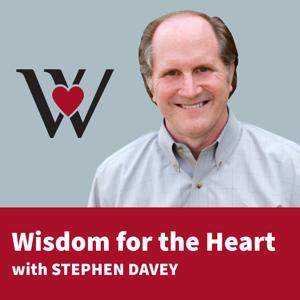
Stephen Davey will help you learn to know what the Bible says, understand what it means, and apply it to your life as he teaches verse-by-verse through books of the Bible. Stephen is the president…
Ranked by our users in the last 21 days

2,501 Listeners

8,593 Listeners
3,934 Listeners

1,424 Listeners

2,568 Listeners

2,184 Listeners

4,728 Listeners
1,981 Listeners

21,171 Listeners

6 Listeners

65,322 Listeners

1,559 Listeners

496 Listeners
6 Listeners

2,460 Listeners
13,149 Listeners
196 Listeners
13 Listeners
9 Listeners

0 Listeners